New Syrian Schools in Lebanon: between refugees’ empowerment and unwillingly fueled Social Alienation
by Estella Carpi
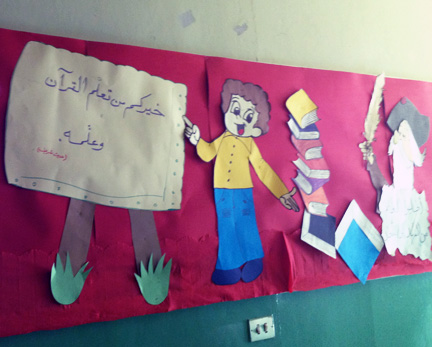
Last October 1, the school “Madrasat al-Iman al-Islamiyya†in Abu Samra in the city of Tripoli (North Lebanon) opened to “fresh off the boat†Syrian refugee kids and youth, in order to cope with the need of providing proper education in their everyday existential limbo.
The doors of this originally Lebanese Islamic school open daily to Syrian pupils from 4pm to 6pm in the afternoon, with the exception of Friday and Sunday, as established in the Tripoli district school calendar. When I visited the school on a Friday morning, the space was being used for playing volleyball and other entertainment activities were organized in class. The Back-to-School campaign has been quite large this year in Lebanon. To date, 4,942 children have been enrolled in schools, 1,650 of who are also supported by UNICEF, of a total refugee population of 162,050 individuals according to the most updated statistics provided by UNHCR.
“Soon we’re going to open new classes for high school students as wellâ€, tells me A., administrative staff member of the school. The school director specifies that there will not be any coordination between the Syrian and the Lebanese school programme: “We made certain that, once the kids are done with their studies here and they will be able to get back to Syria in safe conditions, their certificate will be considered valid whatever the political system will be back home, with or without nizam al-Assad†(the current Syrian regime of Bashar al Assad). The school policies, hence, purvey the underlying intention of the whole Syrian refugeehood system to get back to Syria as soon as it is feasible. “We are going to translate all books from French and English – used in the Lebanese school system – into Arabic, and it’s going to be a big jobâ€, explains to me the director of the school, who has been in Lebanon for 31 years, unlike the newly arrived Syrian teachers and the school’s administrative staff, who make up the vast majority. Continue reading New Syrian Schools in Lebanon