Category Archives: Conferences and Talks

Song, Poetry and Gender in Yemen’s Central Highlands


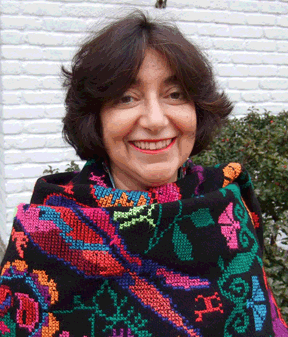
Dr. Najwa Adra, an anthropologist who has worked in Yemen since 1978, will be presenting a talk on “Song, Poetry and Gender in Yemen’s Central Highlands” today (April 7) at Marymount Manhattan College. The talk is from 7:30-9:30 pm in the Regina Peruggi Room of Marymount at 221 East 71st St. (between 2nd and 3rd avenues) in New York. This is a free event but seating is limited, so please RSVP to MilliBurns@gmail.com.

Talk on Yemen


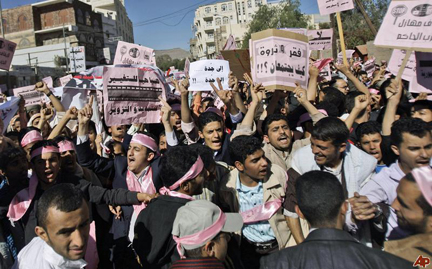
Abdullah Hamiddaddin will be providing a lecture entitle “Whither Yemen” on Thursday, March 31, 2011 at Columbia University in 208 Knox Hall from 12:30-2:00 pm. the discussion will be about how to frame the current struggle in Yemen, the importance of tribal politics, and the overrated threat of al-Qaeda in the Arabian Peninsula. This is sponsored by Columbia’s Middle East Institute.

For more details, click here:

When in Paris


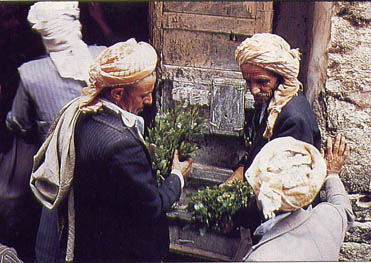
Qat market in Yemen; photograph by Pascal Maréchaux

For anyone reading this in Paris, I am giving a talk in the afternoon on qat in Yemen. Here are the details:

CONFÉRENCE
Prof. Dan Martin Varisco (Anthropologie, Hofstra university)
Qāt, Sex and Traditional Healing / Qāt, sexe et médecine traditionnelle

Abstract/Résumé
There is a substantial corpus of analysis about “Catha edulis”, or qāt in Arabic, both for Yemen and East Africa. Much of this focuses on the origin and distribution of the plant and its legality in an Islamic context. Prof. Varisco has previously published articles on both these aspects of the plant’s history. This talk will focus on the proposed medical benefits of qāt chewing in traditional Yemeni culture, with a focus on the issue of sexual
performance and libido. Although relatively late as an introduction into the medicinal and pharmacological literature, qāt was placed within the existing humoral system. Qāt was considered cold and dry, which explains why the recommended preparation for its use is eating a meal of ‘hot’ food like sorghum porridge or meat. Opinions differ about its impact on the libido. Prof. Varisco examine relevant historical sources (including legal
and medicinal texts), ethnographic accounts, poetry and contemporary scientific analysis of “Catha edulis” for his talk.

Un corpus est déjà constitué sur le qāt ou Catha edulis, aussi bien pour le Yémen que pour l’Afrique de l’Est. Il porte essentiellement sur l’origine et la distribution de cette plante, ainsi que sur son caractère légal en Islam. Ces deux aspects ont déjà fait l’objet de plusieurs publications du Prof. Varisco. Dans sa conférence de Paris, il s’intéressera plutôt aux vertus médicales du qāt, selon la culture yéménite, en particulier aux performances sexuelles et l’accroissement de la libido qu’il est considéré procurer. Bien que le qāt ait été introduit dans la théorie médicale et pharmacologique de manière tardive, il n’en fait pas moins partie du système des humeurs. Il est classé parmi les matières froides et sèches, ce qui explique qu’il doive être absorbé avec des mets Ë‹chaudsËŠ, tel que brouet de sorgho ou viande. Cependant, les opinions varient à propos de son effet sur la libido. Pour les besoins de sa communication, le Prof. Varisco aura donc recours à des sources historiques variées, incluant les textes légaux et médicaux, à des relevés ethnographiques, à la poésie et, enfin, aux analyses scientifiques contemporaines de « Catha edulis ».

La conférence se tiendra le 10 mars 2011 entre 15h et 17h, à l’Institut National d’Histoire de l’Art (INHA), en salle Vasary, Paris, France

2011 RIFT VALLEY INSTITUTE FIELD COURSES


Dhow near Lamu at sunset

2011 RIFT VALLEY INSTITUTE FIELD COURSES:
SUDAN, HORN OF AFRICA AND GREAT LAKES

SUMMARY

This year’s Rift Valley Institute field courses stress the historical background to political developments in the region: the two-state future in Sudan, the effect of recent and upcoming elections in the Great Lakes, and the continuing challenges to political evolution in the countries of the Horn of Africa. The courses are seminar-based, one-week, high-intensity events to be held between May and July. Faculty includes internationally-known regional specialists, researchers and civil society activists from Sudan, Ethiopia, Somalia, Rwanda, Burundi, and the DRC.

The application deadline for all courses is Monday 28 February. You can apply online here.

Summaries of each course are included below. Prospectuses containing further details are attached to this message and can be downloaded from www.riftvalley.net/courses. (Or write to courses@riftvalley.net.)

DATES AND GENERAL INFORMATION

Dates for this year’s courses are as follows:

The Sudan Course, Wednesday 25 May to Tuesday 31 May, in Rumbek, Southern Sudan.

The Horn of Africa Course, Saturday 4 to Friday 10 June in Lamu, Kenya.

The Great Lakes Course, Saturday 9 July to Friday 15 July in Bujumbura, Burundi.

The courses are intensive, graduate-level, residential programmes. They are designed for local and expatriate peacekeepers, aid workers, diplomats, researchers, campaigners, business people and journalists.Taught by leading regional and international specialists, the courses provide a fast-track introduction to the history, political economy and culture of a country or region, challenging assumptions and offering new perspectives on politics, development and other current issues. Continue reading 2011 RIFT VALLEY INSTITUTE FIELD COURSES

Camels in Vienna


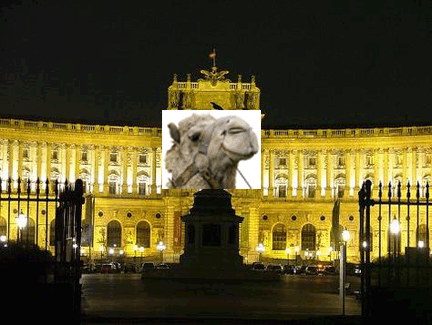
Today I am leaving for Vienna and the forthcoming “Camels in Asia and North Africa
Interdisciplinary workshop” to be held Tuesday & Wednesday 5-6 October, 2010 at the
Austrian Academy of Sciences, AAS, Dr.-Ignaz-Seipel-Platz 2, 1010 Vienna. If you have an interest in any aspect of camels and are near Vienna, Austria, you might want to join in.

Here are the details, also available in pdf from the website.

This workshop aims at a comprehensive discussion on Old World camels (Dromedary and Bactrian camel) including the following topics:
• Origin and domestication
• Conservation of the wild Bactrian camel
• Veterinary folk medicine
• Socio-economic significance: Breeding, caring, trading
• Art: Petroglyphs, poetry and music
• History and Symbolism of camels in Asia and Austria

These issues will be addressed by scholars from the natural sciences as well as from the social sciences and humanities Continue reading Camels in Vienna

IMANA Conference at Hofstra University


The Islamic Medical Association of North America (IMANA) and the Muslim Chaplain’s Office of Hofstra University invite you to attend the 2010 IMANA-Hofstra Ethics Symposium, September 17-18, 2010. The symposium’s theme is End of Life Issues: Ethical and Religious Perspectives.

Intended audience are physicians, especially those in critical care medicine, emergency medicine, maternal fetal medicine and neonatology, medical bioethicists, chaplains, students in these fields and interested individuals.

Full details, including registration, are available on the conference website. For more information, contact the conference co-director Dr. Hossam E. Fadel.

Hofstra University is located in Hempstead, New York, accessible by the LIRR from Penn Station. All sessions take place in the Multipurpose Room 0101, Student Center.

The conference schedule is provided below: Continue reading IMANA Conference at Hofstra University

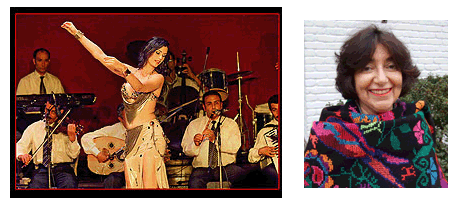
Dance Workshop & Discussion: Leila of Cairo and Anthropologist Najwa Adra


Leila, left; Dr. Najwa Adra, right

Dance Workshop & Discussion: Leila of Cairo and Anthropologist Najwa Adra
Wednesday, September 1, 2010 6:00 pm at Alwan for the Arts

Workshop: 6:00-8:30 pm
Discussion: 8:30-10:00 pm

This evening of dance and discussion provides an opportunity much needed in the bellydance scene: to both embody the feeling of Egyptian raqs sharqi through movement and music, and also to speak to the controversial issues surrounding the dance through dialogue with experts. Alwan welcomes acclaimed dancer Leila of Cairo, and esteemed scholar Najwa Adra, to kick off its 2010-2011 season of culturally contextualized, quality dance and performance.

Dance Workshop with Leila of Cairo

Understanding Classical Egyptian Music for Dance

6:00-8:30 pm

The historic songs of Oum Kalthoum, Abdel Halim Hafez and Warda can be intimidating for dancers of all levels. Join Leila as she navigates through the musical structure of these complex compositions. Explore Egyptian versus Western interpretation of these songs, and utilize Egyptian technique to express the music and ultimately, yourself, within the dance.

Take advantage this rare opportunity to learn with Cairo-based, American-born Leila, who has won over Egyptian audiences with her dance, film and stage appearances.

Discussion with Najwa Adra PhD and Leila

Raqs, What’s the Point? Diverging Bellydance Traditions in Egypt and the U.S.

8:30-10:00 pm

This discussion focuses on differences of perception, meaning, context and technique of the dance known simply as raqs or raqs sharqi in the Arab world, and as bellydance in the US. Leila draws upon her experiences as a US-born dancer who has an exceptionally successful career as a performing artist in Eygpt, while Najwa highlights related issues from her fieldwork research, writings and lifetime of participating in social dance traditions of the Arab world. The talk-back will touch upon notions of authenticity, cultural appropriation and orientalization in the dance. Come with questions and comments! Continue reading Dance Workshop & Discussion: Leila of Cairo and Anthropologist Najwa Adra

Last day in Lamu


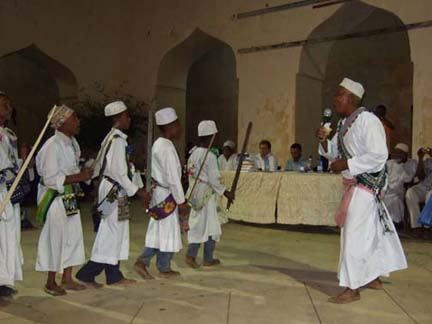
Chamba dance in Lamu Fort

I am sitting in the lobby of Lamu House on the delightful Swahili island of Lamu, my last day after a seminar sponsored here by the Rift Valley Institute on the Horn of Africa. On Wednesday night I attended a reception given by the Lamu museum and other respected officials and members of Lamu town. The highlight of the evening was a performance in “The Fort” of the Chamba wedding dance, a slow-moving line dance with swords and sticks held steadily. On Saturday I went on a dhow trip with Captain Abu (anyone going to Lamu should ask for Abu; he is superb and knows the area well, and the Rasta man Hasan is a fantastic cook) and met Muhammad Famou Othman, head of the dance troop, who took us on a tour of his village.

On Monday I delivered a talk to the Lamu community in The Fort. The talk was in English and I will post it here anon. But I also gave a brief introduction in Arabic, which was well appreciated. I would very much like to learn Swahili now and inshallah return to Lamu to do research on those here who have Yemeni ancestors.

My last day, chilling in a rather warm climate but with a strong breeze.