Category Archives: Gender and Sexuality

Lechery, Immodesty and the Talmud


Lechery, Immodesty and the Talmud
By DOV LINZER, The New York Times, January 20, 2012

IS it possible for a religious demand for modesty to be about anything other than men controlling women’s bodies? From recent events in Israel, it would certainly seem that it is not.

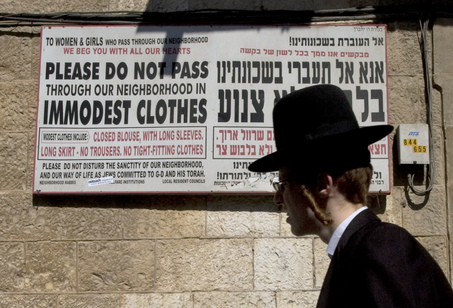
Last month, an innocent, modestly dressed 8-year-old girl, Naama Margolese, living in Beit Shemesh, described being spat on and vilified by religious extremists — all men — who believed that she did not dress modestly enough while walking past them to the religious school she attends. And more and more, public buses in Israel are enforcing gender segregation imposed by ultra-Orthodox riders in and near their neighborhoods. Woe to the girl or woman who refuses to move to the back of the bus.

This is part of a larger battle being waged in Israel between the ultra-Orthodox and the rest of Israeli society over women’s place in society, over their very right to have a visible presence and to participate in the public sphere.

What is behind these deeply disturbing events? We are told that they arise from a religious concern about modesty, that women must be covered and sequestered so that men do not have improper sexual thoughts. It seems, then, that a religious tenet that begins with men’s sexual thoughts ends with men controlling women’s bodies.

This is not a problem unique to Judaism. But the Talmud, the basis for Jewish law, offers a perhaps surprising answer: It places the responsibility for controlling men’s licentious thoughts about women squarely on the men.

Put more plainly, the Talmud says: It’s your problem, sir; not hers. Continue reading Lechery, Immodesty and the Talmud

The Islamic World’s Nude Spring


Aliaa Mahdy

by Joseph Mayton, bikyamasr, December 6, 2011

Egypt’s revolution has stalled. Islamists have taken the lion’s share of the first round of voting. In Tunisia and Morocco, large gains by the Islamists have seen women begin to question their future in conservative societies. Aliaa Mahdy changed the global perspective on how women are viewed in the Arab world, when she posted in November a full-frontal nude photo of herself on her blog.

The posting of her naked body left Egyptians and Arabs angry. Hate and condemnation quickly followed. Ironically, despite all the hatred purported in her direction, millions of people logged onto her blog to see her picture, with even lewd comments being posted.

For Mahdy, it was a symbolic protest against the status of women in Egypt and across the Arab world. She said enough to the centuries of male-domination meted out to women in the country and the region. It was the beginning of the Islamic world’s “Nude Spring” and launched a debate over women’s rights, or rather, “what is appropriate for women.” Continue reading The Islamic World’s Nude Spring

The picture


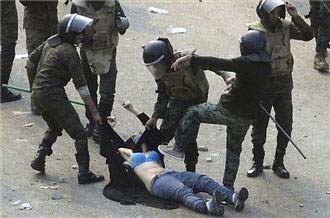
Beating a female protester in Cairo, Reuters

There it is above: the picture that sums up the resistance to political renewal more than any other image possibly could. It has been flashed across the world: a woman’s body exposed to anonymous male aggression. The issue is less the moment of an ongoing event which has riveted attention for almost a year than its symbolic depth. There are other images of security men beating protesters, including women. There are far more brutal shots of bloodied corpses and disfigured bodies. But this is the kind of picture that launches a thousand and one more protesters. Not only within Egypt. It is the kind of image that should shock us all, because it exposes an ugly truth we do not want to admit.

This is the kind of picture where the meaning far outstrips the specifics of the event. We do not know, nor do most people want to know, who she is or what she said or why she was singled out (if she was the only one), because she stands for the fragility of all protests against raw power. The reality is that force is entrenched. The purpose of military and security is to implement the policy of those who define power. Yes, there are revolutions and mutinies, but the need to control always wins out after a political house is “cleaned.” At times the power enforcers will give a little, but there is a point at which the batons are brandished and blood pours from the bodies of those who dare defy power.

What could this woman, dressed in the symbol of supposedly protective modesty — the hijab — have done to receive such treatment? Did they think she concealed an AK-37 beneath her black cover? Did they think any woman on her own posed a danger to men armed with crowd control equipment? Did they stop and think she is somebody’s daughter, probably somebody’s sister, perhaps someone’s wife or mother? No, because that is the ultimate tragedy of controlling protests, whether here on a Cairo street or a policeman spraying Occupy Wall Street young women with pepper spray. The only thing different this time is that the moment has been captured on film. It will never really be over, but replayed over and over again as a reminder that the violence never ends against those who dare protest a monopoly on violence.

While this beating was happening, several Egyptian protesters were killed and far more people were being eliminated in Syria. Such deaths are a daily occurrence in Yemen. Iraq and Afghanistan have not ceased to be killing fields. So why does this particular image have such power? Perhaps because it can resonate on all sides. For the liberal here is the epitome of woman’s ultimate lack of defense against male power. She had not stripped her own clothes off; she came to the square in the modest dress that was supposed to protect her, to set her off as immune to such actions. For the conservative here is the shame of exposing the body of a woman in public, not that of a criminal or a sorceress but a woman who dressed Islamically.

But there is another angle to this image that goes far beyond Egypt. Men virtually everywhere expose women’s bodies for their own perceived needs. On a gender scale the only real difference between this image and a simulated sex attack in a pornographic shot is that the woman is acting for money in the latter. But in both cases the message is that men are the ones who control women. It is a male power play to clothe the woman in any kind of dress and it is an ultimate male right to remove those clothes to suit his own purpose. A woman’s body is for the male to define. The young Egyptian blogger who posed naked, or nearly so, to speak up for freedom over her own body was roundly criticized by liberals and conservatives alike for rocking the voting public’s boat. How dare she defy the norm and expose her body voluntarily. It would only give more votes to the Islamic parties: such was the fear. But the issue is never really about the naked body, which men desire at almost any cost, but the fact that a woman dared defy the demanding male gaze by not letting the male strip her unilaterally or commercially. Look at the image above and look at the image of the blogger. If you see no difference, than you are the baton the security men wield against a defenseless body.

Daniel Martin Varisco

This commentary has been reposted on muftah.org.
Will Saudi Women Lose Their Virginity En Masse If They Start Driving?


by Melody Moezzi, MS.blog Online, December 3, 2011

My first thought is “no,” followed by a swift “none of your business.” But that wasn’t the conclusion of a recent report prepared for Saudi Arabia’s legislative assembly by a well-known academic. He predicted that if Saudi women were given the right to drive, those who had never had sex would quickly start losing their virginity as easily as they might their car keys.

Let’s start with the basics here: It’s a hell of a lot harder to lose your virginity in the front seat, as opposed to the back. Especially while driving. I mean, it’s difficult enough to text and drive.

But if that isn’t enough to sway the Saudi government, I recently polled several of my female friends, and I’ve come up with a report of my own. I submit the following report to the Saudi legislative assembly, which I suspect is far more scientific than the aforementioned prominent academic’s: NONE of the friends I polled, a large number of whom happen to be Muslim women originally from the Middle East, has lost her virginity while driving. Nor did a single one of them lose her virginity immediately after obtaining a driver’s license. Shocking, I know. Continue reading Will Saudi Women Lose Their Virginity En Masse If They Start Driving?

English and the Hijab in Cairo

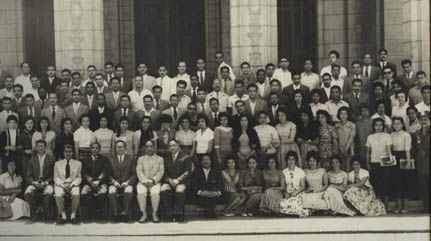
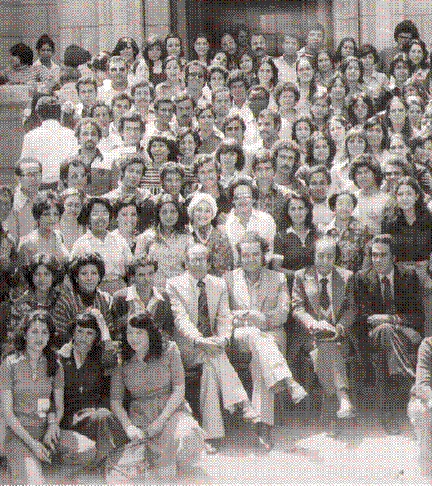
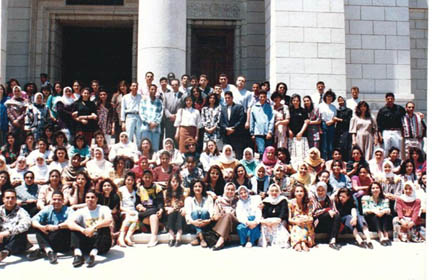
The ongoing political protests in Egypt have captured the imagination of people everywhere. A dictator is toppled and young people twitter their way into a people power not imaginable in the past. And now actual elections with more than 40 parties involved. The final results of the transition are yet to be felt, as many observers fear that there will be a conservative religious regime which will impose more restrictions on women, people’s expressive behavior and non-Muslim minorities. Egypt’s recent past is reflected in a post-Nasser conservative shift that Sadat originally encouraged and that eventually even Mubarak could not control. A visual portrayal of this can be seen in the pictures below of students graduating from the English Department of Cairo University in 1959, 1978 and 2004. Note the fashioning of a more conservative approach even to English literature over the past five decades.


Class of 1958


Class of 1978


Class of 2004

Heather Raffo at Hofstra


“Art as Cultural Diplomacy – performance and talk with Heather Raffo”
Wednesday 10/26, 8PM in the Cultural Center Theater
as part of the Day of Dialogue

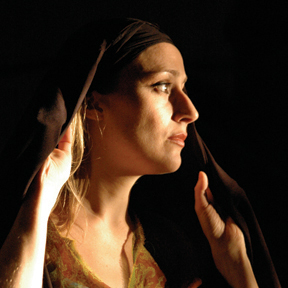
Celebrated actress and Playwright Heather Raffo comes to Hofstra University for discussion about the role theater plays in our understanding of contemporary war. Through the performance and discussion of selected monologues from her acclaimed play 9 Parts of Desire about the lives of Iraqi women, Raffo, takes the audience deep into the heart of why theater can best communicate the complex issues still facing Iraq and America today.

Heather Raffo is the recipient of a Susan Smith Blackburn Prize Special Commendation and the Marian Seldes-Garson Kanin Fellowship for her play 9 Parts of Desire. Most recently she has received a 2005 Lucille Lortel award for Best Solo show as well as an Outer Critics Circle Nomination and a Drama League nomination for Outstanding Performance. Premiering in 2003 in, Edinburgh, the play then moved to London, where critics hailed it as one of the five best plays in London in late 2003. It ran for nine sold out months in New York City before touring the U.S. and internationally. Heather has also performed widely in a range of celebrated productions in NY and beyond, earning a Drama League Nomination among other accolades. She has also offered discussion-presentations in a variety of educational settings. She received her BA from the University of Michigan, her MFA from the University of San Diego and studied at the Royal Academy of Dramatic Art, London. Originally from Michigan, Heather now lives in New York. Her father is from Iraq and her mother is American. For more information, see http://www.heatherraffo.com/

Co-sponsored by the Women’s Studies Department, Middle Eastern and Central Asian Studies Program (MECA), The Center for Civic Engagement, Comparative Literature and Languages, and Dance and Drama

The Peace Push and Shove

As readers of Tabsir can easily see, I am no friend of dictators or military rulers masquerading as democratic demagogues. The fall of Ben Ali, Mubarak and Qaddafi is a welcome sign, even though it is not clear that the people will be able to achieve the kind of government most want. In Yemen the handwriting and a smatter of twittering is on the wall for Ali Abdullah Salih. He has held on to power far too long, allowing for an ugly power grab that could have been avoided if he had done the noble thing and stepped aside earlier, when given ample chance. But Salih is not Asad and Yemen is not Syria. The swell of the Arab Spring has somehow thrown all the dictators into one soup, one overly ladled with self-righteous indignation. Hatred for the man at the top is clouding the pragmatic need for effective political reform.

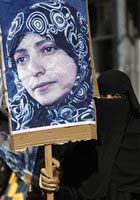
Yesterday the recent Nobel Peace Prize recipient, Tawakkul Karman, came to New York and demonstrated outside the U.N. It should be noted that her efforts in Yemen, as one among many individuals organizing the widespread protests, have not yet resulted in the exit of Salih or the emergence of a new viable government. Since she is now center stage as a symbol of peaceful protest, it is strange that she would leave Yemen and vow to stay in New York until Salih’s assets are frozen and he is put on trial in The Hague. Does she really think that this is a bargaining point? Receiving a peace prize is indeed a great honor, but it hardly makes someone into an effective powerbroker. The last thing Yemen needs at this time is for the United Nations or the United States to meddle into the political mess by dictating rather than working with the various Yemeni parties in negotiation. Karman is opposed to the GCC transition proposal because it grants immunity to Salih, but is it really so important to seek revenge on the man at the top when the entire governmental system has been corrupt and military men like Ali Muhsin have as much blood on their hands as the president? Continue reading The Peace Push and Shove

Tabsir Redux: Earth-shaking cleavage

Violence, scandal and sex: the media feed us a daily diet and we lap it up like faithful mutts willing to chase any sensationalized bone thrown our way. So when an Iranian cleric says something ludicrous to our sectarian ears, it is all the more newsworthy because it is so entertaining. But after the recent loss of life in Haiti, Chile and China, is it really a laughing matter when a far-off cleric blames natural disasters on God’s wrath over human behavior? Consider an AP story which broke on April 19 and was submitted, ironically, by a reporter with the first name of Scheherezade (her namesake could spin a tale almost to death). Here is the bait:

Iranian cleric: Promiscuous women cause quakes

By SCHEHEREZADE FARAMARZI (AP) – Apr 19, 2010

BEIRUT — A senior Iranian cleric says women who wear revealing clothing and behave promiscuously are to blame for earthquakes.

Iran is one of the world’s most earthquake-prone countries, and the cleric’s unusual explanation for why the earth shakes follows a prediction by President Mahmoud Ahmadinejad that a quake is certain to hit Tehran and that many of its 12 million inhabitants should relocate.

“Many women who do not dress modestly … lead young men astray, corrupt their chastity and spread adultery in society, which (consequently) increases earthquakes,” Hojatoleslam Kazem Sedighi was quoted as saying by Iranian media. Continue reading Tabsir Redux: Earth-shaking cleavage