All posts by tabsir

Syrian Refugees in Lebanon


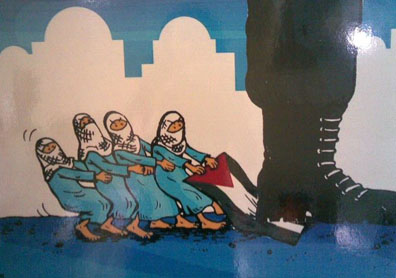
Image from Museum of Resistance in Lebanon; photograph by Estella Carpi

Syrian refugees in Lebanon: when the Apollonian cannot expect anything from the Dionysian

by Estella Carpi

While based in Lebanon, I personally find no way of getting out of the emotional whirlwind of suffering that the Syrian revolution, the merciless state repression and the subsequent armament of the revolutionaries have been giving rise to for 18 months. Without aiming at prematurely assessing the size of the emergency response to the “Syrian humanitarian crisis”, I would like to discuss here the Lebanese phenomenological approach to the current events by using the Syrian refugees’ lens.

Although used to regarding Syria as a model of stability and harmony, and as a place where people allegedly identify through the imposed order, the Lebanese suddenly find themselves taking care of the Syrian Leviathan. If Lebanon has always embodied the Dionysian, with its several war scars, social open wounds and its incontrollable emotionalities, Syria has always represented the rational, organized and balance-keeper Apollonian to the outsider’s eye. Continue reading Syrian Refugees in Lebanon

Finally, Indonesian Outrage Looks Productive


by Kevin Fogg

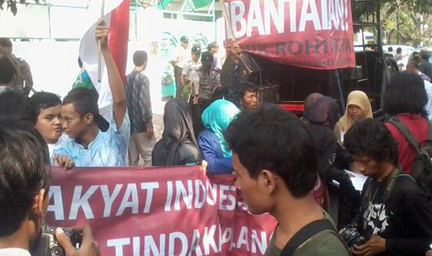
In the last week, as protests have flared around the Muslim world about the film Innocence of Muslims, Indonesia has not been left out. Protests in Jakarta and Surabaya (the capital and second largest city, respectively) on Friday and Saturday were led by the group Hizbut Tahrir. Today more violent protests flared at the US Consulate in Medan and again at the US Embassy in Jakarta, where police arrested four instigators from the frequently-unruly group Front Pembela Islam (Islamic Defenders’ Front).

Since democratization in 1998, Indonesians (especially those in Jakarta, but also in other cities) have not been shy about protesting. Protests in front of the American Embassy (which also faces the central square in Jakarta and the site of most major protests) are not uncommon, but other countries are also frequently the target of protests, including majority-Muslim countries like Malaysia. Most of these protests about overseas issues have no impact on government policy, or on the issues that they are protesting about, but one case this summer shows the flip side of the coin: protests that became productive in international relations

Indonesians were outraged at news in June and July about sectarian clashes involving the Muslim Rohingya minority in Burma. These deaths were not the worst in the ongoing struggles of the Rohingya–involving denied refugee status, limitations on international aid, years of discrimination, and other woes–but the opening of the press in Myanmar allowed news on the conflict, which fed into Indonesian Muslim outrage. Not sparing anyone in their anger, Indonesians even loudly criticized Nobel Prize Winner Aung San Suu Kyi for not paying enough attention to this issue. This led in August to several demonstrations across the country, even including the leader of the national Indonesian Ulama Council. Indonesian attention has kept up since the initial news, too, with the largest Islamically-minded paper in the country hosting a special page for news on the “Rohingya Tragedy,” with new articles almost every day. Continue reading Finally, Indonesian Outrage Looks Productive

Buried Cities Recovered #3


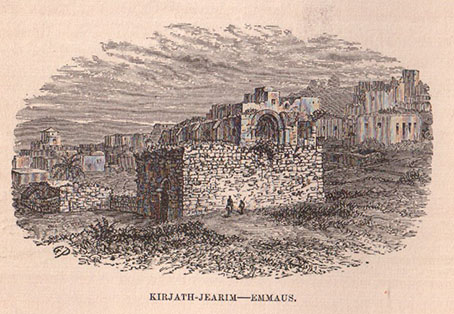
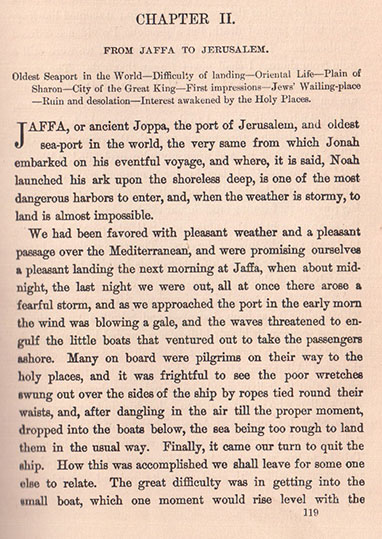
In a previous post I continued a thread on a 19th century Bible Lands text by Rev. Frank S. DeHaas. His account covers Egypt and Palestine. He entered Palestine at the port of Jaffa and discusses his disembarking, which he compares to the turmoil surrounding Jonah on the same sea, in the following passage. But it seems the crowded streets of Jaffa did not inspire the kind of reverence he wanted from traversing on holy ground. So he was quite glad to be out and out where the patriarchs trekked…


Continue reading Buried Cities Recovered #3

Foot[ball] in mouth disease


A division of labor: ultras wage parallel battles to shape Egypt’s future

By James M. Dorsey, The Turbulent World of Middle East Soccer, September 16, 2012

Militant soccer fans of arch rival Cairo soccer clubs Al Zamalek SC and Al Ahly SC represent two sides of the same coin in the forefront of a struggle for the future of Egypt.

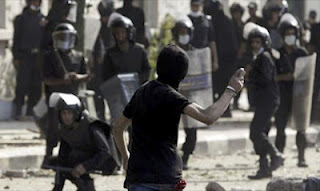
Militants of the Ultras White Knights (UWK), the Zamalek support group, are locked near the US embassy in Cairo into vicious street battles with police and security forces, one of a string of confrontations since last year’s toppling of president Hosni Mubarak. In the ultimate analysis, their struggle aims to force reform of Egyptian law enforcement, the country’s most despised institution, which is widely seen as the brutal enforcers of Mr. Mubarak’s repressive regime, even if those on the battlefield often express their goal in simpler terms of revenge and settling scores.

On the other hand, Al Ahly militants, who together with UWK played a key role in ousting Mr. Mubarak as well as in subsequent street battles that have left scores dead and thousands wounded, have turned their ire on the management of their club in an effort to combat corruption in Egyptian soccer.

Neither battle is easy but achieving victory in the struggle in which UWK has taken the lead is likely to prove far more difficult than turning soccer into a model for the fight against corruption in Egypt and removing the remnants of the Mubarak era. Continue reading Foot[ball] in mouth disease

Mitt miffs the tweets


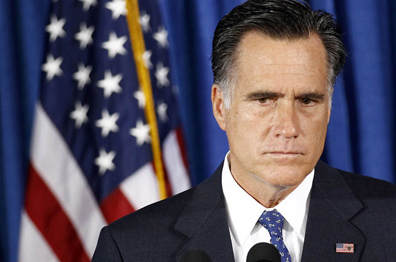
US Republican presidential nominee Mitt Romney listens to questions on the attack on the US consulate in Libya, in Jacksonville, Florida, September 12, 2012. [Reuters]

Romney poses, as militants burn a US consulate over Islamophobic film

By Juan Cole, Al Jazeera, September 14, 2012

As Mitt Romney misfires on the campaign trail; scholar argues that the events in Benghazi are atypical of the new Libya.

Predictably, Republican presidential candidate Mitt Romney tried to make political hay of the tiny demonstrations in Cairo and Benghazi by Muslim militants. The Benghazi mob turned violent in clashes with police and the consulate ended up being burned and an embassy staffers being killed.

Romney seized on the frantic tweets of the Cairo embassy, which condemned the sleazy Youtube videos by American Islamophobes that had provoked the ire of the crowds, as evidence that the Obama administration was sidingwith the attacking mobs. First of all, really? Romney is trying to get elected on the back of a dead US diplomat? Second of all, really? He thinks the State Department thought the attack on themselves was justified? Third of all, really? Romney is selective. When it comes to Christianity, Romney decries a ‘war on religion.’ But apparently he thinks there *should* be a war on Islamic religion. Romney’s intervention (he is just a civilian at the moment) in American foreign policy is unwise and risky, not to mention distasteful. Continue reading Mitt miffs the tweets

Beyond religion in the Middle East


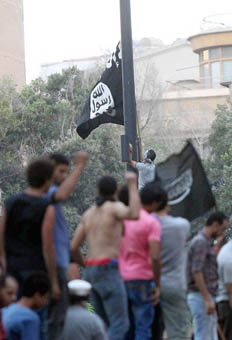
An Egyptian protester tries to raise an Islamic flag at the U.S. embassy during a protest, in Cairo, Egypt on September 11, 2012. (Khaled Elfiqi / EPA / September 13, 2012)

Violence in Egypt and Libya is more about local politics than Islam.

By Mimi Hanaoka, LA Times, September 13, 20121

The chaotic violence that killed U.S. Ambassador J. Christopher Stevens and three American staffers in Libya, and that resulted in a mob storming the U.S. Embassy in Cairo, has been garbed in religious language and references. However, the religious rhetoric from all corners distracts from the real issues: serious domestic political fragmentation in Libya and Egypt in the aftermath of the Arab Spring, and America’s place in the region.

Media attention has focused on a polemic 14-minute movie trailer for “Innocence of Muslims” posted on YouTube, which prompted protests in Benghazi and Cairo. The film was allegedly produced by Sam Bacile, who has identified himself as an Israeli Jew. In the Wall Street Journal, Bacile called Islam a “cancer” and claimed he raised $5 million from about 100 Jewish donors to fund the film, details that only intensify the film’s polemic power.

The trailer, translated into Arabic and viewed thousands of times in the Middle East, portrays the prophet Muhammad as, among other things, a child abuser. Florida pastor and provocateur Terry Jones, who burned the Koran in 2011, claims to have screened the film; a self-described Christian militant in California claims to have consulted on it. Continue reading Beyond religion in the Middle East

The Politics of Cinematic Hate

Yesterday was the 11th anniversary of the tragic loss of life on 9/11, the ugly outcome of hate in which people who had personally done nothing to offend the perpetrators lost their lives. Today we awake to hear that the American ambassador to Libya is dead; the American flag at the U.S. embassy in Cairo is torn to shreds. This is the same American diplomat who aided the Libyan revolution against Qaddafi; this is the same flag that is synonymous with the political notion of democracy. In both cases yesterday it was not a response to anything the United States government did or authorized, nor to any military action. A hate film, and a very poorly done one at that, had been posted on the Internet in which Islam and the prophet Muhammad are portrayed in an extremely negative way. The film, an excerpt of which can be seen here, is pathetic both as cinema and for its almost comical portrayal of Muslims. But it has provided an excuse for militants to once again harp on the specter of the United States against the Muslim world.

Were this film from a religious nutcase like Terry Jones, I suspect it would not have garnered as much attention. But it appears that the maker of the film is an Israeli backed by Jewish donors and promoted by an anti-Muslim Copt in California. How perfect is that for a conspiracy plot. Hateful films do not have to be good cinema to fuel hateful responses. But this time it is the role of the Internet that fuels the fire. Anyone can post a malicious film on Youtube and have it circle the globe in an instant. The solution is not to ban the Internet, which is impossible, nor to justify the actions of those who turn their anger into a killing spree. It is not possible to stop a Terry Jones from burning the Quran or any cinematic venom from being posted (at least temporarily), so the onus falls back on our own ethics. We need to think beyond the politics of hate, which have not been unleashed with a fury, to the politics of restraint.

Buried Cities Recovered #2


In a previous post I began a thread on a 19th century Bible Lands text by Rev. Frank S. DeHaas. This is a typical devout travel account for an American audience by an author who served both a political and religious role. The frontispiece shows the American consulate opposite the Old City wall, shades to come of where the American Embassy might locate if Romney is elected President in November.

Here is his Introduction…


Continue reading Buried Cities Recovered #2