All posts by tabsir

Tabsir Redux: The Cynical Dairy Farmer’s Guide to the New Middle East


BY Karim Sadjapour, Foreign Policy, June 15, 2011

How a couple of cows explain a changing region: equal opportunity offender edition.

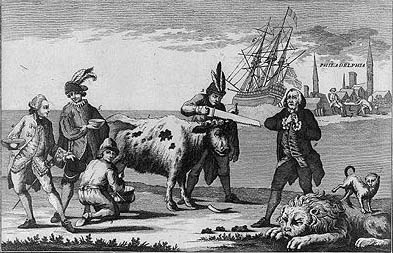
In the early years of the Cold War, in an effort to simplify — and parody — various political ideologies and philosophies, irreverent wits, in the spirit of George Orwell, went back to the farm. No one really knows how the two-cow joke known as “Parable of the Isms” came about, but most students of Political Science 101 have likely come across some variation of the following definitions:

Socialism: You have two cows. The government takes one of them and gives it to your neighbor.

Communism: You have two cows. The government takes them both and provides you with milk.

Nazism: You have two cows. The government shoots you and takes the cows.

Capitalism: You have two cows. You sell one and buy a bull.

Over the years, the parables gradually expanded, using the two-cow joke to explain everything from French unions (You have two cows. You go on strike because you want three cows.) to the Republican Party (You have two cows. Your neighbor has none. So what?). While in its original iteration the cows were a metaphor for currency, capital, and property, they later began to take on different meanings.

Today, the Middle East has replaced the Cold War as America’s primary foreign-policy preoccupation. As opposed to the seemingly ideologically homogenous communist bloc, however, the 22 diverse countries that compose the modern Middle East are still confusing to most Americans. Why can’t the Israeli and Palestinians stop fighting already? What’s the difference between Libya and Lebanon again?

Herewith then is a satirical effort to simplify the essence of Middle Eastern governments so that, in the immortal words of George W. Bush, “the boys in Lubbock” can read it. And, rather than symbolizing property, the cows here symbolize people, which — funny enough — is how most Middle Eastern regimes have traditionally viewed their populations.

Saudi Arabia
You have two cows with endless reserves of milk. Gorge them with grass, prevent them from interacting with bulls, and import South Asians to milk them.

Iran
You have two cows. You interrogate them until they concede they are Zionist agents. You send their milk to southern Lebanon and Gaza, or render it into highly enriched cream. International sanctions prevent your milk from being bought on the open market.

Syria
You have five cows, one of whom is an Alawite. Feed the Alawite cow well; beat the non-Alawite cows. Use the milk to finance your wife’s shopping sprees in London.

Lebanon
You have two cows. Syria claims ownership over them. You take them abroad and start successful cattle farms in Africa, Australia, and Latin America. You send the proceeds back home so your relatives can afford cosmetic surgery and Mercedes-Benzes.

Hezbollah
You have no cows. During breaks from milking on the teat of the Iranian cow you call for Israel’s annihilation. Continue reading Tabsir Redux: The Cynical Dairy Farmer’s Guide to the New Middle East

Central Asia Archaeology Conference at Hofstra


Colloquium at Hofstra University
Art and Archaeology of Central Asia: Works in Progress
Saturday, January 26, Breslin Hall 105

Session I
11:00 am – 12:45 pm

Michael D. Frachetti
Washington University in St. Louis
Agriculture and Mining among Highland Mobile Pastoralists of Semirech’e (3000 – 1500 BCE)

Claudia Chang
Sweet Briar College, Virginia
Progress on the Archaeological Researches
on Iron Age settlements on the Talgar Fan

Perry Tourtellotte
Sweet Briar College, Virginia
Mortuary and Settlement Landscapes of the Iron Age:
Talgar Fan and Beyond

Lunch
12:45 pm – 1:30 pm

Session II
1:30 pm – 4:15 pm

Pavel Lurje
Hermitage Museum, St Petersburg, Russia
Personal Names throughout the History of Chorasmia

Fiona Kidd
Metropolitan Museum of Art, New York
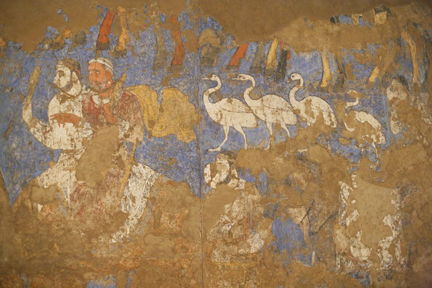
Some New Thoughts on the Procession Scene
in the Paintings of Akchakhan-kala

Anna Feuerbach
Hofstra University
Recent Research on Industrial Remains at Ancient Merv Continue reading Central Asia Archaeology Conference at Hofstra

Introducing IQSA


The International Qur’anic Studies Association (IQSA) was formed in 2012 as a consultation leading to an independent learned society for scholars of the Qur’an. The Society of Biblical Literature was awarded a grant for this consultation from the Henry Luce Foundation, which was announced [link to press release] on 29 May 2012. The founding directors of the IQSA steering committee are Gabriel Said Reynolds and Emran El-Badawi, with administrative support for the consultation and grant from John F. Kutsko.

The goal for the consultation is to form an independent, international, non-profit learned society, whose members include scholars of the Qur’an from universities and institutions around the world. This collaborative work involves meetings, publishing, and professional development. IQSA will be a network for a diverse range of scholars and educators, and it will serve to advocate for the field of Qur’anic studies, in higher education and in the public square. Its vision of Qur’anic Studies is interdisciplinary, and it seeks to involve specialists in literature, history, archaeology, paleography, and religious studies.

As such, IQSA is not just a professional guild for scholars; it also welcomes the participation of the public. Its diverse governing body and members come from Islamic as well as Western societies. A core tenet of IQSA is “mutual understanding through scholarship.”

The steering committee is preparing to launch IQSA as an independent organization during three-year consultation, which involves drafting its official charter and developing its program resources. Membership in IQSA will be open and unrestricted, and you are invited to become a part of the IQSA network.

Visitors are encouraged to join the IQSA e-mail list through the homepage.

The World’s Muslims


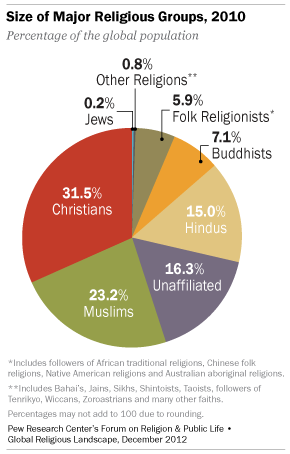
The Pew Foundation has recently released a major worldwide survey of religion. As can be seen from the basic breakdown, Christianity is the largest in number of adherents, with Islam in second place. Here is the discussion of Islam:

Muslims number 1.6 billion, representing 23% of all people worldwide. There are two major branches of Islam – Sunni and Shia. The overwhelming majority (87-90%) of Muslims are Sunnis; about 10-13% are Shia Muslims.8

Muslims are concentrated in the Asia-Pacific region, where six-in-ten (62%) of all Muslims reside. Many Muslims also live in the Middle East and North Africa (20%) and sub-Saharan Africa (16%). The remainder of the world’s Muslim population is in Europe (3%), North America (less than 1%) and Latin America and the Caribbean (also less than 1%). Continue reading The World’s Muslims

The School of Mamlūk Studies


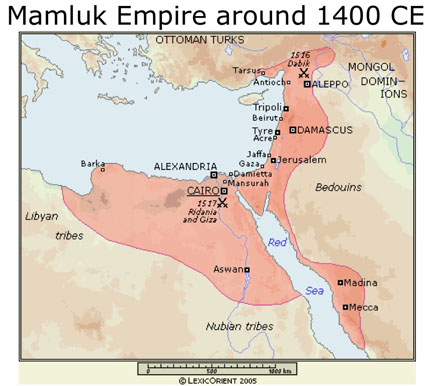
The School of Mamlūk Studies (SMS) is administered by the Universities of Chicago (Ill., USA), Liège (Belgium), and Venice (Italy), respectively represented by Marlis Saleh, Frédéric Bauden, and Antonella Ghersetti. It is currently based at the University of Chicago, where Mamluk-related projects such as Mamlūk Studies Review, the Chicago Online Bibliography of Mamluk Studies, and the Chicago Online Encyclopedia of Mamluk Studies are managed. The mission of SMS is to provide a scholarly forum for a holistic approach to Mamluk studies, and to foster and promote a greater awareness of the Mamluk sultanate (1250–1517). It aims to offer a forum for interdisciplinary debate focused on the Mamluk period in all its historical and cultural dimensions in order to increase, address, investigate, and exchange information and knowledge relevant to Mamluk studies in the broadest meaning of the term. Conceived as a meeting for scholars and graduate students working on any of the many aspects of the Mamluk empire, without neglecting its contacts with other regions, SMS offers to everyone working in the field of Mamluk studies the opportunity to attend annual conferences organized in turn by each of the three collaborating institutions.

The annual conferences will be organized around a general or a more specific theme which scholars will be invited to address. In addition, proposals for panels on other relevant subjects may be submitted by individuals, research teams, or institutions. Accepted panels will be held at the end of the thematic conference. On an irregular basis, SMS will also organize seminars in various fields (such as diplomatics, paleography, codicology, numismatics, epigraphy, etc.) which will be aimed at graduate students. These seminars will be planned to take place prior to or following the annual conference in the institution where the conference is held.

Papers presented at each conference on the selected theme will be published as a monograph, while papers presented at the panels will be considered for publication in Mamlūk Studies Review.

The first annual SMS conference is planned for 2014 in Venice. A call for papers will go out in 2013.

Tabsir Redux: Syrian Cuisine, Two Centuries Ago

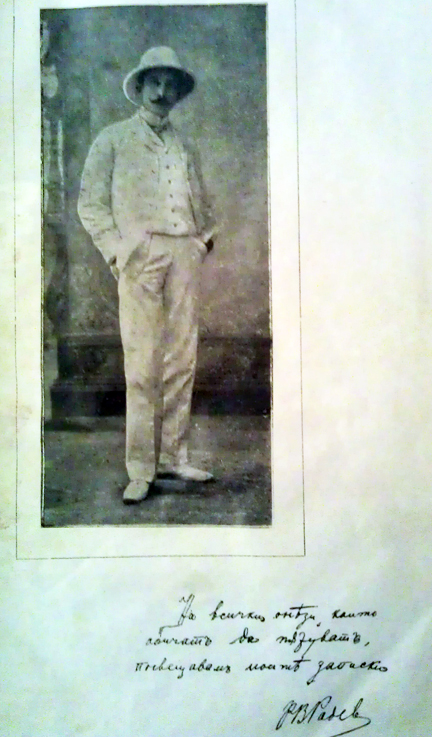
[Note: The following account is by the English traveler William Wittman, who commented on the foods and crops he saw while passing through the Levant in what was then Syria. The spelling is that of the original, from a time when proof reading was a distant concern and spelling was a democratic venture. The picture above is from the original 1803 edition.

Wherever the land is susceptible of cultivation, and has not been neglected, it affords abundant crops of wheat, barley, Indian corn (dourra), tobacco, cotton, and other productions. Fruits and vegetables are in equal abundance. Among the former are pomegranates, figs, oranges, lemons, citrons of an uncommonly large size, melons, grapes, and olives. The melons are large, and have a delicious flavour; as have also the grapes. of which we partook so late as the month of December, when we found they still retained their exquisite flavour. I have already adverted to the uncommon size of the water-melons, many of which weight from twenty to thirty pounds. they are a great and valuable resource to the inhabitants, who are so passionately fond of them, that, during the summer months, they form a great part of their subsistence. Notwithstanding they are as cooling and refreshing, as grateful to the taste, I was surprised to see the natives eat them in such immoderate quantities, without experiencing any unpleasant consequences. Continue reading Tabsir Redux: Syrian Cuisine, Two Centuries Ago

Illuminating Jewish Life in a Muslim Empire


A document attesting to the accounts of Abu Ishaq the Jew (1020-1021CE); The National Library of Israel

By Isabel Kershner, The New York Times, January 14, 2013

JERUSALEM — A batch of 1,000-year-old manuscripts from the mountainous northern reaches of war-torn Afghanistan, reportedly found in a cave inhabited by foxes, has revealed previously unknown details about the cultural, economic and religious life of a thriving but little understood Jewish society in a Persian part of the Muslim empire of the 11th century.

The texts are known collectively as the Afghan Geniza, a Hebrew term for a repository of sacred texts and objects.

The 29 paper pages, now encased in clear plastic and unveiled here this month at the National Library of Israel, are part of a trove of hundreds of documents discovered in the cave whose existence had been known for several years, with photographs circulating among experts. Remarkably well preserved, apparently because of the dry conditions there, the majority of the documents are now said to be in the hands of private dealers in Britain, Switzerland, and possibly the United States and the Middle East. Continue reading Illuminating Jewish Life in a Muslim Empire