All posts by tabsir

Syria Has a Massive Rape Crisis

by Lauren Wolfe, The Atlantic, April 3

One day in the fall of 2012, Syrian government troops brought a young Free Syrian Army soldier’s fiancée, sisters, mother, and female neighbors to the Syrian prison in which he was being held. One by one, he said, they were raped in front of him.

The 18-year-old had been an FSA soldier for less than a month when he was picked up. Crying uncontrollably as he recounted his torture while in detention to a psychiatrist named Yassar Kanawati, he said he suffers from a spinal injury inflicted by his captors. The other men detained with him were all raped, he told the doctor. When Kanawati asked if he, too, was raped, he went silent.

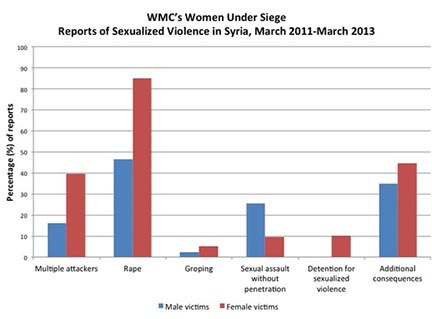
Although most coverage of the Syrian civil war tends to focus on the fighting between the two sides, this war, like most, has a more insidious dimension: rape has been reportedly used widely as a tool of control, intimidation, and humiliation throughout the conflict. And its effects, while not always fatal, are creating a nation of traumatized survivors — everyone from the direct victims of the attacks to their children, who may have witnessed or been otherwise affected by what has been perpetrated on their relatives.

In September 2012, I was at the United Nations when Norwegian Foreign Minister Espen Barth Eide shook up a fluorescent-lit room of bored-looking bureaucrats by saying that what happened during the Bosnian war is “repeating itself right now in Syria.” He was referring to the rape of tens of thousands of women in that country in the 1990s.

“With every war and major conflict, as an international community we say ‘never again’ to mass rape,” said Nobel Laureate Jody Williams, who is co-chair of the International Campaign to Stop Rape & Gender Violence in Conflict. [Full disclosure: I’m on the advisory committee of the campaign.] “Yet, in Syria, as countless women are again finding the war waged on their bodies–we are again standing by and wringing our hands.”

We said after the Holocaust we’d never forget; we said it after Darfur. We probably said it after the mass rapes of Bosnia and Rwanda, but maybe that was more of a “we shouldn’t forget,” since there was so much global guilt that we just sort of sat back and let similar tragedies occur since and only came to the realization later — we forgot.

Could we have forgotten that the unfolding human catastrophe in Syria exists before it’s even over? Continue reading Syria Has a Massive Rape Crisis

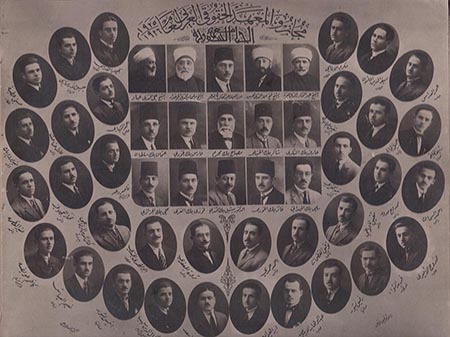
Islamic law in Syria: the Class of 1925-26


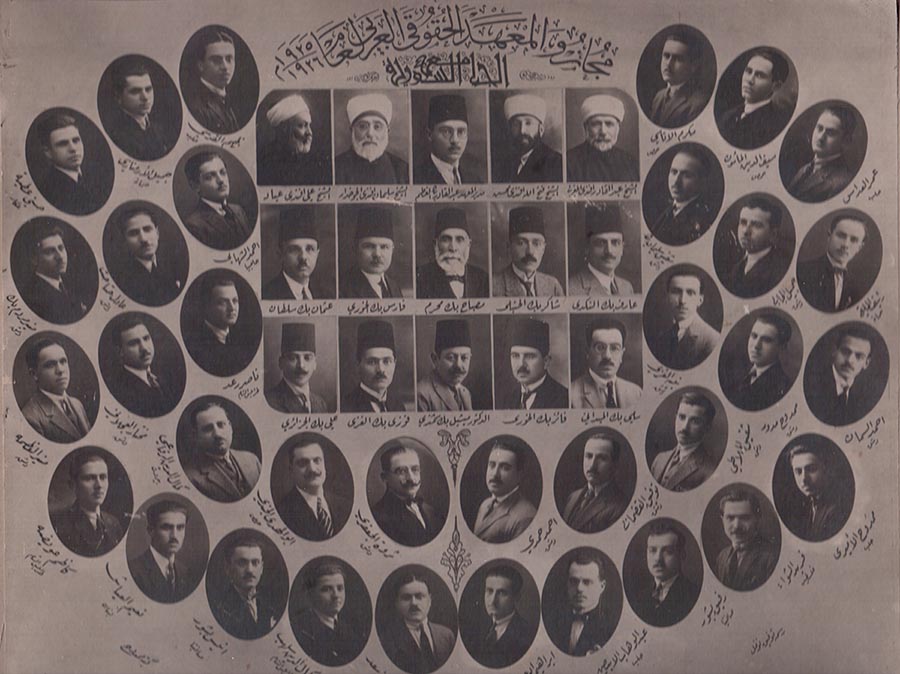
The graduating class surrounding their professors for the University of Syria’s Institute for Arabic Law in 1925-26; for a larger image, click here

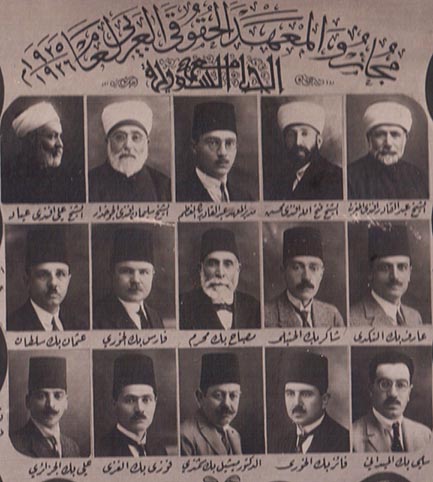
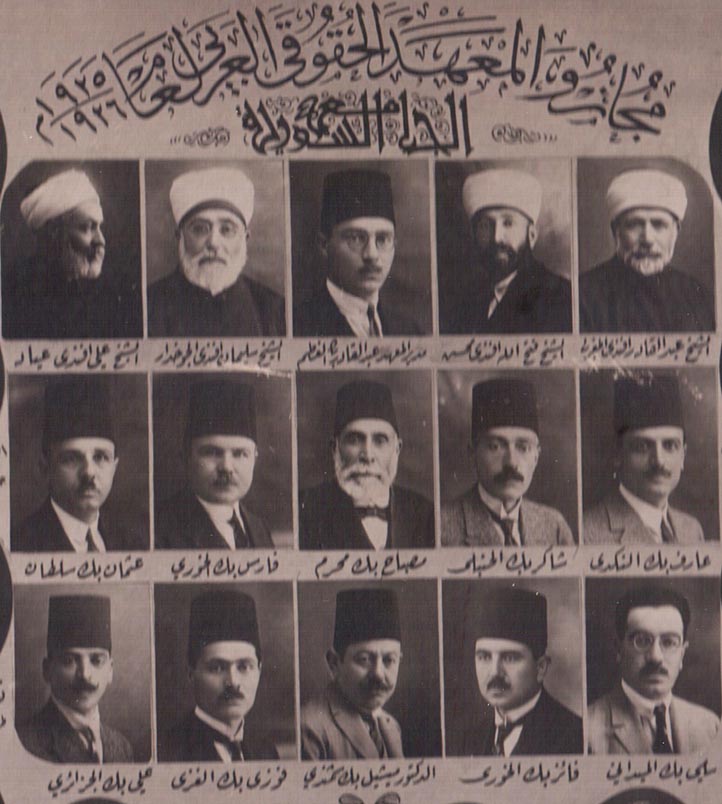
The image above shows the graduating class from the University of Syria’s Institute for Arabic Law in 1925-26. Among the professors is Fath Allah ‘Ali Adibe (top row, second from right), a graduate of al-Azhar and the grandfather of Dr. Najwa Adra. He is in the minority of professors sporting beards, although the moustache was clearly a necessity and only one of the scholars has a bare head and he is one of the few with spectacles. What is fascinating is the representation of the students, who are dressed entirely in Western suit and tie. About half have their moustache intact, with one showing a handlebar worthy of a Viennese gentleman. School graduation pictures like these are priceless. Would it not be a worthy project for someone or some school to archive these for the Middle East? Any takers out there?


The professors for the University of Syria’s Institute for Arabic Law in 1925-26; for a larger image, click here

Arabic Papyri Online in Utah


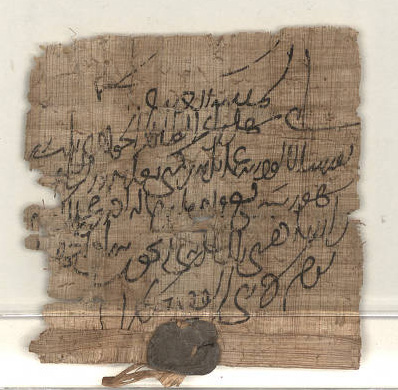
Arabic Papyrus #1564: Receipt for agricultural tax (1/3 of a dinar: from Ushmunayn in Middle Egypt. Compete scroll with seal in fine quality light brown papyrus. 9.3 x 8.3 cm written in black ink. Recto: 6 lines. In good condition. Verso: Two lines occupying the middle of the scroll. In good condition. 249 AH/863-4 CE

The Arabic Papyrus, Parchment & Paper Collection at the J. Willard Marriott Library, University of Utah is the largest of its kind in the United States. It contains 770 Arabic documents on papyrus and more than 1300 Arabic documents on paper, as well as several pieces on parchment.

Professor Aziz Suriyal Atiya, founder of the Middle East Center and the Middle East Library, compiled the collection. Dr. Atiya and his wife, Lola, purchased the collection over a period of several years from dealers in Egypt, Beirut, and London. The bulk of the collection originated in Egypt, in addition to a small group of fragments from the University of Chicago. A large number of pieces date to the period between 700 and 850 CE. The collection includes a significant number of documents from the pre-Ottoman period and thus offers unique source material on the political, economic, religious and intellectual life of Egypt during the first two centuries of Islamic rule and the period up to Ottoman domination.

Farid Esack in New York


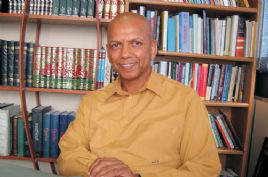
Farid Esack

The Academic Study of Islam and/in/for the Wounded Empire
A Lecture by Dr. Farid Esack
Fri, 5 Apr, 2013 4:00 PM – 6:00 PM

Union Theological Seminary
3041 Broadway at 121st Street
New York, NY 10027

The September 11, 2001 attacks in the USA significantly impacted Islamicists (scholars in the Study of Islam). These events contributed immensely to the growth of irenic scholarship, in which Islamicists increasingly dove into the trenches in order to help save Muslims and the image of Islam from the attacks of different quarters—primarily Western governments and armies and the mass media. This defensive engagement of the Islamicist, described as ‘bunker scholarship’, raises significant questions about fidelity to the post-Enlightenment foundations of critical scholarship. What is more, such scholarship often plays a significantly accommodationist role in co-creating compliant Muslim subjects in a larger hegemonic project.
About Dr. Farid Esack

Professor Farid Esack is a South African Muslim theologian who cut his teeth in the South African struggle for liberation. He studied in Pakistan, the UK and Germany and is the author of Qur’an, Liberation and Pluralism, On Being a Muslim, An Introduction to the Qur’an, and Islam, HIV & AIDS –Between Scorn, Pity & Justice. He has published on Islam, Gender, Liberation Theology, Interfaith Relations, and Qur’anic Hermeneutics. Professor Esack served as a Commissioner for Gender Equality in South Africa and has taught at the University of Western Cape, University of Hamburg, the College of William & Mary, Union Theological Seminary, and Xavier University in Cincinnati. More recently he served as the Prince Al-Waleed Bin Talal Professor of Contemporary Islam at Harvard University. Farid Esack is now Professor in the Study of Islam and Head of the Department of Religious Studies at the University of Johannesburg.

Registration is required. RSVP online.

Sanaa Book Republished

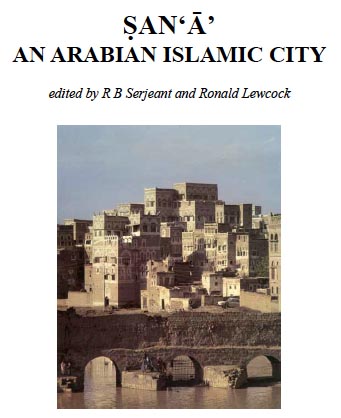
One of the most important volumes for anyone interested in Yemen is San’a’ An Arabian Islamic City, edited by R. B. Serjeant and R. Lewcock for the World of Islam Festival Trust in 1983. Long out-of-print, it is now being brought back into print. And there is a discount, if ordered before April 30, 2013.

The published price is £85.00 but the book is being offered at a pre-publication price of £50.00 until 30th of April 2013, quote SP13 to receive this offer.

For details, contact:

Vicki Coombs
Melisende UK Ltd
G8 Allen House
The Maltings, Station Road
Sawbridgeworth
Herts. CM21 9JX
+44 (0)1279 721398
www.melisende.com

Can Atheists and Muslims Support Freedom of Conscience Together?

By Qasim Rashid and Chris Stedman, Religion & Politics, March 5, 2013

Thomas Jefferson once wrote: “But it does me no injury for my neighbor to say there are twenty gods or no God. It neither picks my pocket nor breaks my leg.”

For many of us, it’s easy to appreciate Jefferson’s eloquently stated advocacy of religious freedom of conscience, as well as the idea that all individuals should be able to express religious or nonreligious positions independent of others’ beliefs. Likewise, at the United Nations, both the Universal Declaration on Human Rights and the binding International Covenant on Civil and Political Rights guarantee “freedom of thought, conscience and religion” to all individuals. But, in spite of international agreements and Jefferson’s beautiful words, the reality is that these tenets are often forgotten.

Today, few corners of the world are immune from the oppression of conscience. Last year, Pakistan’s Malala Yousafzai captivated the world after the Taliban viciously attacked her for promoting education for girls and women. Nearby, Pakistani Christian Rimsha Masih’s future and safety are still uncertain after she beat a blasphemy charge. In 2010, the Taliban murdered 86 Ahmadi Muslims on account of their faith. In Indonesia, Alexander Aan continues to languish in prison for the “crime” of professing his atheism, and atheist Alber Saber has been persecuted in Egypt for his lack of faith. In Iran, U.S. Pastor Saeed Abedini is serving an eight-year prison sentence for the alleged crime of preaching Christianity. And these examples are just a snapshot of what Pew reports as roughly 75 percent of the world—5.25 billion people—that live under some sort of social or governmental oppression of religious conscience. Continue reading Can Atheists and Muslims Support Freedom of Conscience Together?