All posts by tabsir

IRIN on Iraq

[Webshaykh’s Note: There is an excellent report on the progress in humanitarian aid to Iraq over the past decade on the website of the UN Office for the Coordination of Humanitarian Affairs. Click here to access the full report and updates.]

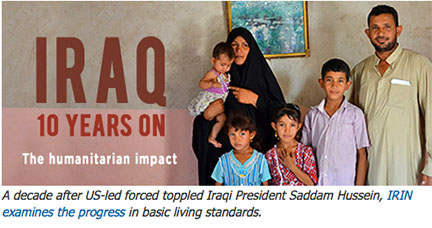
BAGHDAD/DUBAI, 22 April 2013 (IRIN) – Ten years after US forces took over Iraq, opinions on the progress made are as polarized as ever.

On one side, the Iraqi and American governments argue, the gains have been significant.

“Despite all the problems of the past decade, the overwhelming majority of Iraqis agree that we are better off today than under Saddam’s brutal dictatorship,” Iraqi Prime Minister Nouri Al Maliki wrote in a 9 April opinion piece in the Washington Post, marking 10 years after the fall of former Iraqi president Saddam Hussein.

Paul Wolfowitz, who served as the US Deputy Secretary of Defence between 2001 and 2005, wrote the same day in Asharq al-Awsat newspaper that given the hardships under Hussein, “it is remarkable that Iraq has done as well as it has thus far.”

Others are more circumspect in evaluating these gains, looking to the 1980s – under Hussein’s rule – as a time when Iraqi society was much further ahead.

“By all measures and standards, there has been a deterioration in the quality of life of Iraqis as compared to 25 years ago,” said Khalid Khalid, who tracks Iraq’s progress towards the Millennium Development Goals (MDGs) at the UN Development Programme (UNDP). “The invasion comes on top of sanctions that came before it and the Iran-Iraq war. It’s one continuous chain of events that led to the situation Iraqis are facing now.” Continue reading IRIN on Iraq

Tabsir Redux: The Seller of Sweet Words

[Note: The most notable, at least in the Nobel laureate sense, Arab writer of literature is the Egyptian Naguib Mahfouz, who passed away in 2006 . Among his many novels, several of which are available in English translation by Doubleday Press, is the classic “Midaq Alley”, written more than six decades ago, but still a vibrant testament to the universality of human foibles in a literary mirror. Below is one of my favorite character descriptions in the novel. If you have not yet read “Midaq Alley”, then do so as soon as you can, and taste the sweet words (even in translation) for yourself.]

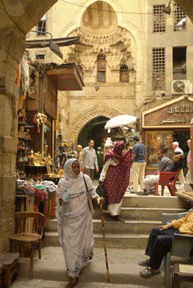
Many things combine to show that Midaq Alley is one of the gems of times gone by and that it once shone forth like a flashing star in the history of Cairo. Which Cairo do I mean? That of the Fatimids, the Mamlukes, or the Sultans? Only God and the archaeologists know the answer to that, but in any case, the alley is certainly an ancient relic and a precious one. How could it be otherwise with its stone-paved surface leading directly to the historic Sanadiqiyya Street. And then there is its café known as Kirsha’s. Its walls decorated with multicolored arabesques, now crumbling, give off strong odors from the medicines of olden times, smells which have now become the spices and folk cures of today and tomorrow…

Although Midaq Alley lives in almost complete isolation from all surrounding activity, it clamors with a distinctive and personal life of its own. Fundamentally, and basically, its roots connect with life as a whole and yet, at the same time, it retains a number of the secrets of a world now past. Continue reading Tabsir Redux: The Seller of Sweet Words

Freelancing the Syrian Conflict


A dark, rancid corner Borri says journalists have failed to explain Syria’s civil war because editors only want ‘blood.’ (Alessio Romenzi)

Woman’s Work
The twisted reality of an Italian freelancer in Syria

By Francesca Borri, Columbia Journalism Review, July 1

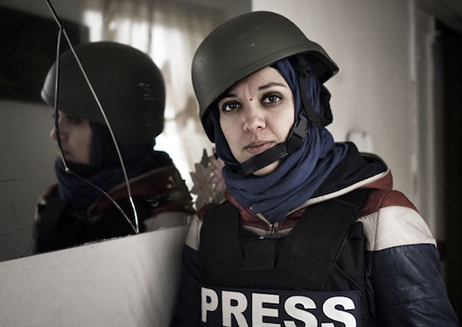
He finally wrote to me. After more than a year of freelancing for him, during which I contracted typhoid fever and was shot in the knee, my editor watched the news, thought I was among the Italian journalists who’d been kidnapped, and sent me an email that said: “Should you get a connection, could you tweet your detention?”

That same day, I returned in the evening to a rebel base where I was staying in the middle of the hell that is Aleppo, and amid the dust and the hunger and the fear, I hoped to find a friend, a kind word, a hug. Instead, I found only another email from Clara, who’s spending her holidays at my home in Italy. She’s already sent me eight “Urgent!” messages. Today she’s looking for my spa badge, so she can enter for free. The rest of the messages in my inbox were like this one: “Brilliant piece today; brilliant like your book on Iraq.” Unfortunately, my book wasn’t on Iraq, but on Kosovo.

People have this romantic image of the freelancer as a journalist who’s exchanged the certainty of a regular salary for the freedom to cover the stories she is most fascinated by. But we aren’t free at all; it’s just the opposite. The truth is that the only job opportunity I have today is staying in Syria, where nobody else wants to stay. And it’s not even Aleppo, to be precise; it’s the frontline. Because the editors back in Italy only ask us for the blood, the bang-bang. I write about the Islamists and their network of social services, the roots of their power—a piece that is definitely more complex to build than a frontline piece. I strive to explain, not just to move, to touch, and I am answered with: “What’s this? Six thousand words and nobody died?” Continue reading Freelancing the Syrian Conflict

Passing Aden in 1860


U.S. Powhatan, which made four trips to Japan from 1857-1860

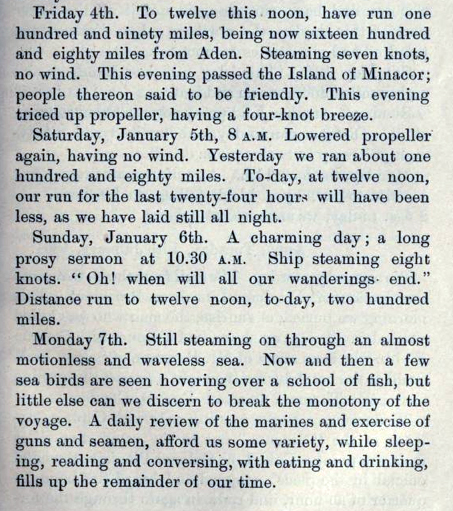
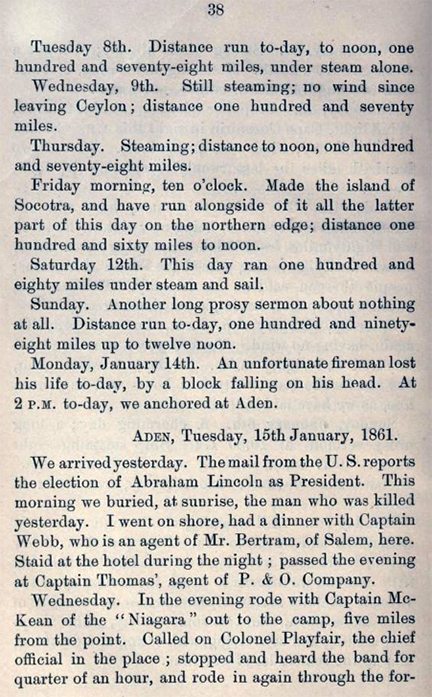
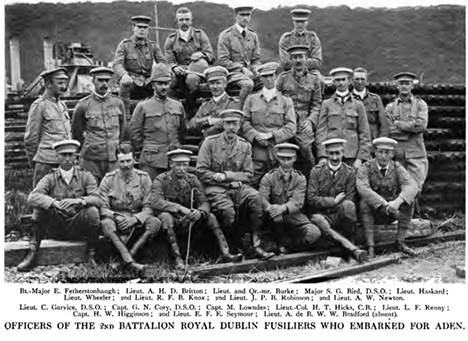
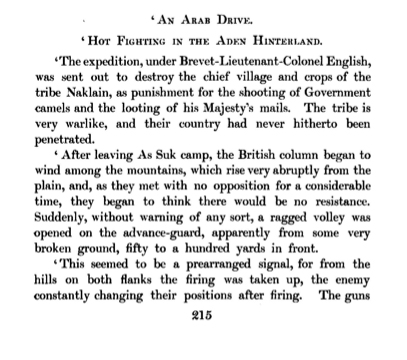
In the mid-19th century a number of American ships sailed to and from Japan. One of these was the U.S. frigate Hartford. An account of the voyage is given by H. P. Blanchard in his A Visit to Japan in 1860, which is online at archive.org. He made a brief stop at Aden, but unfortunately reflected the ethnocentric fear of his day that falling into the hands of any of the “wild” Arabs would be instant death. It appears that most of his time was spent entertaining the ladies and listening to the military band.

Continue reading Passing Aden in 1860

Pork Barrel Islamophobia

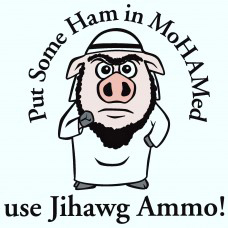
The biblical prophet Isaiah talked about turning swords into plowshares. Leave it to a bunch of Idahoites to turn bullets into bullshit. In the online world of chickenhawkers of nonsense, you are now able to buy pork-laced ammunition. The theory (I hesitate to use this term for such a potato-head notion) is that if a Muslim jihadi is shot with one of these bullets he will, of course, go straight to hell. Here is the rationale on the “about us” of their website:

History of dealings with radical Islam from the days of Jefferson and the Barbary Pirates to actions of Gen. John J. “Black Jack” Pershing in the early 1900’s in the Philippines gave clarity to a modern day market solution-Jihawg Ammo. Our preference is peace first but if a fight is to be had we are determined and resolved to win. Thus came the beginning of the truest form of defensive ammunition ever created in history.

A natural deterrent that prevents violence just by owning it but will strike fear into the hearts of those bent upon hate, violence and murder. Jihawg Ammo is certified “Haraam” or unclean. According to the belief system of the radical Islamist becoming “unclean” during Jihad will prevent their attaining entrance into heaven. Jihawg Ammo is a natural deterrent to radical and suicidal acts of violence.

Our Porcine Coating (Pattern Pending) is infused with the highest quality pork product made right here in America. Jihawg Ammo is produced in the great state of Idaho.

We at Jihawg Ammo hope you will stock up on Jihawg as a natural deterrent to the ever growing threat of radical Islam and Sharia Law. We, however, stress that the nullifying principle of our product is only effective if you are attacked by an Islamist in Jihad. Otherwise, our ammo functions just like any other ammunition so we obviously insist upon defensive use of our ammo only-not offensive.

I suppose it is a comfort that this ammo is only for defense, but then it is sad indeed that those folk who think Obama is a Muslim and the U.S. Supreme Court is about to institute shariah law are also convinced that the Moslems will soon be staging operations in their own backyard (now that the commies decided not to come and rape our women, after all). Perhaps in addition to gun control, we also need dumb-ass control.

Qaradawi on Qaradawi

The following is a letter from Abd al-Rahman Qaradawi to his famous father, Shaykh Yusif Qaradawi, telling him to stay out of politics…

رسالة عبد الرحمن القرضاوي ابيه يوسف القرضاوي: آن لهذه الأمة أن تخوض الصعب، وأن ترسم الحدود بين ما هو ديني، وما هو سياسي، لكي نعرف متى يتحدث الفقهاء، ومتى يتحدث السياسيون!

وجه عبد الرحمن القرضاوي رسالة الى ابيه يوسف القرضاوي انتقد فيها اصداره فتوى يوم أمس بضرورة تأييد الرئيس المعزول محمد مرسي، واعادته الى منصبه، معرباً عن المه الشديد لتصرف والده ودعم الظلمة بدعوى حماية الشرعية والشريعة.

نص الرسالة كما وردت على موقع اليوم السابع:

أبي العظيم فضيلة الشيخ العلامة يوسف القرضاوى …
عرفتُكَ عالمًا جليلا وفقيهًا موسوعيًا متبحرا، تعرف أسرار الشريعة، وتقف عند مقاصدها، وتبحر في تراثها، ونحن اليوم في لحظات فاصلة في تاريخ مصر، مصر التي تحبُّها وتعتز بها، حتى إنك حين عنونت لمذكراتك اخترت لها عنوان “ابن القرية والكُتـَّــاب”ØŒ وأنا اليوم أخاطب فيك هذا المصري الذي ولد في القرية، وتربى في الكتّاب .
يا أبي الجليل العظيم … أنا تلميذك قبل أن أكون ابنك، ويبدو لي ولكثير من مريديك وتلامذتك أن اللحظة الراهنة بتعقيدها وارتباكاتها جديدة ومختلفة تماما عن تجربة جيلكم كله، ذلك الجيل الذي لم يعرف الثورات الشعبية الحقيقية، ولم يقترب من إرادة الشعوب وأفكار الشباب المتجاوزة، ولعل هذا هو السبب في أن يجري على قلمك ما لم أتعلمه أو أتربى عليه يوما من فضيلتكم .
Continue reading Qaradawi on Qaradawi

Egypt’s second revolution: Questions of legitimacy

by Hani Shukrallah, Ahramonline, July 4, 2013

Democracy is constituted by the express and active will of real, living people, not by a box; this is especially true when these people are engaged in an on-going revolution, charting their and their nation’s future

The US government, a substantial section of mainstream Western media and the ousted Muslim Brotherhood all seem to agree: what took place in Egypt over the past few days was a military coup, a setback for the country’s alleged “transition” to democracy.

Irrespective of the variety of vested interests involved, what the three detractors of one of the most potent popular revolutionary upsurges in modern history share is contempt. Twenty-two million signatures (at nearly 50 percent of the nation’s adult population) are collected demanding the ousting of the president; the same demand is made by some 17 million people (at nearly 30 percent of the adult population) as they hit the streets throughout the country, in what has been described as the biggest demonstration in the history of mankind, and they do so against a barrage of threats and predictions warning of 30 June’s “rivers of blood,” and stay there.

Unprecedented it may be, yet not really worth seeing (the Washington Post persisted in speaking of “rival demonstrations” between Morsi supporters and the “opposition”), it is not democracy; it is the army and the “deep state.” Nothing short of the most profound sense of contempt for these very people could explain such utter blindness.

For the Muslim Brotherhood the contempt is deep-seated within a doctrine that constructs the leaders of the Gama’a as the ultimate interpreters of God’s will on earth, and as such owed blind obedience, and a lot of hand-kissing, by their “flock” – little wonder then that a rebellious Egyptian people have come to call them “sheep.”

From the Western side of the above equation – and I am still dealing here with ideological perspective rather than crass interest – it is the equally deep-seated conviction that such people as Arabs and Muslims are incapable of insisting on the sort of “liberties” that “Western Man” takes for granted.

Certainly, race has become passé, now replaced by “culture,” but what with our ostensibly inherent and immutable “Muslim” culture all we presumably can hope for is the kind of stunted and deformed “democracy” that Morsi and his tribe were offering us, never mind freedom of expression, speech, belief, assembly and protest, never mind also the frenzied power grab of Mubarak’s oligarchic and deeply authoritarian state machinery, kept fully intact but for the change of its bosses.

(In June of this year, the deposed Brotherhood president appointed in one sweep 17 new governors from among his group and its allies, a mere three months ahead of planned parliamentary elections, the better to rig them more effectively).

None of it, however, seemed to really matter, minor snags along the “transition,” since all we Arabs and Muslims could hope for and deserve is a 2 percent margin in the ballot box – that is democracy enough in terms of our “culture.”

Yet, there is another aspect to the blindness. Throughout history, popular revolutions by one people have had a tendency to inspire revolutionary upsurges by other peoples, just as Egypt’s was inspired by Tunisia’s, Libya, Yemen, Bahrain and Syria by both. For such a revolution to lead to a bungling, grimly oppressive Islamist regime, whose single claim to “democracy” is ostensibly “free and fair” elections is to drastically undercut such inspirational value. Would the Greeks find inspiration in such an outcome, or the Brazilians?

It was only on the fourth day of Egypt’s second revolution, and following intense American pressure to keep Morsi and the Muslim Brotherhood in power, that US President Barak Obama seemed to discover – all of a sudden – that democracy is not reducible to the ballot box.

Well, hey hurray! In fact, the history of democracy the world over is one where democratic liberties are won on the street, not the ballot box. Even if we set aside the founding democratic revolutions of the modern world, from Cromwell to Robespierre, via America’s founding fathers (beside which Egypt’s twin revolutions appear sparkling clean – “legitimacy” – wise), the extension of the franchise was won on the street, and so was the right of women to vote; trade unions, which were crucial in defining the very meaning of democracy and democratic liberties in today’s world, did not come out of the ballot box, but were born and evolved on shop-floors and on the street, and so has been the redefining of democracy in terms of women’s rights and liberation, well beyond the right to vote.

And last but not least Mr. Obama, need we remind you that the mere thought of running for office would not have occurred to you had it not been for the Montgomery Bus Boycott, the Greensborro Sit-Ins, the March on Washington and the hundreds of other battles, big and small, waged with tremendous sacrifice, on the streets of the self-proclaimed “greatest democracy on earth,” by a great many people, including such “legitimacy”‐unsavory characters as Malcolm X, Rap Brown, Stokely Carmichael and Angela Davis?

A very long and heroic march, full of blood and tears, put you in office Mr. Obama, and it was on the street that the heroes of these battles marched. And throughout the ballot box merely translated, almost always partially, and in stunted form, the gains won, yes, on the street.

Which seems to bring us straight back to our own erstwhile president, Dr. Morsi himself.

In his final, customarily incoherent, address to the nation, the former president (and don’t you just love the prefix “former” attached to the title of two presidents in a little over as many years) repeated the word “legitimacy” literally dozens of times. But here is a little reminder Mr. former-president, you were actually in prison when your predecessor, the “legitimate” president of the country, voted into his fourth term in what your American and other Western allies then hailed as Egypt’s first multi-candidate presidential elections, was illegitimately unseated. (There was nothing in the Egyptian Constitution then in force that allowed the president to cede his powers to something called the Supreme Council of the Armed Forces – SCAF).

We do not know the real story behind your escape from prison, whether it was the people in charge who broke you out of it, or a Hamas contingent imported especially for that purpose, as has been suggested in recent months. And frankly, I do not care. Morsi and other Muslim Brotherhood leaders were political prisoners, and in a revolution, setting political prisoners free is right and proper, even if “illegitimate.”

The thing is, of course, that since the revolution the powers that be in Egypt, hijackers all, have been juggling “revolutionary legitimacy” and formal, legal legitimacy as stipulated by the Constitution and the law of the land, willy-nilly, arbitrarily – and always in ways best tailored to suite their immediate ends. The SCAF did so, over and over again, and so did the Muslim Brotherhood.

The starkest and most flagrant example of this was the “elected” president’s flaunting of constitution, law and democratic norms, by issuing, in November 2012, a Constitutional Declaration immunising his decisions against judicial review, immunising as well that mockery of a legislative body, the consultative Shura Council (the third of which members are appointed by the president, the other two-thirds scornfully voted in by a measly 7 percent of the electorate), and vesting it meanwhile with full legislative authority, and immunising furthermore, a Constituent Assembly, which had been transformed into a closed club of the Muslim Brotherhood an its Salafi and Jihadi allies. Both these institutions had been facing imminent rulings of unconstitutionality by Egypt’s Supreme Constitutional Court.

And what was Morsi’s justification of such draconian measures which clearly aimed at perpetuating the Muslim Brotherhood’s sway over the country until such a time as humanity meets its maker? “Revolutionary legitimacy!” Well, Mr. former-president, this is exactly what is called being “hoist by your own petard,” with the added qualification that yours’ was that of a hijacker, while the people who unseated you derived their revolutionary legitimacy from a real, living revolution, historically unprecedented by virtue of 22 million signatures, by virtue of millions on the streets.