All posts by tabsir

At hand by the Dead Sea


At the Dead Sea

Some extraordinary photographs on {Life}Buzz

Here’s a guy who is following his love to the ends of the earth. Russian photographer Murad Osmann has been snapping photographs of his travels with his beautiful girlfriend Nataly Zakharova, leading the way since 2011. This series is called Follow Me To.

Murad said the first photo happened in Barcelona while they were away on vacation. Nataly was annoyed with him always taking photos of everything, so she grabbed his hand and pulled him forward. That’s when he took the first photo and the rest is history.

Their stunning pictures have earned them over million followers on Instagram.

Online Encyclopedia of Mediterranean Humanism

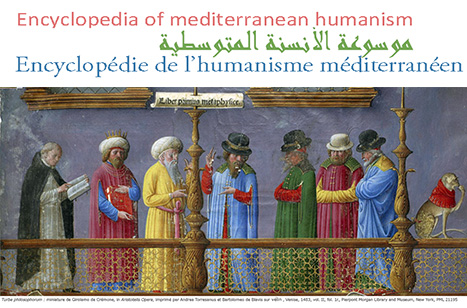
There is a new online resource on European humanism, available in English, Arabic and French. Here is the information about it:

Humanism is not simply a European phenomenon, product of the Renaissance. On the contrary, humanism, understood as both a philological science and a philosophical outlook, is found in all the cultures of the Mediterranean world, from its origins in Greek antiquity to its efflorescence in Quattrocento Italy and beyond. This postulate, explained in the introduction, is the basis of the Encyclopedia of Mediterranean Humanism. The ambition of this encyclopedia is to elucidate the diverse forms that this humanism has taken on in different contexts: classical Greek, Christian (oriental and Latin, patristic and post-patristic), Arabo-Islamic, Jewish, etc. The Encyclopedia offers, under the guidance of its editorial board, a collection of substantial articles which examine the concepts, themes, representations and notions which permeate the texts produced in these different cultures. It is hence not simply a dictionary with multiple entries on diverse topics, but also a real synthesis which presents the meaning and importance of Mediterranean Humanism by grounding it in history and by emphasizing its convergences, without hiding its divergences.

بعيدا عن أن تكون قد ظهرت في عصر النهضة أوأن تكون إمتيازا مقتصرا على أوروبا وحدها، الأنسنة في بعديها المعرفي الفيلولوجي والفلسفي، تَعْبُر كل ثقافات الفضاء المتوسطي، إنطلاقا من أصولها في العصر اليوناني القديم، وصولا إلى ازدهارها في إيطالية القرن الخامس عشر، وما بعده. هذه المسلمة -مفصلة في المدخل العام-، هي أصل موسوعة الانسنة المتوسطية التي تطمح إلى توضيح مختلف النماذج التي إكتستها: في السياق الإغريقي، المسيحي سواء كان كهنوتيا أو شرقيا ولاتيني، عربي اسلامي، عبري إلخ. تحت اشراف هيئة تحرير مختصة، توفر هذه الموسوعة مجموعة مقالات معمقة، تعالج كل المصطلحات، المواضيع، التصورات، المفاهيم التي وظفت في إنتاج نصوص هذه الثقافات المختلفة. ليست مجرد معجم موسوعي بسيط يحتوي مداخل أعلام فقط، كما هو معتاد غالبا في العمل الموسوعي، ولكنها جامع حقيقي يمنح كل دلالته وانسجامه للأنسنة المتوسطية، من خلال دمجها في التاريخ، والتنبيه إلى ما يجمعها دون إهمال ما يفرقها.

Adonis on the Age of Darkness

Cairo Review, May 14, 2014

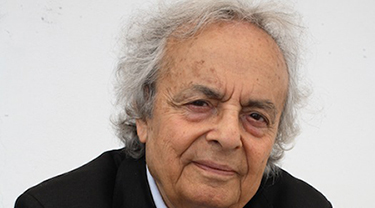
A half century ago, the poet Ali Ahmad Said Esber, better known by his pen name Adonis, left Syria for exile, first to Lebanon and then France. He lives on an upper floor of a new apartment tower in the Paris suburb of Courbevoie, steps from La Grande Arche in the modern business district of La Défense. Embroidered cushions from his homeland are on the sofa, abstract paintings on the walls; Arabic and French newspapers are piled around, next to music CDs of Bach and Mahler; Lebanese sweets are served on a platter along with cups of Nescafé. He never stays in one place for long; at the end of April, he was off to New York to open the PEN World Voices Festival with Salman Rushdie and Noam Chomsky.

Adonis, 84, is widely recognized as the greatest living Arab poet. He began writing verse as a teenager in Qassabin, a village in Syria’s Latakia province. In Beirut in the 1950s, he started a modernist revolution that the Guardian has called “a seismic influence on Arabic poetry comparable to T.S. Eliot’s in the Anglophone world.” He has published twenty volumes of poetry and thirteen books of literary criticism, reflecting on everything from love and Arab nationalism to American power; in 2011, he became the first Arab writer to win the prestigious Goethe Prize for literature. Adonis, meanwhile, has long been a leading public intellectual in the Arab world. His most recent writings are collected in Printemps Arabes: Religion et Révolution, published in France earlier this year by Éditions de La Différence. According to his English translator, Khaled Mattawa, Adonis believes that Arabic poetry has the responsibility of igniting a “mental overhaul of Arab culture.” Cairo Review Managing Editor Scott MacLeod and journalist Jonathan Randal interviewed Adonis in Courbevoie on April 11, 2014.

CAIRO REVIEW: Critics say your poems carry a lot of anger, but you have written some sweet poems. “The rose leaves its flowerbed/To meet her/The sun is naked/In autumn, nothing except a thread of cloud around her waist/This is how love arrives/In the village where I was born.”
ADONIS: Yes, romantic.

CAIRO REVIEW: How old were you when you wrote that?
ADONIS: I forget.

CAIRO REVIEW: Has Syria plunged into a dark age?
ADONIS: Well, the Arab world is living, and for a long time has been living, in a kind of age of darkness. Syria is part of that. But we can’t judge the future. I think that there are always some strengths in the people, to find solutions, escapes/exits, new horizons. I believe in that. The human being is a decent creature, who is manipulated by everything.

CAIRO REVIEW: When you were sixteen, was it a better moment?
ADONIS: Beginning when I was fifteen, we had plans. We could feel it, personally, lots of people of my generation. We had a kind of hope and vitality, a hope to change things, do something better. But from that moment of my adolescence, we also felt that there was nothing we could do in our society if the revolution was going to remain politically institutionalized. Without the separation of religion from the state, there was nothing we could do. I felt that for a long time.

CAIRO REVIEW: Was religious fundamentalism a danger at that time?
ADONIS: No. There wasn’t the ideological aspect of religion in my youth. It was almost invisible. Religion was never a problem. With my friends at school, I never asked, “What’s your religion?” Never. It didn’t exist. Continue reading Adonis on the Age of Darkness

Music of the Pearls

Check out the nicely illustrated online article by Kuwaiti ethnomusicologist Ghazi Al-Mulaifi on the music of pearling in the Arabian Gulf.

‘All the men died at sea,’ Ghazi Al-Mulaifi’s grandfather would respond, every time his inquisitive grandson questioned him about his days as the master of a Kuwaiti pearling ship during the 1930s and 1940s. Naturally, his grandfather’s ambiguity only served to exacerbate the young Al-Mulaifi’s interest. ‘Who was this grandpa-captain of mine, who didn’t want to talk to me about the sea?’
he wondered.

As Al-Mulaifi – now a 37 year old PhD candidate in ethnomusicology at New York University – became more and more interested in music as he grew older, he found himself increasingly drawn to one particular aspect of the Kuwaiti pearl diving tradition – its soundscape. For the whole article and illustrations, click here.

Frankenstein in Baghdad

International Prize for Arabic Fiction 2014: “Frankenstein in Baghdad”

Beyond good and evil

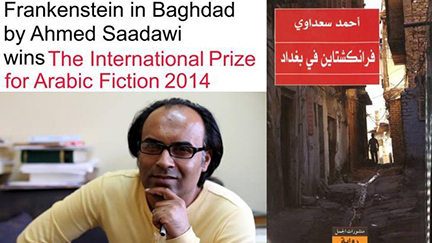
Ahmed Saadawi’s novel “Frankenstein in Baghdad” has won the 2014 International Prize for Arabic Fiction.

Khaled Hroub presents the book, from Qantara.de

Turning the final page of Ahmed Saadawi’s novel “Frankenstein in Bagdad”, the reader’s head is full of questions: who is really the monster of Bagdad? Who created it? What does it consist of and why is it so tenacious, costing so many innocent lives? Easy, generalising answers might be: the invasion of Iraq, confessionalism, politicians and their interests …

But such banal responses simplify the situation too much, for they would mean seeing only criminals and innocents in the brutality of Iraq’s daily events.

In real life, the situation in Iraq is bitterer than any black-and-white portrayal could render. Saadawi does away with such good/evil dichotomies and counters them with a dismal reality in which simplified notions soon melt away. Neither is innocence entirely innocent, nor is crime absolute.

A monster made of severed body parts

Shesma, the monster of Baghdad, is made up of body parts of innocent victims. This new play on Frankenstein’s monster goes on a mission that initially appears clear and righteous – despite its brutality – but soon comes to seem ambivalent and sacrilegious. Continue reading Frankenstein in Baghdad

Islam in the Public Square

The following is an excerpt from the 2013 Presidential Address (“Islam in the Public Square”) of John Esposito for the American Academy of Religion. His entire talk is free to read online here.

The response of colleagues and family to my chosen career was interesting: Why study Islam, they asked. When I began to speak publicly, both Muslims and Christians asked why I studied Islam, but they had very different agendas in their mind. The best comment I heard was “You’ll never get a job!” At that time I was a young Catholic theologian teaching scripture and theology, and there would always be theology and religion departments.

When I was looking for a job in 1972, only one job advertised was narrowly in Islamic Studies, and the other was in World Religions at the College of the Holy Cross. When interviewed by the incoming chair at Holy Cross, I noted that Hinduism and Buddhism were my minors (in addition to an MA in theology) and that my major was Islam. He pointedly answered, “We are not looking for somebody in Islam,” and even worse, he said, “I prefer somebody in Japanese and Chinese.”

Training in Islam was totally absent for the military and foreign service officers. And not only that, our foreign service officers in the field were not encouraged to look at religion. When the Iranian Revolution came along, a friend who had been in the embassy said that there was no contact with the ulama, no going into the universities and dealing with faculty or the students in Islamic studies. Indeed, when you talked to analysts in the field reporting back to Washington or consultants on risk assessment in countries, they never looked at the religion factor. And so when Iran came along, people saw it as an epi-phenomenon. Continue reading Islam in the Public Square

“Honest to God” Burgers


Russell Khan, Sulman Afridi, and Khalid Latif (left to right) at New York City’s Honest Chops, the country’s first halal whole animal butchery.

by NEW YORK (CNNMoney), May 30

Thick T-bone steaks and richly marbled oxtails decorate the display case at Honest Chops, a new whole animal halal butchery in downtown Manhattan.

Not only is the shop committed to selling humanely raised meat, it’s all slaughtered in the Islamic tradition, which involves a prayer and quick death using a sharp knife.

Khalid Latif, who founded the butchery in March, spoke to Muslim students and working professionals in his community who wanted a higher quality of meat than their neighborhood markets offered.

Initially, he and his partners Anas Hassan and Bassam Tariq were just interested in opening a halal butchery. But after learning about the unnatural feed that commercial cattle and chickens are raised on, they opted to source their meat from small producers in upstate New York, Maryland and Massachusetts.

“When there’s not a certain kind of purity to the food that we’re consuming, that becomes problematic from the spiritual standpoint,” said Latif, who has rigorous standards for the meat he sources. Continue reading “Honest to God” Burgers