All posts by tabsir

Laughter that Lasts 12 Centuries

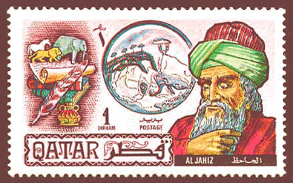
The honor of being the greatest writer in Arabic prose, at least in the eyes of numerous Arab literati for the last millennium, belongs to the Iraqi Abu ‘Uthman ‘Amr ibn Bahr al-Jahiz. Born in Basra in 776 C.E., a full millennium before our own nation was founded, Jahiz lived most of his life between the recently founded Baghdad and Samarra. He is the acknowledged master of Arabic adab literature, an eclectic form both entertaining and instructive. The elegance of his writing is matched by the grounding of his reflections on the ordinary and the lowest parts of the social order.

One of his most entertaining works that survives is a satirical look at misers and the nature of avarice. In a culture that idealized hospitality from the poor Bedouin’s goat-hair tent to the sumptuous silk cushions of the sultan’s palace, this is a telling admission that not everyone abides by the social norms. Continue reading Laughter that Lasts 12 Centuries
Always a Kurd

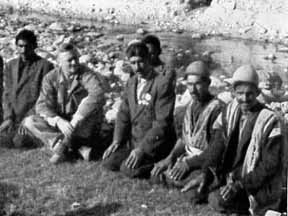
In his post-World War II visit to the Kurdish highlands of Iran, Justice William O. Douglas was clearly thrilled by the resilience of his hosts in the face of threatened Soviet dominance. His comments on the Kurds here are worth remembering more than half a century of political change later:

I learned three things from my visit among the Kurds. ‘First’: Kurdish nationalism is in the marrow of these tribesmen – deeper than any creed or dogma. They want a state of their own, one in which they have a degree of self-government. But their basic loyalty is to Persia. There it will remain. They have pride in the tradition that they are Medes. They have pride in their historic role – border patrol. Neither their misery and poverty nor Communist propaganda have altered those articles of their faith. Continue reading Always a Kurd

The Dervish Dishes it Out

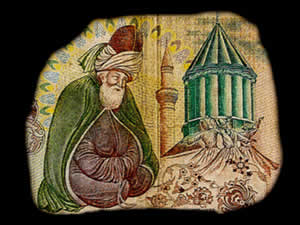
Some messages are timeless. This poem of Rumi, though at least seven centuries old, still resonates no matter how sanitized the morality of the day.

Dervish at the Door

A dervish knocked at a house
to ask for a piece of dry bread,
or moist, it didn’t matter.

‘This is not a bakery,’ said the owner.

‘Might you have a bit of gristle then?’

‘Does this like like a butchershop?’

‘A little flour?’

‘Do you hear a grinding stone?’ Continue reading The Dervish Dishes it Out

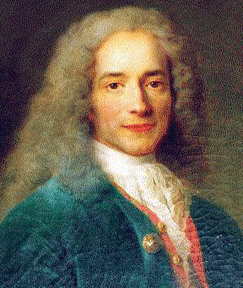
A Candid[e] View of an Honest Turk

[One of the great moral tales of the 18th century is Voltaire’s (1759) Candide, a book well worth reading and rereading from time to time. Here is an excerpt from the end of the book, but it is not Orientalism in the Saidian sense of negative portrayal; indeed it is the honest Turk which stands in contrast to tyrants of all stripes.]

During this conversation, news was spread abroad that two viziers of the bench and the mufti had just been strangled at Constantinople, and several of their friends impaled. This catastrophe made a great noise for some hours. Pangloss, Candide, and Martin, as they were returning to the little farm, met with a good-looking old man, who was taking the air at his door, under an alcove formed of the boughs of orange trees. Pangloss, who was as inquisitive as he was disputative, asked him what was the name of the mufti who was lately strangled.

“I cannot tell,” answered the good old man; “I never knew the name of any mufti, or vizier breathing. I am entirely ignorant of the event you speak of; I presume that in general such as are concerned in public affairs sometimes come to a miserable end; and that they deserve it: but I never inquire what is doing at Constantinople; I am contented with sending thither the produce of my garden, which I cultivate with my own hands.” Continue reading A Candid[e] View of an Honest Turk

Book of Curiosities

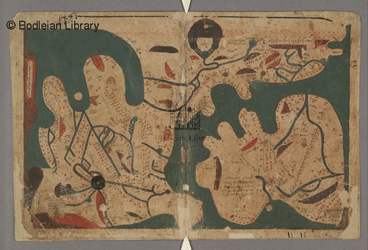
The Bodleian Library in collaboration with The Oriental Institute, University of Oxford, announces the electronic publication of The Book of Curiosities of the Sciences and Marvels for the Eyes, a newly discovered medieval Arabic treatise on the depiction of the Heavens and the Earth. The treatise is one of the most important recent finds in the history of Islamic cartography in particular, and for the history of pre-modern cartography in general. The publication of the treatise is mounted on a dedicated website employing a new method for publishing medieval maps. Continue reading Book of Curiosities

Bury Me Not on the Lonesome Yemeni Plain

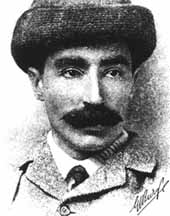
There are not as many travel accounts by Western authors visiting the Middle East as sand particles in the great Arabian desert, but the number is considerable just the same. One of the younger visitors, arriving in the British held port of Aden in 1896, at the age of 22 was G. Wyman Bury, whose intrigues and failed attempt to navigate the so-called “Empty Quarter” left him a broken man and brought him to an early death at age 46. It did not start out that way. Spending a year in Morocco, the young English lad described himself there as a “callous youth just out of his teens dropping in haphazard on a real tribe accompanied by a mission-taught Moor and a large liver-coloured pointer who had more sense than his master.” Continue reading Bury Me Not on the Lonesome Yemeni Plain

Tableaux Manners Egyptian Style

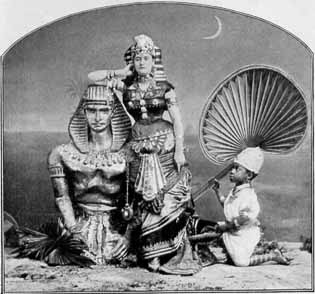
The year was 1875. As reported in The Cosmopolitan (for January, 1898), the governor of New York proposed a fund raiser for the expected visitors in the upcoming American centennial celebrations. New York City’s high society was mobilized under the direction of Mrs. Elizabeth Hamilton Cullen, granddauther of Alexander Hamilton and wife of General G. W. Cullen. Mrs. John Jacob Astor and Mrs. Belmont assisted in gathering 230 elite ladies and gentlemen to pose in various tableaux from “The Puritan Family at Prayer” to “Miss Egypt” shown here. Here is a nostalgic tidbit of vintage American Orientalism when the digs in Egypt were still very fresh. But for a nation that had only abolished slavery slightly over a decade before, it is clear that the race to end racism had only just begun. Continue reading Tableaux Manners Egyptian Style

Islam by the Numbers

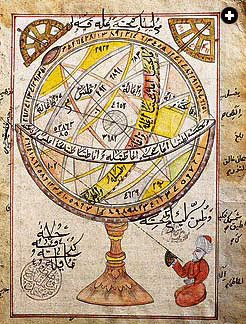
[Illustration: An astronomer calculates the position of a star with an armillary sphere and a quadrant in this illustration from a 16th-century Ottoman manuscript, ART ARCHIVE /UNIVERSITY LIBRARY ISTANBUL /DAGLI ORTI]

[Note: The current issue of “ARAMCO World” has a long and well illustrated article on the history of the sciences in the islamic World. This is written by Richard Covington, an author based in Paris.]

Like astronomy, which evolved from the practical necessities of finding the directions and hours for prayers, Islamic mathematics was very much a hands-on affair at the beginning, a product of the marketplace and of the need for pragmatic legal precedents. Both algebra and the use of zero had the same end in mind—streamlining computations for business deals. Al-Khwarizmi had a hand in the development of both.

In his Kitab al-jabr (Book of Algebra)— the word comes from the Arabic word jabara, “to restore”—the Baghdad mathematician spells out his no-nonsense intent: “It’s a summary encompassing the finest and most noble operations for calculations which men may require for inheritances and donations, for shares and judgments, for commerce and all sorts of transactions that they have among them such as surveying tracts of land, digging canals and other aspects and techniques.” Continue reading Islam by the Numbers