All posts by tabsir

Googling in Arabic (sort of)

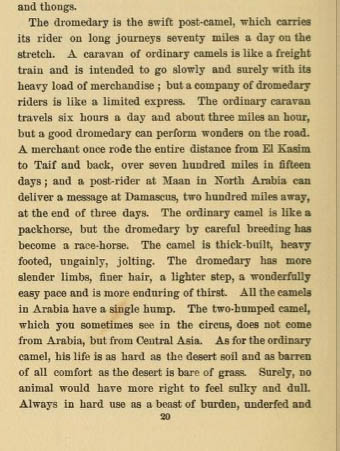
Let’s say you really do not know the Arabic language, but you want to Google in Arabic. Where there is a linguistic will, there is a digital way. Now you can simply turn to Yamli, a Google-like engine that allows you to type in English, choose the relevant Arabic term and search Arabic sites. There are other sites as well. So I typed in “mawt” and up popped the Arabic word for death. The problem is that the sites chosen are actually in Arabic, so what good does it do to search when the sites themselves cannot be read? Continue reading Googling in Arabic (sort of) →

By their books, ye shall know them


For 10 years, we’ve lied to ourselves to avoid asking the one real question

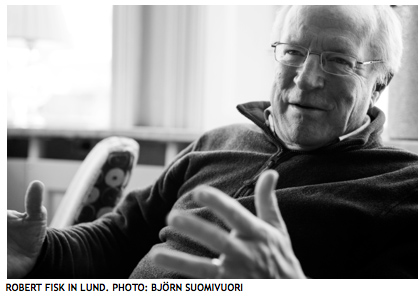
by Robert Fisk, The Independent, Saturday, 3 September 2011

By their books, ye shall know them.

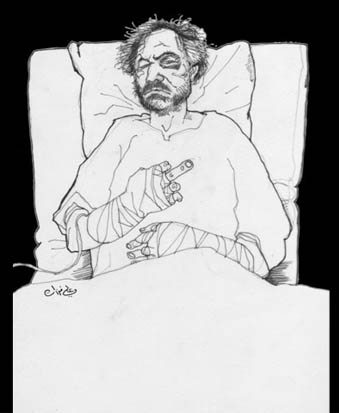
I’m talking about the volumes, the libraries – nay, the very halls of literature – which the international crimes against humanity of 11 September 2001 have spawned. Many are spavined with pseudo-patriotism and self-regard, others rotten with the hopeless mythology of CIA/Mossad culprits, a few (from the Muslim world, alas) even referring to the killers as “boys”, almost all avoiding the one thing which any cop looks for after a street crime: the motive.

Why so, I ask myself, after 10 years of war, hundreds of thousands of innocent deaths, lies and hypocrisy and betrayal and sadistic torture by the Americans – our MI5 chaps just heard, understood, maybe looked, of course no touchy-touchy nonsense – and the Taliban? Have we managed to silence ourselves as well as the world with our own fears? Are we still not able to say those three sentences: The 19 murderers of 9/11 claimed they were Muslims. They came from a place called the Middle East. Is there a problem out there?

American publishers first went to war in 2001 with massive photo-memorial volumes. Their titles spoke for themselves: Above Hallowed Ground, So Others Might Live, Strong of Heart, What We Saw, The Final Frontier, A Fury for God, The Shadow of Swords… Seeing this stuff piled on newsstands across America, who could doubt that the US was going to go to war? And long before the 2003 invasion of Iraq, another pile of tomes arrived to justify the war after the war. Most prominent among them was ex-CIA spook Kenneth Pollack’s The Threatening Storm – and didn’t we all remember Churchill’s The Gathering Storm? – which, needless to say, compared the forthcoming battle against Saddam with the crisis faced by Britain and France in 1938.

There were two themes to this work by Pollack – “one of the world’s leading experts on Iraq,” the blurb told readers, among whom was Fareed Zakaria (“one of the most important books on American foreign policy in years,” he drivelled) – the first of which was a detailed account of Saddam’s weapons of mass destruction; none of which, as we know, actually existed. The second theme was the opportunity to sever the “linkage” between “the Iraq issue and the Arab-Israeli conflict”.

The Palestinians, deprived of the support of powerful Iraq, went the narrative, would be further weakened in their struggle against Israeli occupation. Pollack referred to the Palestinians’ “vicious terrorist campaign” – but without any criticism of Israel. He wrote of “weekly terrorist attacks followed by Israeli responses (sic)”, the standard Israeli version of events. America’s bias towards Israel was no more than an Arab “belief”. Well, at least the egregious Pollack had worked out, in however slovenly a fashion, that the Israeli-Palestinian conflict had something to do with 9/11, even if Saddam had not. Continue reading By their books, ye shall know them →

Gems of Arabic Literature #3: On Sicily

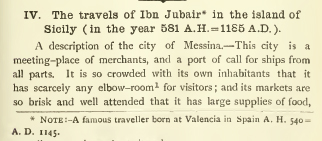
With the virtual flood of book digitalization online quite a few obscure books are now available online either at archive.org or through Google. I recently came across a gem: a translation of a high school Arabic text used in Aden by the British at the start of the 20th century. The title page was shown in a previous post. The full text can be downloaded as a pdf here. The excerpt below is from Ibn Jubayr’s travel account of a visit to Sicily. The Arabic text of Ibn Jubayr can be downloaded in pdf form here. Since my grandfather (hence the name Varisco) came from near Palermo, I take great pleasure in providing his account here.


Continue reading Gems of Arabic Literature #3: On Sicily →

Tabsir Redux: “when I asked him what a Moslem was”

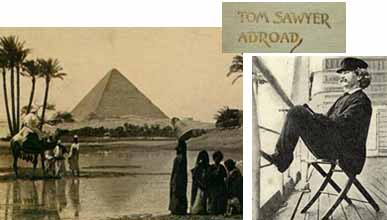
According to all three major monotheisms even God needed time to take a rest and so the sabbath was created. With the spate of mosque bombings, torture of prisoners and outright mayhem dominating the news about the Middle East these days, it might help to sit back and read what the American humorist Mark Twain wrote about his Missouri-born creation Tom Sawyer set loose in the Holy Land more than a century ago. Continue reading Tabsir Redux: “when I asked him what a Moslem was” →

Muhammad gets no respect


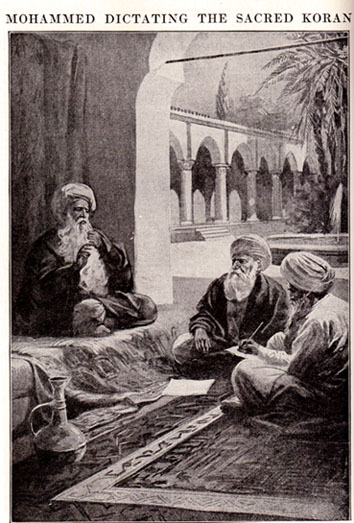
Caption:”Every Mohammedan has the greatest reverence for the sacred scriptures of his religion, called the Koran, a word that means “book,” just as our Bible does. Mohammed pretended that the chapters of the Koran were brought to him from heaven by the angel Gabriel, and to confirm this, pointed to the fact that he himself could neither read nor write. But the general opinion of scholars is that he dictated the Koran.”

Exactly 90 years ago a four-volume set of encyclopedia-like human interest books was published as The Human Interest Library: Visualized Knowledge by Midland Press in Chicago. In a previous post I commented on its thoroughly “Orientalist” flavor. In a chapter on “Epoch Makers of History,” the founders of major religions include Confucius, Zoroaster, Buddha, Lao Tsze and “Mohammed.” In the account, Muhammad is summarily dismissed as a charlatan. To add insult to injury, a full page illustration is shown (as shown above) depicting Muhammad dictating the Quran. The narrative is utterly dismissive, as you can read for yourself:

And now, last of all, we come to the most recent of religious founders, Mohammed, who is the prophet to millions of the human race, and has sometimes, very ignorantly, been compared with Christ. Continue reading Muhammad gets no respect →