Sikh and ye shall find “Siran”

Misapprehending Muslims and the Media’s Misinformation

by Hasan Azad, Huffington Post. November 17, 2012

My friend Sim is a strapping young man in his 20s. He is fitter than I could ever dream of becoming. Sim has run in the New York marathon for two years in a row, and hopes to run in many more to come. When you meet Sim you’re immediately struck by the warmth of his smile. Opinions are unanimous, Sim has a heart of gold — and the good looks to go with it!

Sim was recently flying back to New York from visiting with his parents in Texas, when the chipper middle-aged Texan lady sitting next to him asked in the most disarmingly matter-of-fact manner that only Texans are capable of, “You’re not a Muslim are you?” A question possibly prompted by Sim’s full-length beard and turban. When he responded, “No, I’m Sikh,” the woman was visibly relieved, so much so she hugged Sim (short for Simran, in case you’re wondering), adding “I’m so glad you’re not a Muslim. They want to take over America with ‘Siran’!” Simran, being the gentleman that he is, smiled politely, but later revealed to me that he had no idea how to respond to the exchange. And it’s true, it wasn’t a “simple” exchange that had occurred, which could or should be explained away as another example (and aren’t there so many?) of unwitting Texan folk who can’t tell the difference between a Sikh and a Muslim. Continue reading Sikh and ye shall find “Siran”

Fouad Ajami and his legacy


Fouad Ajami, left, met in 2007 with Iraqi Prime Minister Nouri al-Maliki in Baghdad’s Green Zone. (Wathiq Khuzaie/AP)


By As’ad AbuKhalil – Alakhbar English, June 23, 2014

The news of Ajami’s death triggered a competition among American journalists: they all wanted to express how much they loved him and admired him. They all spoke about his “grace” and one Zionist publication called him the “genuine Arab hero.” The New York Times and Wall Street Journal were quick to publish glowing obituaries.

Fouad Ajami is not the only Arab Zionist (and I am using the word Zionist here as a description and not as an insult, which it is for all of us anti-Zionists who measure the ideology by its devastating impact on the lives of Palestinians and Arabs and by its blatantly racist discourse) but he may have been the first Arab Zionist to advocate publicly for his Zionism. Ajami’s career is a political career and not an academic one.

Academic careers in the top US universities are specifically and rigidly structured and designed: those who are not graduates of the “elite US universities” don’t even get short-listed for jobs. Yet, Fouad Ajami went to school at Eastern Oregon College and received his PhD at the University of Washington, Seattle. It is certain that he is the only graduate of the University of Washington, Seattle who got an offer from Harvard University (he turned it down). When Martin Peretz and other Zionists at Harvard were lobbying for the university to hire Ajami, he demurred. He set his own conditions: that he did not want to teach undergraduates. They explained to him that all faculty at Harvard teach undergraduates. Continue reading Fouad Ajami and his legacy

Irhabis against the World Cup

By James M. Dorsey, The Turbulent World of Middle East Soccer, June 22

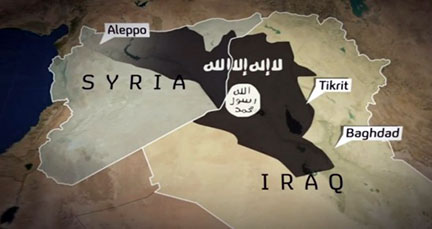
It’s not just soccer fans whose football fever soars during a World Cup. So does that of militant Islamists and jihadists with deadly consequences. Scores of fans have been killed since this month’s kick-off of the Cup in attacks in Iraq, Kenya and Nigeria.

The attacks by the likes of the Islamic state in Iraq and Syria (ISIS), Al Shabab in Somalia and Boko Haram appear to have become a World Cup fixture with similar random slaughter having occurred during the 2010 tournament in South Africa.

They reflect the diversity of opinion among jihadists on the merits of soccer as well as a degree of opportunism among all jihadists, irrespective of their attitude towards the beautiful game, in exploiting its popularity whether by seeking to maximise publicity by targeting fans during the tournament or using it as a recruitment tool.

The attacks occurred against the backdrop of a series of statements and fatwas, religious opinions, by militant clerics, often Salafis who seek to emulate to the degree possible 7th century life at the time of the Prophet Mohammed and his immediate successors who are not jihadists, condemning soccer as an infidel game that is intended to divert the faithful from their religious obligations or create divisiveness. Continue reading Irhabis against the World Cup

Zamzam Flim Flam

The sacred sites of Mecca have a long and rich history in Islamic tradition. One of the most important aspects is the well of Zamzam located close to the ka‘ba in the Meccan shrine. According to tradition this well flowed out miraculously when Ibrahim’s son Ismail was thirsty and scraped his feet on the ground. The well was later rediscovered by the Prophet Muhammad’s grandfather, Abd al-Mutallib. For centuries the well of Zamzam has provided the water for Muslim pilgrims to the site. Regardless of what one thinks about legendary attribution, Zamzam water has been a great marketing tool over the years. On Amazon you can even buy water allegedly bottled at the well in Saudi Arabia, only a mere $15 for 500 ml. In Germany you can buy the same amount for only 3.5 Euros, even though it appears that Saudi Arabia bans the export of Zamzam water.

Then there is the Burj Zamzam Clock, a virtual ibn Big Ben towering over the ka‘ba and shielding a shopping mall and luxurious hotel. Such selling of holy sites has a long history as virtually every inch of Palestine can be linked to some biblical event. But by turning a sacred site into a tourist attraction, does not Zamzam become the victim of flim flam?

At hand by the Dead Sea


At the Dead Sea

Some extraordinary photographs on {Life}Buzz

Here’s a guy who is following his love to the ends of the earth. Russian photographer Murad Osmann has been snapping photographs of his travels with his beautiful girlfriend Nataly Zakharova, leading the way since 2011. This series is called Follow Me To.

Murad said the first photo happened in Barcelona while they were away on vacation. Nataly was annoyed with him always taking photos of everything, so she grabbed his hand and pulled him forward. That’s when he took the first photo and the rest is history.

Their stunning pictures have earned them over million followers on Instagram.

Online Encyclopedia of Mediterranean Humanism

There is a new online resource on European humanism, available in English, Arabic and French. Here is the information about it:

Humanism is not simply a European phenomenon, product of the Renaissance. On the contrary, humanism, understood as both a philological science and a philosophical outlook, is found in all the cultures of the Mediterranean world, from its origins in Greek antiquity to its efflorescence in Quattrocento Italy and beyond. This postulate, explained in the introduction, is the basis of the Encyclopedia of Mediterranean Humanism. The ambition of this encyclopedia is to elucidate the diverse forms that this humanism has taken on in different contexts: classical Greek, Christian (oriental and Latin, patristic and post-patristic), Arabo-Islamic, Jewish, etc. The Encyclopedia offers, under the guidance of its editorial board, a collection of substantial articles which examine the concepts, themes, representations and notions which permeate the texts produced in these different cultures. It is hence not simply a dictionary with multiple entries on diverse topics, but also a real synthesis which presents the meaning and importance of Mediterranean Humanism by grounding it in history and by emphasizing its convergences, without hiding its divergences.

بعيدا عن أن تكون قد ظهرت في عصر النهضة أوأن تكون إمتيازا مقتصرا على أوروبا وحدها، الأنسنة في بعديها المعرفي الفيلولوجي والفلسفي، تَعْبُر كل ثقافات الفضاء المتوسطي، إنطلاقا من أصولها في العصر اليوناني القديم، وصولا إلى ازدهارها في إيطالية القرن الخامس عشر، وما بعده. هذه المسلمة -مفصلة في المدخل العام-، هي أصل موسوعة الانسنة المتوسطية التي تطمح إلى توضيح مختلف النماذج التي إكتستها: في السياق الإغريقي، المسيحي سواء كان كهنوتيا أو شرقيا ولاتيني، عربي اسلامي، عبري إلخ. تحت اشراف هيئة تحرير مختصة، توفر هذه الموسوعة مجموعة مقالات معمقة، تعالج كل المصطلحات، المواضيع، التصورات، المفاهيم التي وظفت في إنتاج نصوص هذه الثقافات المختلفة. ليست مجرد معجم موسوعي بسيط يحتوي مداخل أعلام فقط، كما هو معتاد غالبا في العمل الموسوعي، ولكنها جامع حقيقي يمنح كل دلالته وانسجامه للأنسنة المتوسطية، من خلال دمجها في التاريخ، والتنبيه إلى ما يجمعها دون إهمال ما يفرقها.