
Are you ready for a Muslim robot programmed to pray? Speaking of the transformed life, you can now wind up a robot to do the prayer. Hopefully, it is rust-proof. Youtube has it all.
Are you ready for a Muslim robot programmed to pray? Speaking of the transformed life, you can now wind up a robot to do the prayer. Hopefully, it is rust-proof. Youtube has it all.

by Mohammed al-Qiri, Yemen Observer, April 8, 2008
The Grand Mosque of Sana’a is considered to be the oldest in the Islamic world. It was built by order of the Prophet Mohamed (PBUH) in the sixth Hijri year, corresponding to 627 C.E.. It is located in the Bathan garden, between Ghamdan palace and the Malmlamah rock.
Over the course of history, there have been many additions made to the original building. The mosque was extended in the eighth century by the Amawi Khalif al-Walid ibn Abdulmalik (705- 715 C.E.) and at the beginning of the Abasi dynasty in the eighth century C.E., doors were added by Governor Omar ibn Abdulmajeed al-A’dawi, in addition to other overhauls in 745 C.E under his watch. Continue reading Sanaa’s Grand Mosque stands for 1400 years

المصدر: شري٠عرÙØ©
One of the central claims of feminist theory, post Second Sex, is that gender is inevitably a political issue. It would seem that this point has won converts from all sides.
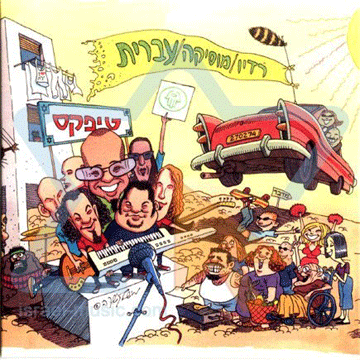
TO BANISH THE “LEVANTINE DUNGHILL†FROM WITHIN: TOWARD A CULTURAL UNDERSTANDING OF ISRAELI ANTI-IRAN PHOBIAS
By Haggai Ram, International Journal of Middle East Studies 40 (2008), 249–268.
Held since 1956, the Eurovision Song Contest is an annual event traditionally dedicated to the eternal themes of love, peace, and harmony. Yet Israelis asked to pick a song for the 2007 contest in Helsinki paid little heed to these themes. Instead, they settled for “Push the Button,†a controversial number by an Israeli punk group called Teapacks; the song is generally understood as a description of life under the threat of a nuclear-armed Iran with its “crazy rulers.†Meanwhile, an Israeli fashion house (Dan Cassidy) commissioned a series of photos at a construction site in southern Tel Aviv that showed a topless model lying in a pit. The project was designed as a warning against the “holocaust†that would follow Iran’s possible nuclear attack on Israel; the pit, as the project’s creative director explained, represented “the mass grave of complacent Tel Aviv residents.†Continue reading TO BANISH THE “LEVANTINE DUNGHILL†FROM WITHIN

The Iraqi Poet Badr Shakir al-Sayyab
[Note: This is the 21st in a series of translations of selected letters of the noted Iraqi poet Badr Shakir al-Sayyab. For more information on the poet, click here.]
Letter #21
Al-Ma’qil, 9/17/1964
My Brother, Adunis. Dearest Beloved (along with Muhyi al-Din Muhammad). May I be lucky enough to find Muhammad.
O Dearest Friend,
How are you? Correspondence between us has stopped for about nine months now. The two reasons for this are bad luck and my incurable disease. My general health is not bad, but my two paralyzed legs are still the same. My soul is overflowing with poetry, but it is poetry that flows from the fountain of deep pain and dejection, not of delight. Just yesterday, I wrote a poem void of sadness, despair, and pain because our brother, ‘Ali al-Sabti, met with my loved ones in Lebanon and carried joyful news about them to me with a promise that they will send me a letter. Continue reading The Letters of Badr Shakir al-Sayyab: #21

Battle in Brooklyn | A Principal’s Rise and Fall
Her Dream, Branded as a Threat
By ANDREA ELLIOTT, The New York Times, April 28, 2008
Debbie Almontaser dreamed of starting a public school like no other in New York City. Children of Arab descent would join students of other ethnicities, learning Arabic together. By graduation, they would be fluent in the language and groomed for the country’s elite colleges. They would be ready, in Ms. Almontaser’s words, to become “ambassadors of peace and hope.â€
Things have not gone according to plan. Only one-fifth of the 60 students at the Khalil Gibran International Academy are Arab-American. Since the school opened in Brooklyn last fall, children have been suspended for carrying weapons, repeatedly gotten into fights and taunted an Arabic teacher by calling her a “terrorist,†staff members and students said in interviews. Continue reading Battle in Brooklyn
By Andrea Teti, Department of Politics and International Relations, University of Aberdeen
Following a wave of strikes and an equally spectacular tsunami of price increases in a range of essential goods over recent months, the April 8th local elections seemed for a brief moment to have become a focus for Egypt’s diverse opposition. A few days before a general strike proclaimed for April 6th, the coalition for democratic change Kifaya! (Enough!) published a statement saying it expected the Muslim Brotherhood’s active support. In the event, the Brotherhood defended Kifaya!’s right to strike, but did not participate in it. Then, following a wave of pre-election arrests and dirty tricks by the ruling National Democratic Party – resulting in a mere 21 MB candidates making it onto ballots out of the 5,754 put forward – the MB declared the elections beyond repair, and boycotted them. The NDP’s electoral victory (97% of posts) was as striking as the estimated 5% voter participation rate. Continue reading Open season on Egypt’s opposition, but Islam is not the solution

August 23, 2007
Jews for Racial and Economic Justice (JFREJ) on Debbie Almontaser’s Resignation and the targeting of the Kahlil Gibran International Academy
As parents, students, teachers, New Yorkers, and Jews, we are outraged by the series of events that have culminated in Debbie Almontaser’s resignation as principal of the Kahlil Gibran International Academy. We are particularly disturbed that Mayor Bloomberg, Joel Klein, the Chancellor of the Department of Education, and Randi Weingarten, the President of the United Federation of Teachers, bowed to right-wing pressure and did not strenuously resist and condemn the unjustified attacks on Ms. Almontaser, which fed on and fostered anti-Arab and anti-Muslim prejudice. We call for Debbie Almontaser to be reinstated to her position as principal if that is what she wishes, and for full support for the Kahlil Gibran International Academy. Continue reading Khalil Gibran International Academy