The Latino Ummah


Latino Muslims Define Their Identity 10 Years After 9/11

by Jorge Luis Macias, The Huffington Post, September 9, 2011

It has been 10 years since the Sept. 11 terror attacks, but many Latino Muslims say there is still a lack of understanding about their religion and its practices.

A 2007 study conducted by the Pew Research Center showed that Latino Muslims accounted for an estimated 4 percent out of a total of about 2.5 million Muslims living in the U.S. But a look at the individuals behind those numbers reveals a group of people who say they have become ambassadors for Islam despite the common stereotypes they say are still leveled by many in the U.S.

According to the Pew findings recounted in a 2011 report, while 40 percent of the U.S. population believed Muslims in the U.S. support extremism, only 21 percent of U.S. Muslims said there is support for extremism among them in the U.S.

“The first misconception is to associate violence with Islam,” said Wilfredo Amr Ruiz, a Muslim chaplain and attorney born in Puerto Rico. “Another misconception is that somehow Islam aspires to some sort of world domination, and that his followers want to impose Islamic Law in the countries in which they live, which couldn’t be further from the truth.” Continue reading The Latino Ummah →

Wellcome Library Arabic Manuscripts Online

Historic Arabic medical manuscripts go online

Researchers may now search and browse the Wellcome Library’s Arabic manuscripts using groundbreaking functionalities in a new online resource that brings together rich descriptive information and exceptionally detailed images.

Arabic medicine was once the most advanced in the world, and now digital facsimiles of some of its most important texts have been made freely available online. The unique online resource, based on the Wellcome Library’s Arabic manuscript collection, includes well-known medical texts by famous practitioners (such as Avicenna, Ibn al-Quff, and Ibn an-Nafis), lesser-known works by anonymous physicians and rare or unique copies, such as Averroes’ commentaries on Avicenna’s medical poetry.

The Wellcome Arabic Manuscript Cataloguing Partnership (WAMCP) combines the efforts of the Wellcome Library, the Bibliotheca Alexandrina and King’s College London Digital Humanities Department and is funded by JISC and the Wellcome Trust. It offers a rich digital manuscript library available online for free, which represents a significant resource for a wide range of researchers – including Arabic studies scholars, medical historians and manuscript conservators – to aid and enhance their work.

The resource is now available online. Continue reading Wellcome Library Arabic Manuscripts Online →

Googling in Arabic (sort of)

Let’s say you really do not know the Arabic language, but you want to Google in Arabic. Where there is a linguistic will, there is a digital way. Now you can simply turn to Yamli, a Google-like engine that allows you to type in English, choose the relevant Arabic term and search Arabic sites. There are other sites as well. So I typed in “mawt” and up popped the Arabic word for death. The problem is that the sites chosen are actually in Arabic, so what good does it do to search when the sites themselves cannot be read? Continue reading Googling in Arabic (sort of) →

By their books, ye shall know them


For 10 years, we’ve lied to ourselves to avoid asking the one real question

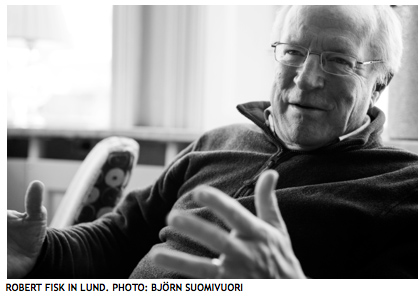
by Robert Fisk, The Independent, Saturday, 3 September 2011

By their books, ye shall know them.

I’m talking about the volumes, the libraries – nay, the very halls of literature – which the international crimes against humanity of 11 September 2001 have spawned. Many are spavined with pseudo-patriotism and self-regard, others rotten with the hopeless mythology of CIA/Mossad culprits, a few (from the Muslim world, alas) even referring to the killers as “boys”, almost all avoiding the one thing which any cop looks for after a street crime: the motive.

Why so, I ask myself, after 10 years of war, hundreds of thousands of innocent deaths, lies and hypocrisy and betrayal and sadistic torture by the Americans – our MI5 chaps just heard, understood, maybe looked, of course no touchy-touchy nonsense – and the Taliban? Have we managed to silence ourselves as well as the world with our own fears? Are we still not able to say those three sentences: The 19 murderers of 9/11 claimed they were Muslims. They came from a place called the Middle East. Is there a problem out there?

American publishers first went to war in 2001 with massive photo-memorial volumes. Their titles spoke for themselves: Above Hallowed Ground, So Others Might Live, Strong of Heart, What We Saw, The Final Frontier, A Fury for God, The Shadow of Swords… Seeing this stuff piled on newsstands across America, who could doubt that the US was going to go to war? And long before the 2003 invasion of Iraq, another pile of tomes arrived to justify the war after the war. Most prominent among them was ex-CIA spook Kenneth Pollack’s The Threatening Storm – and didn’t we all remember Churchill’s The Gathering Storm? – which, needless to say, compared the forthcoming battle against Saddam with the crisis faced by Britain and France in 1938.

There were two themes to this work by Pollack – “one of the world’s leading experts on Iraq,” the blurb told readers, among whom was Fareed Zakaria (“one of the most important books on American foreign policy in years,” he drivelled) – the first of which was a detailed account of Saddam’s weapons of mass destruction; none of which, as we know, actually existed. The second theme was the opportunity to sever the “linkage” between “the Iraq issue and the Arab-Israeli conflict”.

The Palestinians, deprived of the support of powerful Iraq, went the narrative, would be further weakened in their struggle against Israeli occupation. Pollack referred to the Palestinians’ “vicious terrorist campaign” – but without any criticism of Israel. He wrote of “weekly terrorist attacks followed by Israeli responses (sic)”, the standard Israeli version of events. America’s bias towards Israel was no more than an Arab “belief”. Well, at least the egregious Pollack had worked out, in however slovenly a fashion, that the Israeli-Palestinian conflict had something to do with 9/11, even if Saddam had not. Continue reading By their books, ye shall know them →
The State of Agriculture in Late 13th Century Rasulid Yemen, 5


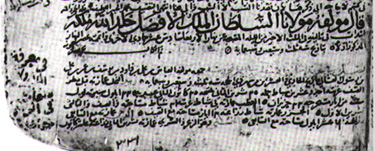
Tax document of al-Malik al-Afḍal, mid 14th century CE

By Daniel Martin Varisco

[In 2003 I attended a conference in Rome and gave a paper which was eventually published in Convegno Storia e Cultura dello Yemen in età Islamica, con particolare riferimento al periodo Rasûlide (Roma 30-31 ottobre 2003 (Accademia Nazionale dei Lincei, Fondazione Leone Caetani, 27, pp. 161-174, 2006). As this publication is virtually inaccessible, I am reprinting the paper here (with page numbers to the original indicted in brackets). For the previous part of this article, click here. The references are provided at the end of the first entry.]

ARCHIVING AGRICULTURAL ECONOMICS

Al-Ashraf’s Milh al-malāḥa provides a textbook survey of the mechanics of the agricultural system, but there is nothing on production costs, yields or the marketing system. Fortunately, some microeconomic details can now be filled in with information from the Muẓaffar archive, compiled from field reports sent to the Rasulid court between 691-95/1292-96 at the very end of al-Muẓaffar’s reign. Particularly valuable is a survey made in Ramadan 692/1293 from the lands of a shaykh Muḥammad ibn IbrāhÄ«m al-Ḥawm (?) of Ta‘izz and shaykh RashÄ«d al-DÄ«n Manṣūr ibn Ḥasan in Mikhlāf Ja‘far, as well as some data from ‘Abadān. (26) Details are provided on fees and shares for ploughing and virtually every agricultural activity with special emphasis on the obligations in sharecropping agreements and regional differences.

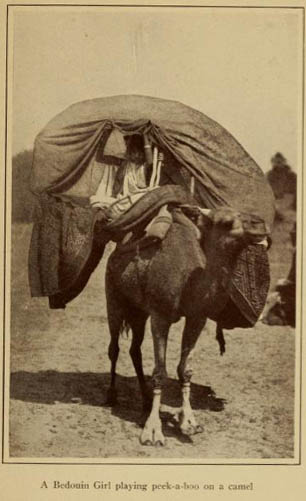
For the Ta‘izz case, the grain yields of sown sorghum are said to be up to 400 fold (i.e. one zabadī of seed will yield a crop of 400 zabadī) on good land, 150 fold on middle-range land and only 90-100 fold on poor land. Sorghum is also important in Yemen for its stalk (‘ajūr), used as fodder and fuel. The stalk yield for the sowing on good or medium land will be three camel (?) loads, but reaches five loads on land of poor quality; the reason given for this is that such sorghum is grown mainly for its stalk value. [p. 171]

For wheat in Ta‘izz, the increase is 15 fold on good land, 10 fold on medium land and only 3 fold on poor land. Emmer wheat (‘alas), on the other hand, yields 10 fold on good land, 4 fold on medium land and 2 fold on poor soil. Barley is said to yield 10 to 1; this is sown only in the mountain areas and not usually on the best land. Information is also provided on the straw (tibn) yields. Continue reading The State of Agriculture in Late 13th Century Rasulid Yemen, 5 →

Muslims of Color


press release says it all:

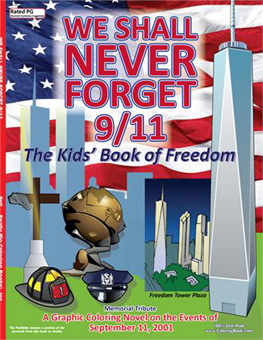
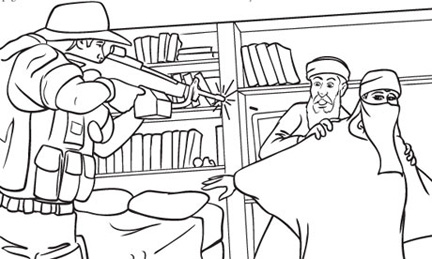
To the American people and all others who may read this child’s coloring book, We Shall Never Forget is designed to be a tool that parents can use to help teach children about the facts surrounding 9/11. This book also describes basic freedoms in America. We suggest parental guidance. As the 9/11 events are shown countless times on national media, this book will help children understand the meaning of these events. The book was created with honesty, integrity, reverence, respect and does not shy away from the truth. In this book you will see what happens to a terrorist who orders others to bomb our peace loving wonderful nation.

Here is propaganda so blatant and smiley gross that it deserves a place alongside the insidious emulation of Lenin by the Soviets and idolization of dictators the world over. The cover image is an interesting spin on the separation of church and state in our land of the free: here we see the tattered American flag flying above a cross illuminated by a beam of light from above, at the feet of which lie a firefighter’s helmet and police hat. To label the libel in this colorfully designed “Kid’s Book of Freedom” a “Graphic Coloring Novel” strikes me as a misspelling; is it not more aptly named a “Pornographic Coloring Novel,” to be rated so for the sensational violence mongering rather than any out-of-place showing of body parts?


Continue reading Muslims of Color →