Winter in Syria


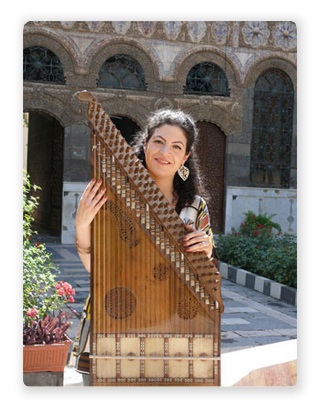
Maya Youssef, Syrian kanun player

Amidst all the strife that the Syrian people have been suffering over the past year, imagine a musical break. Imagine Vivaldi in Syria. Imagine a performance of Vivaldi’s “winter” from his Four Seasons. Imagine this played by the Syrian National Orchestra and accompanied by a kanun. Well, imagine no more. You can listen to Maya Youssef playing this right now. Enjoy.

For more information on Maya Youssef, click here.

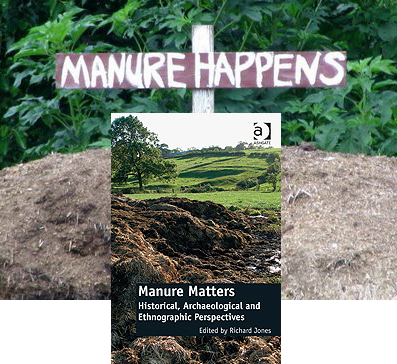
Manure Matters


Shit happens but Manure Matters. The latter is the title of a recently published anthology, edited by Richard Jones for Ashgate with details about the historical use of manure in Europe, India and the Arab World. My own contribution to the volume is entitled “Zibl and Zirā‘a: Coming to Terms with Manure in Arab Agriculture,” (pp. 129-143).

Here is the description of the book, as posted on Ashgate’s website:

This book brings together the work of a group of international scholars working on social, cultural, and economic issues relating to past manure and manuring. Contributors use textual, linguistic, archaeological, scientific and ethnographic evidence as the basis for their analyses. The scope of the papers is temporally and geographically broad; they span the Neolithic through to the modern period and cover studies from the Middle East, Britain and Atlantic Europe, and India. Together they allow us to explore the signatures that manure and manuring have left behind, and the vast range of attitudes that have surrounded both substance and activity in the past and present.

Contents: Why manure matters, Richard Jones; Science and practice: the ecology of manure in historical retrospect, Robert Shiel; Middening and manuring in Neolithic Europe: issues of plausibility, intensity and archaeological method, Amy Bogaard; (Re)cycles of life in late Bronze Age southern Britain, Kate Waddington; Organic geochemical signatures of ancient manure use, Ian Bull and Richard Evershed; Dung and stable manure on waterlogged archaeological occupation sites: some ruminations on the evidence from plant and invertebrate remains, Harry Kenward and Allan Hall; Manure and middens in English place-names, Paul Cullen and Richard Jones; The formation of anthropogenic soils across three marginal landscapes on Fair Isle and in The Netherlands and Ireland, Ben Pears; Zibl and zira’a: coming to terms with manure in Arab agriculture, Daniel Varisco; Understanding medieval manure, Richard Jones; Lost soles: ethnographic observations on manuring practices in a Mediterranean community, Hamish Forbes; Manure, soil and the Vedic literature: agricultural knowledge and practice on the Indian subcontinent over the last two millennia, Vanaja Ramprasad; Postscript, Richard Jones; Bibliography; Index.
Journal of Sufi Studies


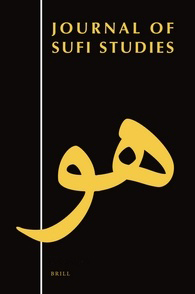
Brill has just announced the inaugural issue of a new publication, the Journal of Sufi Studies. The first issue is currently available free online. the following excerpt is from the editor’s introduction:

While the academic study of Sufism has a relatively long and productive pedigree in both western and Islamic academic discourses, in recent years the mainstay philological, philosophical and literary approaches to the subject have begun to give way to a much wider array of approaches drawn from across the humanities and social sciences. In the new conversational vistas and cross-fertilizations attendant to the study of the subject that such a situation portends, it would appear that the time is now ripe for sentiment to give way to assurance. What can, for example, anthropologists bring to the table which might be of interest to art historians? How might the insights of those dealing with philosophical discourse inform the work of those interested in cultural history? How and in what ways might a study devoted to pre-modern Sufi communities be usefully placed alongside one investigating globalized Sufi networks in modern times? While disciplinary territoriality and parochialism might been seen as posing difficulties to an effort seeking to link together scholarly engagements produced in different academic arenas, creating a space for genuine conversation and cross-fertilization on a subject of shared interest is not necessarily as arduous as it may sound. This, especially when dealing with a subject as amendable to a general multivocality, scholarly or otherwise, as that which this journal looks to engage.

It is precisely such a space which the Journal of Sufi Studies looks to create: an international scholarly forum for research on Sufism which, in taking an expansive view of the subject, brings together all disciplinary perspectives so as to promote a wide understanding of the richly variegated Sufi tradition in both thought and practice and in its cultural and social contexts. By providing a forum for academic research of the highest caliber on any and all denotable instances of Sufism wherever they may be situated, the journal looks to make a distinctive contribution to current scholarship on Sufism and its integration into the broader field of Islamic studies. As such, it is the fervent hope of the editors that this journal will come to serve as a meaningful outlet for the field of Sufi studies, one which fosters, shapes and energizes the efforts of those researchers who have ventured to engage one or another instantiation of the particularly persistent feature of the Islamic tradition which is Sufism, and in doing so contribute to those processes which are presently shaping the contours of the field itself.

For Whom the Death Toll tolls


“John Donne and 1664 Dutch map of the world

“No man is an iland, intire of it selfe; every man is a peece of the Continent, a part of the maine; if a clod bee washed away by the Sea, Europe is the lesse, as well as if a Promontorie were, as well as if a Mannor of thy friends or of thine owne were; any mans death diminishes me, because I am involved in Mankinde; And therefore never send to know for whom the bell tolls; It tolls for thee….”
John Donne, Meditation 17, Devotions upon Emergent Occasions, 1624

What was true some four centuries ago for the English metaphysical poet John Donne is timeless, even if his writ shows its linguistic age. Today it can also be said that no country is an island unto itself, no matter where or how you spin the globe. This is certainly the case for the United Sates, with our military still on the ground in Iraq and Afghanistan, targeted drones over Pakistan and Yemen, the smoldering aftermath of the bombs that brought down Qaddafi in Libya, the stench of made-in-the-USA arms just about everywhere. If, as Donne eloquently reflects, the death of any man (or woman or child) diminishes us, then why are we so hell-bent on adding to this diminishing by arming thugs and sending our military to die in other countries?

First, it is important to realize how much the death toll drones on daily. Take today, for example. On Al-Jazeera we learn there are “many dead in Afghanistan suicide blasts,” 18 dead and 45 wounded by the numbers. As the nominal peace part still fails to protect the dictator-weary people of Syria, reports are that some 9,000 have been killed so far by the Assad regime, including refugees over the border in Turkey. There are also “Pakistanis dead in apparent sectarian attack,“adding six more to the thousands who have been killed in the ongoing violence that plagues Pakistan. The see-saw fighting in Yemen’s troubled south leaves “Dozens killed in attack on Yemen army base.” And a few days ago “Hamas hangs three Gaza prisoners“. Continue reading For Whom the Death Toll tolls

Chrislam: Reinventing an Apocalyptic Neologism


Forget Huntington’s politically incoherent “Clash of Civilizations” and move over Eurabia and Islamofascism, there is yet another neologism in the Islamophobisphere (Okay, this is one of my own…). This is “Chrislam,” and for Christ’s sake (both the sacred and the profane uses of this phrase), no less. Among other end-timers, the expectant folks over at Rapture Ready have uncovered a diabolical (quite literally for these folks) plot to merge Christianity and Islam. It could be suspected of being Satanic for the simple fact that the plot takes place at Ivy League (and thus white-sepulchered) Yale University. Here is the post from one Joseph Chambers:

RICK WARREN, CHRISLAM AND THE YALE UNIVERSITY COVENANT

I NOW HAVE THE OFFICIAL YALE UNIVERSITY COVENANT SIGNED BY RICK WARREN. This is proof positive that he is a signed partner in promoting the Covenant between Islam and our Jehovah God as one God now named “Chrislam”. I’m simply printing for you the entire covenant and also coping his and other name from this document. Below is the exact list directly from the web page itself. Please note the underlined names mentioned here, and on the radio program: Robert Schuller, Rick Warren, Brian D. McLaren an David Yonggi Cho. Check the list for other names you might be familiar with. There are hubdreds of ministers thet may inlude your Pastor or leaders in your denominations. Check the large list of names on this offocial list from Yale. http://www.yale.edu/faith/acw/acw.htm

In the spirit of the Prophet Daniel, Mr. Chambers is tackling the end times by the horns (big and little for those who read Daniel), although I suspect Daniel’s Aramaic is more grammatical than Chamber’s English. Or is it that spell checks are also an invention of the Devil, not that Microsoft isn’t a prime candidate for the Lucifer of the moment? Continue reading Chrislam: Reinventing an Apocalyptic Neologism