Muslim Salafists and Moderates: What’s the Difference?


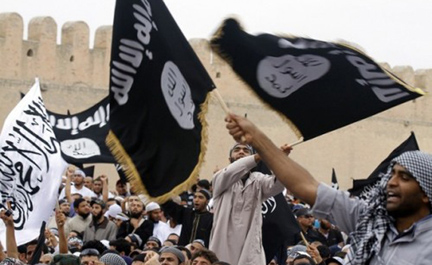
Tunisian Salafists; Photo by Reuters

By Anouar Majid

Many people in the Muslim world are scrambling to get out from centuries (not just decades) of tyranny and build a good future for themselves and their descendants. They want to catch up to the West, build strong economies, and invent things that would make their nations proud, but they keep slipping further behind nations that were once their peers. This regression only intensifies their desire to get respect. With nothing to show for their pride, they go back to the distant nebulous past to sing the glories of long-dead warriors and savants. An imagined glorious history is a safer bet than the dysfunctions of the present or the bleak promises of the future.

It is this attachment to the past that produces the kind of extremism many of us find abhorrent. The new offenders these days are the Salafists, a loose confederation of Muslim literalists who believe that the pristine faith of the seventh century is the best remedy to what ails Muslim-majority nations today. Sporting robes and beards, they have declared war on churches, women with skirts, bars, insufficiently pious Muslims, and anything that smacks of the false West. Even Islamist parties, including Hamas, are not immune to the Salafist righteous indignation. Continue reading Muslim Salafists and Moderates: What’s the Difference?

Orientalist Cheesecake


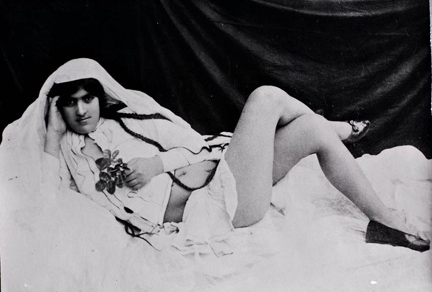
Portrait of a lying woman, Antoine Sevruguin, Iran, 1901 (geheugenvannederland.nl).

If a picture is worth a thousand words, then one like this century-old photograph taken in Iran will leave the reviewer with no loss for words. Here is the quintessential native Ottoman Era odalisque to ogle at. A number of enticing props are they as well: the flowers in hand, the shoes on the bed at the end of a curvaceous bottom in corso flowing down the exposed torso, the half-hidden belly button, long pigtails and dark kohl-laced eyes. Not only is this figure exposed to the viewer, but she engages with a direct gaze, using a hand to cradle her head. Here, visually presented, is the Orient represented: a luscious and willing consort for the taking.

The photograph above is part of a series of Ottoman Era images from the Ottoman History Podcast, a radio program and Facebook site based in The Netherlands. The site has a splendid selection of photographs from the Ottoman Era, the vast majority of which are not odalisque cheesecake, and it is well worth perusing.

Regarding the photograph above, here is how the Facebook site describes it: Continue reading Orientalist Cheesecake

Johnsen on Yemen in New York

Book Night With Gregory Johnsen

12 November 2012 – 6:00pm – 7:30pm

40 West 45th Street, Club Quarters, New York, Free admission

by Sonya K. Fry, Overseas Press Club of America

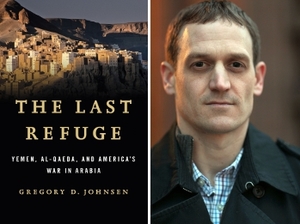
The Last Refuge: Yemen, Al-Qaeda, and America’s War in Arabia [W.W. Norton & Company, November, 2012] is an eye-opening look at the successes and failures in fighting a new type of war in the turbulent country of Yemen, written by Gregory D. Johnsen, who is an OPC Foundation Scholar, a Fulbright fellow in Yemen, part of a 2009 USAID conflict assessment team and is now a doctoral candidate in Near Eastern studies at Princeton University.

Johnsen takes readers into Yemeni mosques where clerics in the 1980’s recruited young men to jihad to fight the Russian invaders in Afghanistan. These men eventually formed the basis for the Al-Qaeda movement. The story also leads to the presidential palace in Yemen where the country’s military dictator, Ali Abdullah Salih vascillated between helping the U.S. get rid of Al-Qaeda in the Arabian Peninsula and hindering the process. Salih himself called this delicate balancing act of staying in power a “snake dance.” For years this dance included concealing Islamists from the prying eyes of U.S. intelligence and yet later he allowed the U.S. to conduct attacks that killed dozens of Al-Qaeda operatives including Abu Ali al-Harithi, who was known as the “godfather” by U.S. intelligence. The dramatic story sounds like a Hollywood movie: Haritihi turned on his cell phone as he left a secret meeting which signaled a predator drone to track him. The first missile from the drone exploded next to Harithi’s speeding car. He threw the phone out of the window and screamed at everyone to get out, but there was nowhere to go since they were in the middle of the desert. The drone fired its second missile and the car exploded in flames. Continue reading Johnsen on Yemen in New York

Two documentary films on Islam in NYC

For those in the New York area and who have power (I still do not after Sandy hit last week), there are two films that will be of interest to those who read this blog. One is American Imam by Donya Ravasani. It is showing twice at the IFC Center: Saturday, Nov 10 at IFC 11:15am and Thursday, Nov 15 at IFC 1pm

It will be screened together with Building Babel, David Osit’s documentary about the developer of the so called Ground Zero Mosque.

For details on New York’s Documentary Festival, check out their website.

If the devil is in the details, the Winner is?

In the last day before the rhetorically cataclysmic 2012 presidential election, pundits are playing (not really something that could be called work) around the clock to predict who will win tomorrow’s final tally. There is no question about the obvious fact that the United States is about as polarized as it has ever been. As both candidates shout out, the choice is clear. It is hard to imagine anyone who is still undecided; indeed, I think it is so unpatriotic not to have made up your mind that anyone still labeled “undecided” should not be eligible to vote. If turnout is anything like the last election (and most pundits think it will not be on either side), some 40% of the eligible voters will not bother to vote at all. Democracy is so taken for granted in this country that some of my fellow citizens are content to let others decide their fate. And given the untold millions of dollars fueling the propaganda machines, it would seem that the political system assumes the rest of the electorate can be bought by 30-second attack ads.

I write this post in my university office, since my home has not had electricity or Internet for over a week, due to the massive destruction caused by Hurricane Sandy. In my home town more than 50 cars are lined up overnight hoping for gas to be delivered to the local Hess station. But despite the brutal infrastructure damage, especially along the southern coast of Long Island, the death toll has been relatively low. All deaths are tragic, but meanwhile the death toll rises daily in Syria, bumped from the evening news in the New York Metropolitan Area. Camping out by my fireplace each night and setting up my Coleman stove, I really have nothing to complain about. In a sense the enforced rest, week off from teaching and catch-up on reading has been a pleasant, even if increasingly cold, experience. But tomorrow the real damage could be done if Gov. Romney is elected.

I have no crystal ball, but the odds certainly favor President Obama at this moment. No president is perfect, but in my mind Obama deserves re-election for a variety of reasons and Governor Romney does not for an even larger number of reasons. Let’s start with the no-end-in-sight “War on Terror” that many on the right in this country see mainly as a war with Islam. Romney’s previous comments on the Islamic faith show that he is only too eager to grovel before the Islamophobic right wing that paints Islam as inherently violent and Muhammad as a pedophile. The more people hate Islam, the more likely they are to vote for Romney. Romney has stoked this fear as well, in his “severely conservative” rightward leap during the Republican primaries. Not once has he said to the extremists and newly christened “teavangelicals” that their antagonism toward Muslims is wrong. Continue reading If the devil is in the details, the Winner is?

Unequally yoked is no joke


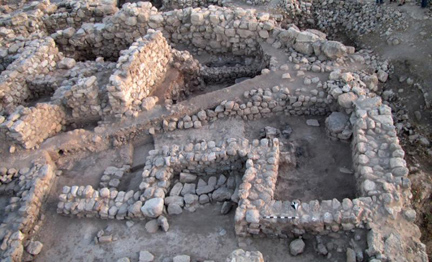
Gelatine silver print (probably made in the mid-1920s) of an American Colony photograph taken in southern Palestine between 1898 and 1911; from the John Garstang collection

“Be ye not unequally yoked together with unbelievers; for what fellowship hath righteousness with unrighteousness? And what communion hath light with darkness?” 2 Corinthians 6:14, KJV

The admonition of the Apostle Paul in his second letter to Corinth is the ultimate justification for separatism. Orthodox Jews, Fundamentalist born-again Christians and ultra-conservative Muslims all have taken to heart the sentiment of this advice, often making it into an outright ban. The latest news sensation is about a Muslim “catacomb sect” in Russia’s Tatarstan region:

Four members of a breakaway Muslim sect in Russia’s Tatarstan region have been charged with cruelty against children for allegedly keeping them underground.

Police discovered 27 children and 38 adults living in catacomb-like cells in an eight-level underground bunker.

The sect’s elderly leader, Faizrakhman Sattarov, had reportedly wanted to build his own Islamic caliphate beneath the ground…

Officials said the children, aged between one and 17 years, had never left the compound, gone to school or been treated by a doctor, and had rarely seen the light of day.

According to the Russian website Islam News, Mr Sattarov, 83, declared himself an Islamic prophet in the mid-1960s after interpreting sparks from a trolleybus cable as a divine light from God.

He and his followers began to shun the outside world in the early part of this century.

One is not sure to laugh or cry at a prophet who gets his revelation from the sparks of a trolleybus cable, but in the end a vision is a vision no matter what the alleged divine source. All three major religions have had their break-away, nothing-to-do-with-this-life prophets and the few sheep that inevitably follow them over the cliff of rationality. The problem here is what may be labeled a dogmatic emphasis on the “unsocial contract.” In other words, this is a kind of cultural suicide, hardly the umma envisioned by the Prophet Muhammad.

The metaphor in the old photograph above is what intrigues me. The supposed rationale is that a team of domestic animals should be the same, generally two oxen. That is all well and good if you actually have two of these rather expensive beasts, but what if you don’t? In many cases farmers in the region had to make due with either a donkey or a camel, but hitching two different animals may not have been as rare as assumed, nor as problematic. Notice in this image that a little boy leads the camel, allowing it to keep the pace of the ox while the ploughman bears down on the blade. Rather than focus on there being two separate animals, think about the social cooperation of boy, man, ox and camel as a unit.

When the emphasis is on what makes the animals different either from each other or from humans, the broader point of cooperation is easily lost. The same is true in religion. Separatists are doomed to failure by their very nature, except as oases sustained within a wider pluralistic context. Those sects which survive learn to adapt to competing views and accept change, no matter what level of reticence. Consider the early Mormons, who were so far out of the mainstream that they were persecuted everywhere they went. No matter the doctrines still enshrined on the main webpage of the Church of Latter Day Saints, the church has embraced the very kind of patriotism that once forced them to the arid wilderness of Utah. This is the only way they could have survived.

I am certainly no prophet, even though I have seen trolleycar sparks in my youth, but I suspect that the future of Islam will see increasing rather than decreasing pluralism. As a religion which has spread well outside its Arabian geographic origin, the ways of being Muslim are far too many to ever be bottled into one halal variety. Even in the heyday of Islamic power there was never a unanimity of belief. Like Judaism and Christianity there will continue to be those who insist they represent the “true” faith, but no religion can resist the perpetual cultural change that envelops the entire globe. Think of that Palestinian fellah in the 1920s photograph above. He could never have imagined the technological and social change in his own backyard today. Today we think we can imagine, but the future is probably not best revealed by looking at a trolleycar, sparks or not.