Category Archives: Arab-Israeli Conflict

David vs Goliath, the IDF vs Hamas


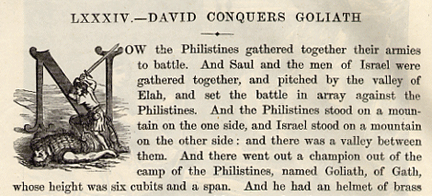
Lithograph letter illustrating The Child’s Bible Illustrated from a 19th century serial publication.

When the once holy land of Biblical proportions is the issue on the front page of every newspaper, politics must make way for metaphor. The Israeli plan to bring down Hamas echoes with Samson bringing down the temple on the Philistines. Lots of Philistines were killed that memorable day, but only with a martyr’s mentality. Plug in “Gazans” or “Israelis” for “Philistines,’ and the martydom makes both scenarios equally mad. Moving forward in Biblical time, the Philistines did not disappear as a thorn in the side of Israel. Today, well beyond the world of the prophets, the jet fighters and tanks of the IDF have replaced David’s sling, but search as the military scanners may there is no Goliath in modern Gaza. Was Sophocles still writing for the stage, the ongoing Israel/Palestine tragedy would make Oedipus Rex look like Twelfth Night. How unbiblical a thought. Continue reading David vs Goliath, the IDF vs Hamas
Is Israel Repeating Mistakes of the Past?


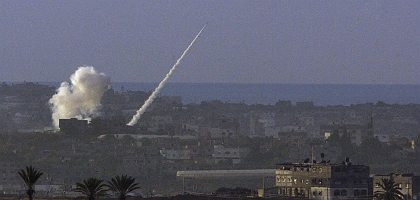
A rocket fired from the Gaza Strip takes off toward Israel. AP

Is Israel Repeating Mistakes of the Past?

By Yassin Musharbash, Der Spiegel, December 31, 2008

Israel has promised a “war to the bitter end.” Yet history is full of examples showing that battling an organization like Hamas is almost futile. It is a lesson Israel learned just two short years ago.

It was almost a century ago when the British soldier T.E. Lawrence described for posterity the World War I revolt of the Arabs against the Ottoman Empire in the Middle East. Lawrence helped organize the revolt, and he famously said that combating such an uprising was “like eating soup with a knife.”

A rocket fired from the Gaza Strip takes off toward Israel.
His adage may not be perfectly applicable to the current Israeli offensive against Hamas in the Gaza Strip. Hamas, after all, is more than just a rebel group. It is simultaneously a political party, a social-services organization and a terrorist group. It is a sworn enemy of Israel, and it continues to incessantly fire rockets across the border, hoping to kill Israeli civilians at random. The group has a civilian and a military component.

Still, the maxim uttered by Lawrence — who was later immortalized in the film “Lawrence of Arabia” — does have a present-day application when speaking of the ongoing fight against terror groups like the Taliban, Hezbollah, al-Qaida. And Hamas. Lawrence was essentially describing the problems that result when a regular army comes up against an irregular fighting force. In military parlance, such a conflict is called “asymmetrical.” Continue reading Is Israel Repeating Mistakes of the Past?

Gaza: the cycle can be broken


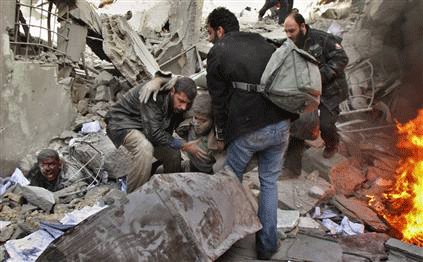
Palestinian rescue workers carry a wounded prisoner in the rubble of the Saraya prison after it was hit by a missile strike on Sunday. Photo by Majed Hamdan / AP.

Gaza: the cycle can be broken

The Independent/, Sunday, 28 December 2008

More than 30 years ago, the American political philosopher Michael Walzer wrote: “First oppression is made into an excuse for terrorism, and then terrorism is made into an excuse for oppression.” It was a good description of the Israel-Palestine problem then, and a good description of the dynamic that would make it worse over the following three decades.

It is a dynamic that operates in contravention of the simple, comforting and wrong principle that two democracies have never gone to war against each other.

The conflict between Israel and the people of Gaza is driven by democratic impulses. Hamas, the Islamic political party and paramilitary organisation, won control of the Gaza Strip in free and fair elections in January 2006. Its charter famously calls for the destruction of the state of Israel and, although that was hardly the issue on which those elections were fought, there can be little doubt about the depth and extent of hostility towards Israel felt by the majority of the population of Gaza. Continue reading Gaza: the cycle can be broken

People in Muslim Nations Conflicted About UN

People in Muslim Nations Conflicted About UN

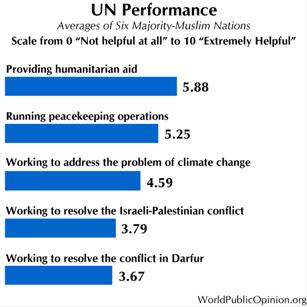
Favor More Active UN With Broader Powers, But See US Domination and Failure to Deal With Israel-Palestinian Conflict

Press Release, WorldPublicOpinion.org, December 3, 2008

College Park, MD—A poll of seven majority Muslim nations finds people conflicted about the United Nations. On one hand there is widespread support for a more active UN with much broader powers than it has today. On the other hand, there is a perception that the UN is dominated by the US and there is dissatisfaction with UN performance on several fronts, particularly in dealing with the Israeli-Palestinian conflict.

These are the findings from a WorldPublicOpinion.org survey in Egypt, Turkey, Jordan, Iran, Indonesia, the Palestinian Territories, and Azerbaijan. Muslims in Nigeria (50% of the general population) were also polled. The survey was conducted in two waves in 2008. Overall, 6,175 respondents were interviewed in the first wave and 5,363 in the second; a total of 11,538 respondents participated in the study. The first wave was conducted January 12-February 18, 2008 though in two nations it was completed in late 2006. The second wave for all nations was completed July 21-August 31, 2008. Margins of error range from +/-2 to 5 percent. Not all questions were asked in all countries. Continue reading People in Muslim Nations Conflicted About UN

Friend of Israel


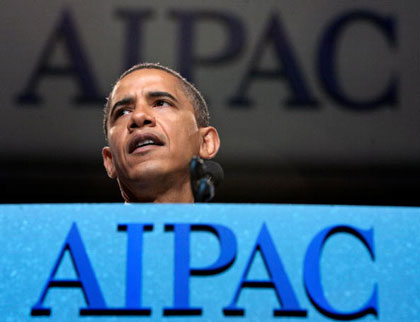
Let’s hope Obama won’t be a ‘friend of Israel’

By Gideon Levy, Haaretz,
November 9, 2008

The march of parochialism started right away. The tears of excitement invoked by U.S. president-elect Barack Obama’s wonderful speech had not yet dried, and back here people were already delving into the only real question they could think to ask: Is this good or bad for Israel? One after another, the analysts and politicians got up – all of them representing one single school of thought, of course and began prophesizing.

They spoke with the caution that the situation required, gritting their teeth as though their mouths were full of pebbles, trying to soothe all the fears and concerns. They searched and found signs in Obama: The promising appointment of the Israeli ex-patriots’ son, whose father belonged to the Irgun, and maybe also Dennis Ross and Dan Kurtzer and Martin Indyk, who may, God willing, be included in the new administration.

But in the background, a dark cloud hovered above. Careful, danger. The black man, who had associated with Palestinian expats, who speaks of human rights, who favors diplomacy over war, who even wants to engage Iran in dialogue, who will allocate more funding for America’s social needs than to weapons exports. He may not be the sort of “friend of Israel” that we have come to love in Washington, the kind of friend we have grown accustomed to. Continue reading Friend of Israel

Obama’s Iranian Opening

by William O. Beeman, New America Media, News Analysis, November 12, 2008

New America Media Editor’s note: Diplomacy between the United States and Iran has been at a standstill. President-elect Barack Obama has a great opportunity to end the cold war between the two nations. NAM contributing writer William O. Beeman is professor and chair of the Department of Anthropology at the University of Minnesota.

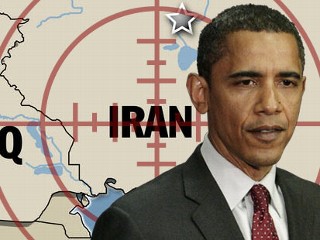
President-elect Barack Obama has a serious opening to improving relations with Iran, if he knows how to exercise it. Unfortunately, his transition advisory team is weak on Middle East affairs, and almost non-existent on Iran. This leaves the president-elect prey to the same forces that have tried to sabotage progress on rapprochement with Iran during the Bush administration.

Paradoxically the Bush administration in its last days is flirting with a thaw on Iranian relations. They have been giving serious consideration to establishing a real United States Interests Section in Tehran. Iranians have had an Interests Section in Washington for decades. By contrast, the Swiss Embassy has represented U.S. interests with Swiss personnel. Continue reading Obama’s Iranian Opening

The shoe is on the other fit

A Difference in Language

By Abdul Rahman Al-Rashed, Asharq Alawsat, November 11, 2008

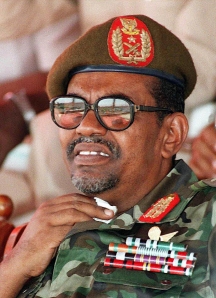
I can not imagine what Sudanese President Omar Hassan Al Bashir had for dinner the evening when he made his fervent speech in Darfur where he proclaimed ‘America, Britain, and France are all underneath my shoes’. I hope that the President’s shoes remain in good condition because he will surely need them over the coming days.

That said, it is Bashir’s good fortune that the metaphor of being underneath one’s shoes is lost in translation and is not such an insult in the West, as it is in our culture, for surely such a remark made by the President about an Arab country would have led to war. Continue reading The shoe is on the other fit

Showcasing Palestinian cinema


Jackie Reem Salloum, the director of Slingshot Hip Hop, wants to encourage Palestinians to tell their stories through artistic expression.

Showcasing Palestinian cinema
By Deena Douara, Al-Jazeera, October 29, 2008

On the heels of the Toronto International Film Festival comes another motion picture fete about a people trying to carve out a state in a war-torn region.

From October 25 to November 1, Toronto will showcase 36 films about the Palestinians as part of year-long commemorations marking the 60th anniversary of the ‘Nakba’, or catastrophe.

Kole Kilibarda, one of the Toronto Palestine Film Festival (TPFF) organisers, believes audiences will be surprised by “the amazing cinema produced even under the most difficult of circumstances”.

The TPFF will include Canadian, North American, and world premieres of award-winning documentaries, features and short films.

Palestinian films have gained prominence on the international scene in recent years, beginning with the enigmatic Divine Intervention (2002) and the controversial Oscar-nominated Paradise Now (2005). Continue reading Showcasing Palestinian cinema