Category Archives: Arab-Israeli Conflict

Another War, Another Defeat


Professor John Mearsheimer

Another War, Another Defeat

The Gaza offensive has succeeded in punishing the Palestinians but not in making Israel more secure.

By John J. Mearsheimer, The American Conservative, January 26, 2009

Israelis and their American supporters claim that Israel learned its lessons well from the disastrous 2006 Lebanon war and has devised a winning strategy for the present war against Hamas. Of course, when a ceasefire comes, Israel will declare victory. Don’t believe it. Israel has foolishly started another war it cannot win.

The campaign in Gaza is said to have two objectives: 1) to put an end to the rockets and mortars that Palestinians have been firing into southern Israel since it withdrew from Gaza in August 2005; 2) to restore Israel’s deterrent, which was said to be diminished by the Lebanon fiasco, by Israel’s withdrawal from Gaza, and by its inability to halt Iran’s nuclear program.

But these are not the real goals of Operation Cast Lead. The actual purpose is connected to Israel’s long-term vision of how it intends to live with millions of Palestinians in its midst. It is part of a broader strategic goal: the creation of a “Greater Israel.” Specifically, Israel’s leaders remain determined to control all of what used to be known as Mandate Palestine, which includes Gaza and the West Bank. The Palestinians would have limited autonomy in a handful of disconnected and economically crippled enclaves, one of which is Gaza. Israel would control the borders around them, movement between them, the air above and the water below them. Continue reading Another War, Another Defeat
Entitled to consideration and respect


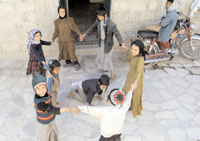
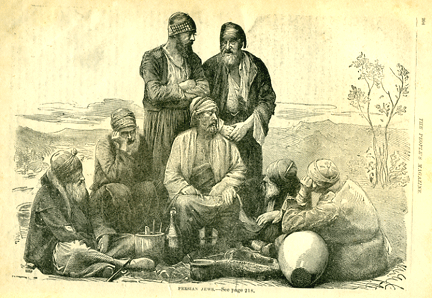
Illustration of “Persian Jews” from the People’s Magazine, 1879

The current fighting in Gaza is a tragedy of Greek dramatic proportions. On the one hand a highly sophisticated military machine wielded at present with Hawkish intent, on the other a ragtag guerilla group bent on lobbing barbs at the Hawk’s fortified lair. And in the middle frightened civilians in a humanitarian nightmare of medieval mindset. The problem is that neither side is really willing to treat the other with consideration and respect. In this unethical tie, of course, the onus must be on the stronger to recognize the limited options of the weaker.

The tragedy does not end with the present loss of life, limb and hope for Gazans. Unfortunately, it overshadows a historical trajectory that created the rise of Zionism as a political ideal in Europe. There is no excuse for the present punishing policies of Israel towards the residents of Gaza. Indeed, it is all the sadder given the sordid history of anti-Semitism in both the Christian-dominated West and Islamic-dominated Near East. Recently I picked up an old magazine from 1879, published exactly 140 years ago. On one page I was struck by the extraordinary pathos of an image of “Persian Jews.” Continue reading Entitled to consideration and respect

What You Don’t Know About Gaza


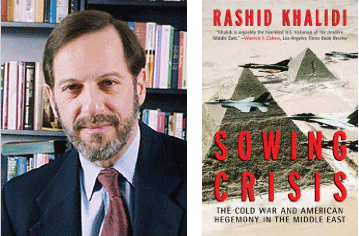
Professor Rashid Khalidi of Columbia University, left

What You Don’t Know About Gaza
By RASHID KHALIDI, The New York Times, January 8, 2009

NEARLY everything you’ve been led to believe about Gaza is wrong. Below are a few essential points that seem to be missing from the conversation, much of which has taken place in the press, about Israel’s attack on the Gaza Strip.

THE GAZANS Most of the people living in Gaza are not there by choice. The majority of the 1.5 million people crammed into the roughly 140 square miles of the Gaza Strip belong to families that came from towns and villages outside Gaza like Ashkelon and Beersheba. They were driven to Gaza by the Israeli Army in 1948.

THE OCCUPATION The Gazans have lived under Israeli occupation since the Six-Day War in 1967. Continue reading What You Don’t Know About Gaza

How Israel brought Gaza to the brink of humanitarian catastrophe


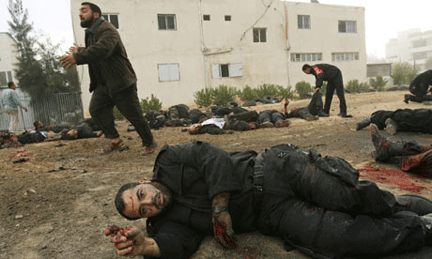
A wounded Palestinian policeman gestures while lying on the ground outside Hamas police headquarters following an Israeli air strike in Gaza City. Photograph: Mohammed Abed/AFP/Getty Images

How Israel brought Gaza to the brink of humanitarian catastrophe
by Avi Shlain, The Guardian, Wednesday 7 January 2009

The only way to make sense of Israel’s senseless war in Gaza is through understanding the historical context. Establishing the state of Israel in May 1948 involved a monumental injustice to the Palestinians. British officials bitterly resented American partisanship on behalf of the infant state. On 2 June 1948, Sir John Troutbeck wrote to the foreign secretary, Ernest Bevin, that the Americans were responsible for the creation of a gangster state headed by “an utterly unscrupulous set of leaders”. I used to think that this judgment was too harsh but Israel’s vicious assault on the people of Gaza, and the Bush administration’s complicity in this assault, have reopened the question.

I write as someone who served loyally in the Israeli army in the mid-1960s and who has never questioned the legitimacy of the state of Israel within its pre-1967 borders. What I utterly reject is the Zionist colonial project beyond the Green Line. Continue reading How Israel brought Gaza to the brink of humanitarian catastrophe

Gaza aid diary: Nowhere is safe


Many Gazan families are in need of aid, but NGOs are struggling to reach them all [GALLO/GETTY]


Gaza aid diary: Nowhere is safe

by Salwa El Tibi in Gaza, Al-Jazeera, Tuesday, January 6, 2009

Yesterday was the first time in nine days that I was able to leave my house.

It is about a 10 minute journey from my home to the warehouse where the Save the Children food parcels are stored – but even as I drove the Save the Children car to work, I felt very afraid.

The noise from the bombings was so loud. There were very few cars on the roads and all of the shops were closed.

I saw three buildings that had been completely destroyed.

Dangerous work

At the warehouse I waited for our volunteer staff who help to distribute our food parcels across different parts of the Gaza Strip.

When we distribute the parcels we work in groups because it is so dangerous. Continue reading Gaza aid diary: Nowhere is safe

Murder in ‘Amran


Children of deceased Masha Nahari, playing in their front yard. Because of hostility against them and fear of harm they remain indoors as must as possible. (YT Photo by Amira Al-Sharif)

While Gaza crisis causes more hostility against Yemeni Jews,
murdered Jewish family demands transferring trail to Sana’a

by Mohammed bin Sallam, Yemen Times, January 4, 2009

SANA’A. During the second court session of the trial of Abdul Aziz Al-Abdi, who is accused of murdering Jewish citizen Masha Al-Nahari this past December 31, journalists and lawyers said that “the court session was full of chaos and quarrels. A soldier was attacked by one of the family members of the accused. In addition, the Jewish family received death threats from the murderer’s relatives.”

Advocates of Al-Nahari demanded to transfer the case and trial to Sana’a due to lack of proper security at the Amran Court and dominance of Al-Abdi’s relatives who �control the events of the session and create chaos inside the court hall,” said Abdul Rahman Barman, a lawyer from Allaw Law Foundation which volunteered to defend Al-Nahari’s case in the court. Continue reading Murder in ‘Amran

Rizpah and the Politics of Vengeance


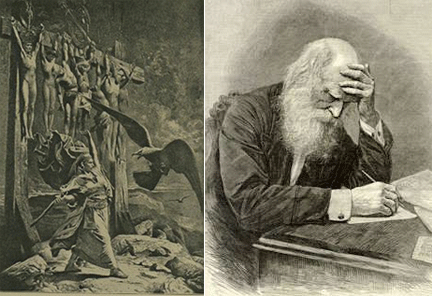
Rizpah protecting the bodies of her sons, by George Becker, left; William Cullen Bryant, right

With Gaza ablaze, the political woes of contemporary Palestinians continue to echo past tragedies on the same blood-drenched ground. Consider the vengeance of the Gibeonites, both a purge and a scourge in the early days of Israel’s King David. Setting aside who is who for the moment, the biblical account recorded in the book of II Samuel describes a weak David with a struggling economy (called a famine in those days). The Gibeonites, who sought vengeance for their slaughter by the former King Saul, demanded seven of his sons, and David agreed. The princes were soon hanged in eye-for-an-eye justice. Yet the queen mother of two of the sons spent five months protecting the bodies from being devoured by beasts not shaped like humans. Her name was Rizpah and she can be seen as a maternal heroine or a distraught widow.

Like so many of these seemingly sacred stories, almost any moral can be teased out of the narrative. Should the lesson be “Do not make deals with the enemy, even when you are weak”? I can see both supporters of Hamas and Israeli hardliners applauding the message. Or might it be possible to read the story in a more sane hindsight as a referendum on the futility of vengeance? Were the matter simply an eye for an eye, it could theoretically stop after the first act of vengeance, but this region has seen an infinity of eye-gouging that no blessed peacemakers have yet been able to stop. My own preference is for Rizpah fighting off the vultures of violence, less an act of protecting only one’s own than defiance of the perpetual killing that makes martyrdom a virtue on both sides.

Once again, I prefer to tune out the talking heads and let a poet of the past speak: Continue reading Rizpah and the Politics of Vengeance

The Siege of Gaza


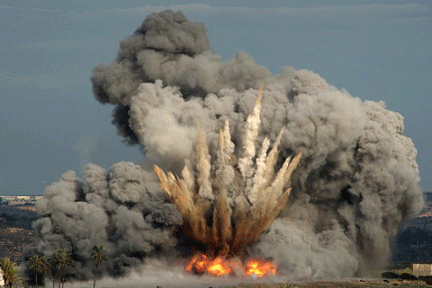
A bomb dropped by an Israeli air force F-16 jet exploding in Beit Hanoun, north of the Gaza Strip.

The Siege of Gaza: Barack Obama’s First ‘Test’?
John L. Esposito, Middle East Online, December 31, 2008

Until the Israeli government gets a message that the international community will hold Israel to the same standards as it does other nations and the Palestinians, there can be no hope for peace negotiations to work.

While some had predicted Barack Obama would be “tested” early in his administration by America’s enemy Osama, Obama’s first major foreign policy “test” has instead come from America’s ally, Israel. Continue reading The Siege of Gaza