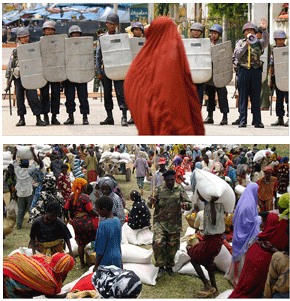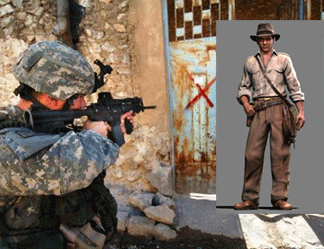
Get ready for a shock. Anthropology (the best kept discipline secret in American academics) made the front page of today’s New York Times. And, believe it or not in the Ripley tradition, it was not about finding the “missing link” or “Noah’s ark”. In a report filed by David Rohde and entitled “Army Enlists Anthropologists in War Zones,” the focus is on the Pentagon’s newly instituted “Human Terrain Teams,” a kind of social science intellectual swat team approach, in which the military uses experts on the local culture. In a video on the website, an American officer explains that his soldiers no longer routinely break down doors of houses and violate the cultural space of Afghan homes, but let their Afghan counterparts knock first while they wait respectfully outside. While I am not sure it takes an anthropologist to point out what should be obvious through simple experimentation, the basic argument of the article is that the military is being coached to listen and work with the local population rather than play knee-jerk mercenary search and destroy games.
It is hard to argue with the sentiment that talking and negotiating are better ways to accomplish a proposed peace-building mission than assuming everybody in sight is a terrorist or is hiding one. So anthropologists, especially recent graduates who have a hard time finding jobs, should be pleased that supply actually might be influenced by a newfound demand for their services. Take Marcus B. Griffin, for example, an embedded anthropologist in Iraq who has a blog discussing his work. Continue reading Anthropo covertus: A Disputed Species