Category Archives: Ethics

The best Kurd?


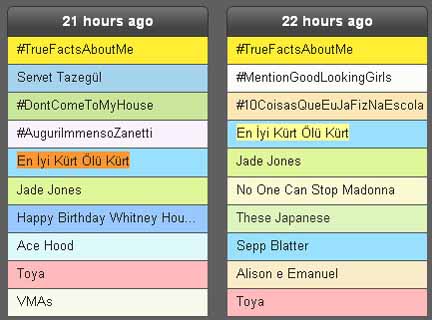
In the social media revolution Twitter has taken a breathtaking role. The Arab Spring may still have sprung without cellphones, but the rapid ability to communicate has been an enormous aid to coordinating protests. But it seems that much of Twitter is for twits, to whit media narcissists who think the public lives to follow their quotidian banality and the full range of bigots who use Twitter to spew out hate. Take the Turkish phrase “En İyi Kürt Ölü Kürt” (“The best Kurd is a dead Kurd.”), which trended on August 9, as reported on Al Jazeera. The trend came after news coverage of an ambush of a Turkish military bus by suspected Kurdish separatists. But the anti-Kurdish sentiments may also have been heightened by Turkey’s decision in June to allow the teaching of Kurdish in schools.

Part of the trend was the response by Kurds who were angry at the racist post. Continue reading The best Kurd?

Consuming halal or letting halal consume you


Dietary rules — I suspect these have always been around as our earliest ancestors learned what foods made them feel good, what foods made them sick and what foods made them well. The ancient world and the Islamic era have bequeathed a wealth of herbal remedies and food recipes that continue to have relevance. Then there are the taboos, the kosher and halal rules that go beyond any scientific rationale to diet by revelatory fiat. The kosher laws in Leviticus, as anthropologist Mary Douglas showed many years ago, are not really about health, but symbolic for the community that applies them. Tainted beef will get you sick just as quickly as tainted pork. But as long as there is no harm, then eating kosher or halal is not a problem. It may be an inconvenience, but it is not going to harm your health.

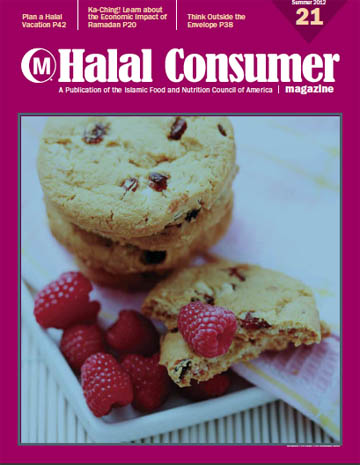
It is one thing to eat halal and another to turn the idea of halal food into something that is more about consuming than eating as a religious preference. Devout Christians complain that Christ has been x’d out of Christmas and they are right: Santa Claus, Christmas trees and oligatory gifts define Christmas as it is currently consumed in the United States. I suspect there is a danger that the same thing can happen to halal food and to the fasting month of Ramadan. Let’s take Ramadan first: the original intent was for religious reflection at a time when both Jews and Christians also observed fasting as a reflective rite. Going without food and water, no matter what the exact time dimension, is a powerful symbol pointing to those less fortunate who may have no food or water or barely enough to survive. It can also cleanse your body. But if you simply abstain during the day, then gorge after sunset and spend half the night celebrating, what exactly is the point of fasting? Continue reading Consuming halal or letting halal consume you

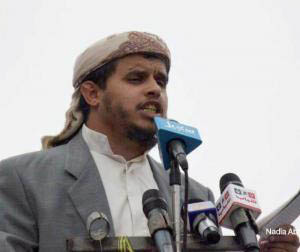
Thank God it’s Friday? Not in Yemen these days


“We want imams to discuss our problems, discuss government decrees and oppose oppression.”

Friday sermons not relevant
by Mohammed Al-Samei, Yemen Times, August 2, 2012

Yemenis have been critical of the performance of imams because of the topics they address in Friday sermons.

They say that the imams do not address the relevant issues from which residents suffer. Moreover, they don’t discuss new topics in their sermons.

Fathi Abu Al-Nassr, a Yemeni journalist, said that many imams don’t touch on the problems of society or new developments among residents. He added that the core of the sermon ought to be the concerns of Yemenis.

Abu Al-Nassr described imams as “parrots who address expired issues.” He pointed out that they are one of the most important reasons behind the ignorance of society.

Although some imams attempt to address different issues, they are discouraged by society members who refuse to discuss such topics.

Khaled Al-Hada’i, an imam who appears in various mosques in Sana’a, told the Yemen Times that many imams don’t shed light on local problems; instead they address religious issues.

He explained that bringing discussion of current affairs to the sermons is a slow process due to the complicated situation in Yemen and lack of awareness among residents. Continue reading Thank God it’s Friday? Not in Yemen these days

Islam and America: A Moroccan View


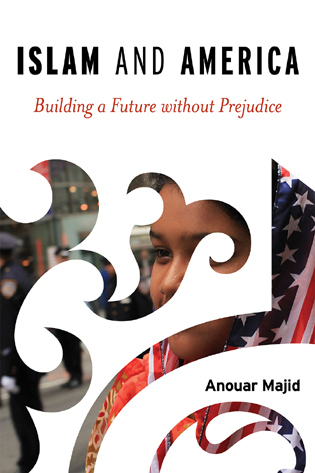
[Webshaykh’s note: The Moroccan American scholar Anouar Majid, Founding Director of the Center for Global Humanities and Associate Provost for Global Initiatives at the University of New England, has recently published a book well worth reading. Following on his earlier analysis of the evolving relations between America and the Islamic world, this is a personal foray that calls for building a future of mutual respect without prejudice. Below is a brief excerpt, but I heartily endorse reading the entire book, Islam and America.]

I know for a fact that Muslims and Americans can engage in meaningful discussions that can lead to progress, if such discussions are anchored in some knowledge of history. I witnessed such debates in Rabat, Morocco’s capital. in 2005, after I had given a lecture to a packed hall of Moroccan and American students, as well as a couple of officers from the US embassy, on the meaning of American freedom. At that time, the US government was trying hard to reach Muslims, but Muslim skepticism and fear were aggravated by US military actions in the region and by the aspersions cast on their religion in the media. Still, the topic of freedom generated such a lively debate that it planted the idea for this project in my consciousness.

As I did with the topic of freedom in Rabat, I am using this book to survey American-Muslim relations within the old clash of religions before we ask ourselves –Muslims and non-Muslims alike –whether our beliefs and prejudices still make sense today. I wouldn’t be surprised if my readers –American and Muslim, Israeli and Palestinian, Jew and Arab, or just simply religious and secular – found themselves uncomfortable at different points in the narrative. No nation, religion, or ethnicity gets a free pass, not because I want to be provocative, but because I am at a point in my life when, both intellectually and, even more importantly, emotionally, such rigid tribal divisions mean very little to me. The blind passions they engender are plunging our already fractured world into a deepening abyss. If gun lobbyists in the United States often claim that people – not guns – kill, then we must make sure that people carrying guns are not ideologically predisposed to shoot. I do respect the intensity of religion or nationalist convictions, but I also hope that such sentiments do not prevent us from engaging in serious conversations about our common future.

Excerpt from Anouar Majid, Islam and America: Building a Future without Prejudice (Lanham, MD: Rowman and Littlefield, 2012, p. 20).
MBBBB (Muslim Brotherhood Bashing by Bachman)


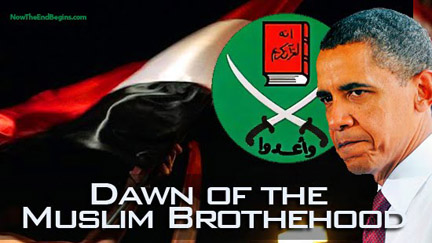
Anti-Obama propaganda on Americans Stand with Israel website

Ellison Challenges Bachmann: Put Up or Shut Up

by James Zogby, The Huffington Post, July 14, 2012

A few weeks back, the sensation-seeking Representative Michele Bachmann did her best imitation of the late Senator Joseph McCarthy. She and four of her Congressional colleagues released letters they had collectively sent to the Inspectors General of the Departments of State, Justice, Defense, and Homeland Security, and the Office of the Directorate of National Intelligence calling on them to investigate whether “influence operations conducted by individuals and organizations associated with the Muslim Brotherhood” have “had an impact on the federal government’s national security policies.”

Warning of “determined efforts by the Muslim Brotherhood to penetrate and subvert the American government as part of its ‘civilizational jihad'” the representatives wanted the Inspectors General to identify the Muslims who were influencing U.S. policy.

In making these charges, Bachmann and her cohorts were relying on the work of a Washington-based group the Center for Security Policy — a notorious player in the anti-Muslim industry that has been working for several years to smear Muslim American groups. The head of the Center served as one of Bachmann’s advisers during her ill-fated run for the presidency and the only source cited in the Congressional letters was the Center’s “training program,” “The Muslim Brotherhood in America: The Enemy Within.” Continue reading MBBBB (Muslim Brotherhood Bashing by Bachman)

A Salacious Salafi


Sheikh Wanis and his fellow adulterers

Al-Ahram has published an account of a salacious encounter of an Egyptian Salafi who is a former MP.

Egyptian authorities have decided to put on trial a Salafist ex-MP who was caught allegedly performing an “indecent” sexual act with a woman in public, a judicial source said on Thursday.

Ali Wanis’s trial is set for Sunday and will take place on time although he has gone missing since police found him last month engaged in a sexual act with a 22-year-old woman in a car parked on a highway.

The woman, a university student, is behind bars and the public prosecutor’s office has ordered the arrest of Wanis, a cleric and former MP for the ultra-conservative Al-Nour party.

After the incident in early June, Wanis denied any wrongdoing and said in a video posted on his website that he had parked along the side of the road because his passenger “became sick.”

But the pair have been accused of performing an “indecent” sexual act in public.

Al-Nour party, won the second largest number of seats in parliamentary elections last winter after the Muslim Brotherhood.

It was hit with a scandal in March when another lawmaker was forced to resign from parliament and from his party after claiming he was injured in a carjacking — to explain bandages on his face — when in fact he had had a nose job.

Wow — a blow job and a nose job and the appeal of Salafism takes a nose dive. Continue reading A Salacious Salafi

Timbuctu too…


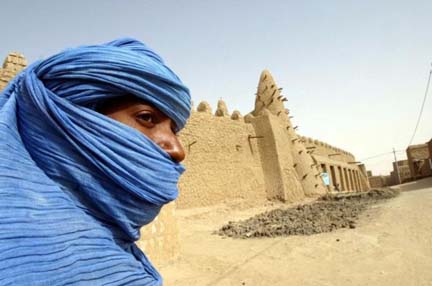
A Tuareg nomad stands near a 13th century mosque in Timbuktu in this file photo [Reuters]

There is an old saw in English: cutting your nose to spite your face. The sorry lot of vigilante Ansar extremists have already desecrated several Muslim saints’ tombs in southern Yemen, but now come reports of lawless fanatics destroying saint shrines in the famed city of Timbuktu in Mali. Al Jazeera is reporting that many, if not all, of the shrines there on the World Heritage List have been damaged or destroyed. These are ritual attractions considered sacred by local Muslims for several centuries, not replicas of the Buddha or foreign idols. So who exactly do these fanatics hate? If you think they are doing this because they hate America and its freedoms, think again.

Iconoclasm has a long history that is hardly unique to the Middle East. The modus vivendi is the idea that if you don’t like something, just get rid of it no matter what other people think. Tolerance and dialogue might as well be Satanic in this twisted worldview. It is important to observe that in both the Yemeni case and now in Timbuktu the destruction takes place because of an almost total breakdown of security. No government, responsible or not to world opinion, is behind this action to such a sacred Islamic site. It is very much a replay of the Wahhabi wave that swept across Arabia with the sword of the Sa’ud clan. The Wahhabis, considered fanatics at the time by most other Muslims, wanted to turn back the clock to a narrow understanding of what they thought life was like in the time of the Prophet. Were ‘Abd al-Wahhab, who died in 1792 (just six years before Napoleon invaded Egypt and proclaimed himself a true Muslim come to rescue Egypt from its corrupt rulers) to come back from the dead and see the palaces, shopping malls and gentrification of the ka‘ba as these have evolved with the vast oil wealth of the Saudi elite, he would no doubt follow Balaam and curse the day he ever met Ibn Sa’ud.

Timbuktu, as a major African center of Islamic education, is also a rich treasury of Islamic manuscripts. Will these fanatics torch the handwritten copies of the Qu’ran, traditions and other religious books in the libraries? ‘Abd al-Wahhab is not about to be resurrected, but there is a need for a modern day Muslim Balaam to get off his ass and curse such sacrilege.

Below the Arab Spring


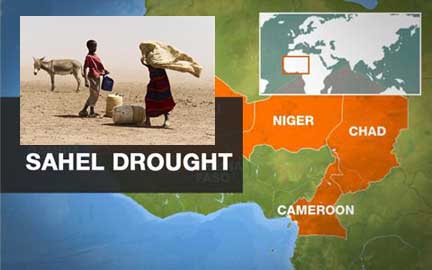
This summer the “Arab Spring” seems to be getting hot as hell, even beyond the “war-is-hell” sense. Masses of Egyptians are rallying in Tahrir Square to protest the military’s latest moves; Syria downs a Turkish fighter jet; there are increasing riots in Sudan not related to the secession of the south; and the list goes on. But below the North African countries where the jasmine-tinted winds of change first blew away dictators in Tunisia, Egypt and Libya (with the anti-dictatorial aroma catching on in Yemen and reaching as far east as Bahrain) there is a crisis which is not being covered. The hot topic should be the Sahel, the region that cuts across Africa in a dry zone of perpetual dearth and periodic death.

In a special report on Al Jazeera, it is reported that 15 million people are affected by a severe drought combined with ineffective government assistance programs and decreasing food supply. The report provides a country-by-country breakdown of the problem. Consider the situation in Mali, for example:

Prices of millet and sorghum grain have risen significantly after harvests in 2012 were 25 per cent lower than in 2011. Political instability, following a coup in March 2012 and the breakup of Northern Mali into the self-proclaimed state of Azawad, has further hampered the ability of aid agencies to assess needs and deliver the necessary aid to this landlocked country.

The UN Office for Coordination of Humanitarian Affairs (OCHA) reported that more than a million children face acute malnutrition, with as many as 146,000 people displaced into Niger, Burkina Faso and Mauritania, under deteriorating circumstances.
People affected: 3-4million.

Continue reading Below the Arab Spring