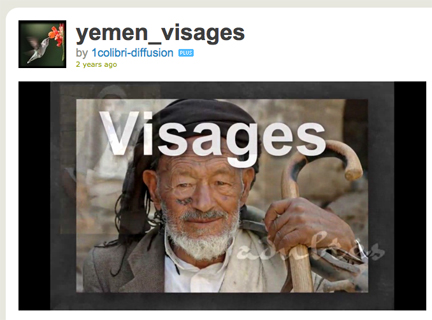
With all the scenes of angry crowds protesting President Salih’s 32-year reign, it is useful to remember who the Yemeni people are. Here is a delightful montage online.
With all the scenes of angry crowds protesting President Salih’s 32-year reign, it is useful to remember who the Yemeni people are. Here is a delightful montage online.
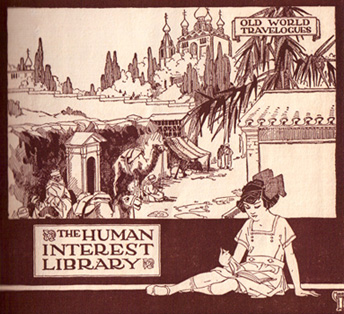
Exactly 90 years ago in 1921 a four-volume set of encyclopedia-like human interest books was published as The Human Interest Library: Visualized Knowledge by Midland Press in Chicago. All four volumes ended up in my family’s library, but my favorite is the fourth volume entitled Old World Travelogues. Here is how the volume begins:
It was a saying of Lord Bacon that “History maketh one wise.” Perhaps this is not universally true, but one can scarcely traverse the history and geography of the Old World with its deeds of heroism, picturesque scenes and peoples, splendid buildings, or hallowed places, without having become wiser and better, as well as having enjoyed many an hour of keen pleasure. With the most interesting of guides, we visit splendid cities, historic rivers of scenic beauty or castle-lined banks; monument-covered battle-fields, or the haunts of poets and cavaliers.
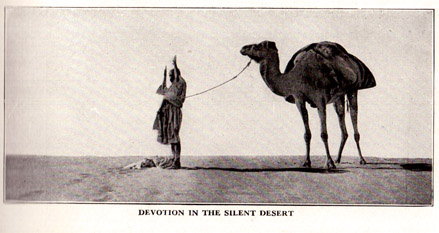
The image above is at the head of the article on “The Sahara and its Inhabitants” (pp. 95-103). If this history is intended to make the reader wiser, it is a bleak premise indeed. Here is how the desert is represented:
The desert is a dreary, monotonous place, life there has a great sameness, there is little physical work to be done, little cooking is required and there is little to engage the attention of men. Continue reading Old World Travel 90 years on: #1 The Sahara
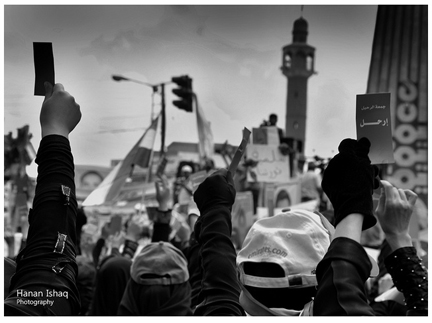
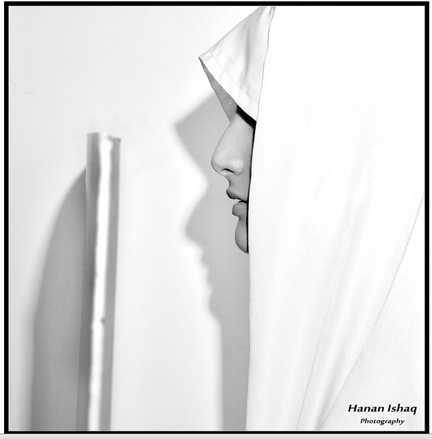
The current protests in Yemen have not gone unnoticed. Among the Yemeni photographers chronicling the current unrest is Hanan Ishaq, a young Yemeni artist whose work is featured on Flickr.
[With this post I start a new series dedicated to photographs in an “Orientalist” mode. In addition to Reading Orientalism (which is also the title of my last book), the creation of an imagined Orient is very much a pictorial voyeuristic voyage. In this series I focus on Western images of the Middle East and North Africa, both those that perpetuate stereotypes and those that chip away at the bias. Readers of the blog are welcome to send in images they have found and want to share.]
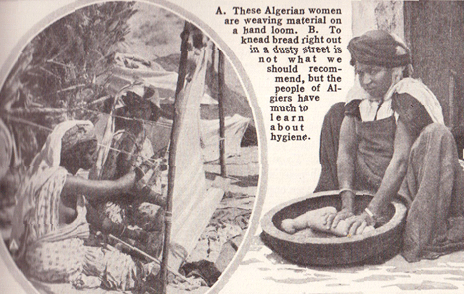
I start with images from a 1933 edition of Richards Cyclopedia, with 24 volumes published in New York by J. A. Richards, Inc and edited by Ernest Hunter Wright and Mary Heritage Wright. This is an unusual encyclopedia, arranged by topics in a more or less arbitrary order but replete with images. One of the articles is called “The Green Girdle of the Sahara” (vol 18, pp. 4631-4636). The subtitle is: “What Men Live Now along the Northern Strip of Africa, Where the Egyptians Started the Clock of History and Where Grim Carthage Used to Frown across the Sea at Rome?”
The article starts out by describing the Barbary coast and then adds this comment:
Although the Barbary Coast is not an Eastern, or oriental, country, lying as it does due south from Europe, it seems to visitors from Europe and America like a corner of the Orient. It has a religion out of the East, Mohammedanism (mô-hâm’êd-ân-îz’m). Among the farming peoples who make their living from its soil are many restless Jews and fierce Arabs, whose Eastern ways have been taken up by the native peoples. Thus the Berber of this small fertile strip treats his women folk as an oriental might treat them, and he has an oriental’s indifference to dirt. Yet the Berbers are cousins of the northern races, many of them having blue eyes and fair hair.
To be an Oriental outside the literal Orient, to have an indifference to dirt and to be a Mohammedan: such is the fate for the Berber in 1930’s stereotyping. The image above illustrates the sentiment of an Algerian woman who has “much to learn about hygiene.” Given the Islamic duty of ablutions before prayer and the long history of anti-bathing practice in Europe, this is a very narrow put-down indeed.
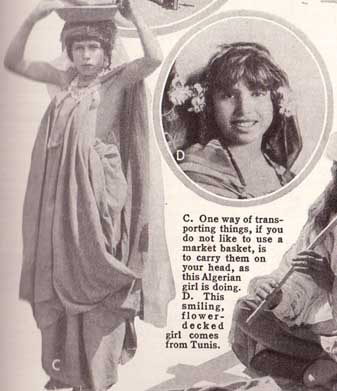
The picture immediately above shows both the hardship of being female (carrying market items on one’s head) and the beauty of the maid with flowers in her hair. Exotica über alles.
to be continued
Daniel Martin Varisco
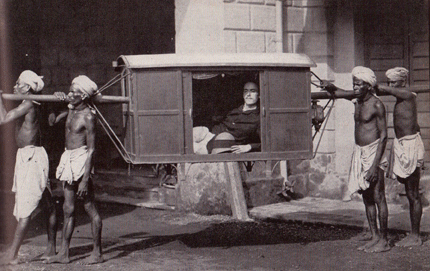
During World War II the Smithsonian Institution issued a number of “War Background Studies.” I recently came across #18 in this series entitled Peoples of India by William H. Gilbert, Jr. (Washington D.C.: Smithsonian Institution, April 29, 1944). I was struck by the archaic presentation of images and the overtly Orientalist writing of Gilbert, who is billed as a “Specialist in Sociology and Anthropology, Legislative Reference Series, Library of Congress” and posted an excerpt from his Introduction in a previous post. The following comments are in reference to this earlier post.
First, the old saw that a picture is worth a thousand words is as apt today as ever. In the last post the image provided there (and again above) of a British “sojourner” in a palanquin shows the Brit, prone and pith helmut at his side, staring outside his box of privilege, while there are two bare-chested bearers in front and two behind. What a compelling metaphor for the colonial view of India. There is no direct engagement between the foreigner and the people; they are merely there to take him from place to place by hand. Ironically, the caption notes that the palanquin is no longer used since the arrival of the railroad, so this image becomes a vestigial reminder of how the present occupies the past for its own comfort. Int his case the white man’s burden is turned upside down; the white man is quite literally the burden here.
Second, notice the adjectival mode in the paragraphs cited in the previous post. Continue reading India Orientalized for War, 2
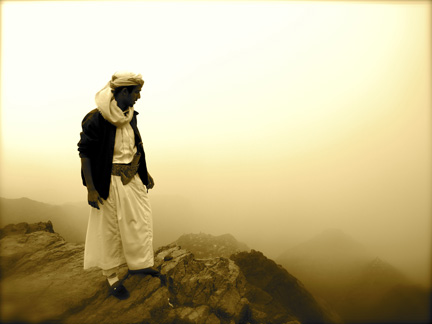
The recent protests that have shaken the Middle East from North Africa to Yemen so dominate the news these past couple of months that it is almost as though we see nothing else. Whether pictures are worth a thousand and one words, or even more, here are some superb photographs of Yemen by Raiman al-Hamdani, taken with his permission from his Flickr account.
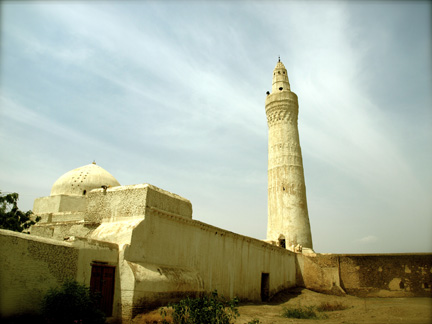
One of the important mosques in the coastal town of Zabid
“Palkee or palanquin and bearers, Calcutta. Although the palanquin is no longer used for travel in India, in the days before the railroad it was of primary importance. The Kahars and other castes of palanquin bearers are thought to have been the prototypes of the bearers who are assigned to European sojourners in India today.”
During World War II the Smithsonian Institution issued a number of “War Background Studies.” I recently came across #18 in this series entitled Peoples of India by William H. Gilbert, Jr. (Washington D.C.: Smithsonian Institution, April 29, 1944). The image on Plate 6, reproduced above, sets the tone for this non-war zone. I was struck by the archaic presentation of images and the overtly Orientalist writing of Gilbert, who is billed as a “Specialist in Sociology and Anthropology, Legislative Reference Series, Library of Congress.” The Introduction (pp. 1-2) sets out in words the image vividly portrayed above. Read this for yourself and consider the various ways in which the author’s rhetoric both romanticizes India and justifies the colonial enterprise. I will make my own comments in a succeeding post, but I welcome comments posted here.
Introduction
Hardly any other country in the world can make a stronger claim on man’s inherent desire for the unique and the romantic than India. Continue reading India Orientalized for War, 1
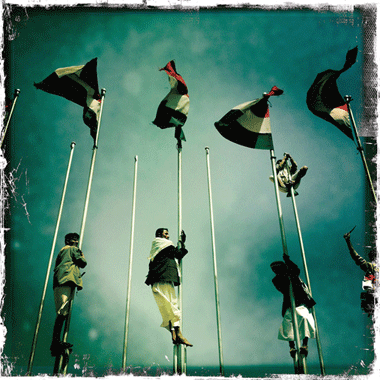 On April 1, pro-government protesters clung to poles bearing the country’s flag, demonstrating their loyalty to the regime; photograph by Karim Ben Khelifa for Newsweek
by Gregory Johnsen, Waq al-Waq, April 4, 2011
Following weeks of on-again, off-again negotiations, in which Salih appeared to back away from tentative deals to step down, forces loyal to his government opened fire on protesters today in Taizz, killing at least 15 according to al-Jazeera.
Other forces in Hudaydah also cracked down on protesters today, firing live bullets and tear gas and injuring more than 300 according to the breaking news tracker on Mareb Press. (Note: many of these injuries are the result of tear gas.)
There are also early reports of renewed clashes in Sanaa.
All of this comes shortly after the New York Times published a piece today suggesting that the US is ready to abandon President Salih.
The piece is getting a lot of play on al-Jazeera, and on nearly every Yemeni news website.
It is unfortunate that the Obama administration’s policy only began “to shift in the past week.” Salih’s demise has been self-evident for much longer than that, and consistent US refusals to see that and the resulting dithering and calls for negotiations (asking protesters to give up the only leverage they have) has only put U.S. security interests more at risk.
Salih’s last-ditch attempts to hold on to power have resulted in a security breakdown in other parts of the country, as parts of the military defected and others abandoned their posts. This breakdown has opened up a great deal of space for AQAP – anyone think they aren’t taking advantage of the current situation?
I argued nearly a month ago that the US needs to ask more than just: what comes after Salih? Continue reading Two Bad Options in Yemen