Category Archives: Yemen

Yemen’s legitimacy crisis


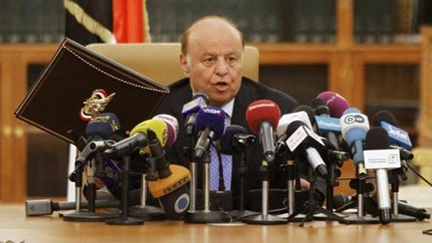
President Hadi, who is currently governing from Aden

Yemen’s legitimacy crisis is not new but is critical

By: Sama’a al-Hamdani, al-Araby al-Jadid, 3 March, 2015

On February 21, Yemen’s President Abd-Rabbo Mansour Hadi, escaped the Houthi-mandated house arrest and successfully fled to the southern city of Aden. A few hours later, al-Jazeera television broadcast a statement by the then resigned president. At the end of the statement, Hadi signed his name, “Abd-Rabbo Mansour Hadi, President of the Republic of Yemen”. It strongly suggested he had withdrawn his resignation.

So Yemen is now left arguably with two former presidents (Hadi and Ali Abdullah Saleh), a hugely powerful rebel militia leader (Abdulmalik al-Houthi), several secessionist movements (a couple of Southern Hiraks, a Marib Hirak and a Tihaman Hirak), UN-backed transitional committees, and two transitional agreements (The Gulf-Cooperation Council (GCC) transitional deal of 2011 and The Peace and Partnership Agreement of 2014).

In this confusion what, or rather, who, has legitimacy? Continue reading Yemen’s legitimacy crisis

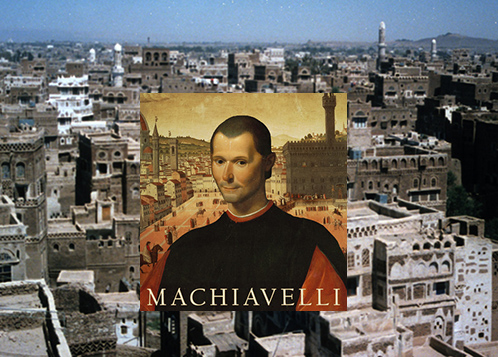
Lessons in Yemeni Machiavellianism

by Samaa Al Hamdani, Fikra Forum, February 20

[For this article in Arabic, click here.)

Last September, a rebel militia known as the Houthis successfully captured large portions of Yemen’s north and its capital, Sana. A few months later, in January 2015, President Abdu Rabu Mansour Hadi and his government resigned following clashes with the Houthis. By February 10, diplomatic missions in Sana’a had evacuated the country to protest the “illegitimate Houthi takeover.” Overnight, the Houthis became Yemen’s new rulers, but very little was known about them.

The enigmatic Houthi movement transformed from a Zaydi revivalist group in the early 1990s, to a rebel movement in the mid-1990s, to an enemy warring against the Yemeni state in the early 2000s. Following the revolution in 2011, the Houthis secured 33 seats in the National Dialogue Conference (NDC), because they had significant local influence and were considered victims of the former regime. The Houthis were granted a specialized committee in the NDC solidifying them as an influential political player. However, as soon as the dialogue concluded, the Houthis lost faith in the internationally backed political transition. Since then, the Houthis – led by Abdul-Malik al-Houthi – have employed Machiavellian tactics to gain influence in Yemen, taking advantage of the dismal performance of Hadi’s National Unity Government to seize territory and power.

In September 2014 Hadi lifted fuel subsidies, which angered much of the Yemeni population and provided an opening for the Houthis. Cleverly, the Houthis sided with the people against the government; thereafter, within six days, they seized the capital. Months later, on February 11, they mobilized mass protests to overshadow any activities by the opposition. It is likely that a Houthi-led protest will take place on March 18, the anniversary of the “Friday of Dignity,” during which 56 protestors were killed in 2011. By hijacking public rallies, the Houthis aim to silence the opposition and, in this specific case, avoid criticism by the Gulf Cooperation Council and the United Nations Security Council.
Continue reading Lessons in Yemeni Machiavellianism

Yemen’s Houthis and Islamist republicanism under strain

By Stacey Philbrick Yadav, The Monkey Cage, Washington Post, February 2

This post is part of the “Islamist Politics in the Shadow of the Islamic State” symposium.

A Houthi, an Islahi and an independent Islamist walked into a bar. Okay, actually, it was a conference room. It was 2012, and these three youth leaders from rival movements stood together across from a group of similarly diverse secular youth, debating the possibility of a madani (civil) state in Yemen built on an Islamic foundation. In that moment, they were what I call Islamist republicans, more than they were Shafai or Zaydi Muslims (let alone Sunni or Shiite), or members of any particular political organization. By this I mean that they shared an ideological convergence made possible by the upheavals of 2011. That solidarity has been largely (but not entirely) eroded by events over the past two years. But in that moment, those commitments were real and sensible in the context of Yemeni politics. The erosion of the concept of Islamist republicanism in Yemen over the past two years of “transition” has troubling implications for the ability to sustain many Yemenis’ dream of a civil state.

Yemen’s current spiraling crises can be read in light of the proxies and flows of interests outside of Yemen as much as within it. This is not to say that domestic politics aren’t primary – they establish the basic terrain of conflict, without a doubt. But since 2011, Yemen’s politics have been continually negotiated by a complex (often opaque) web of actors stretching from Riyadh in Saudi Arabia and Tehran to Washington and London. This has entailed both qualitative and quantitative shifts in the nature of foreign interest and action in Yemen, much of it driven by anxieties over or misunderstandings of Islamic republicanism. In the face of the transitional government’s resignation on Jan. 22, it became less clear than ever who is actually in charge of what in Yemen. Continue reading Yemen’s Houthis and Islamist republicanism under strain

CNN on Yemen’s Border

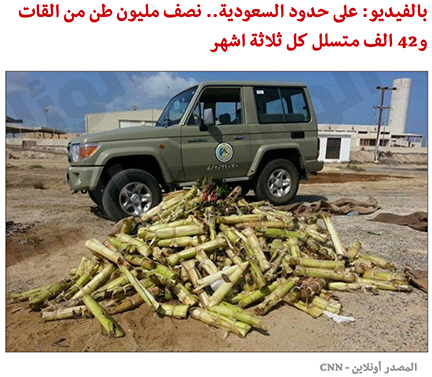
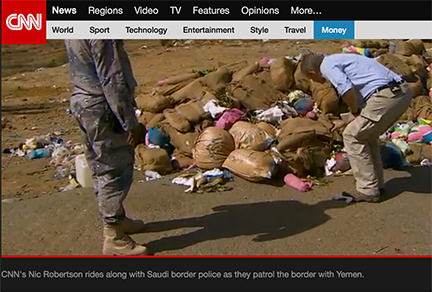
The media news network CNN sent reporter Nic Robertson to the border of Saudi Arabia and Yemen, where he was given a tour and saw several of the Yemenis caught smuggling over the border. One of the items being smuggled was qat. A young boy was given $50 to smuggle it into Saudi territory. The authorities tell him that in the past three months they captured close to half a million tons of qat worth 100 million dollars on the street. Here is one way the Huthis are getting cash. The report indicates that the Saudis are spending a lot of money to build fences and guard towers, although much of the border is so rugged it is impossible to stop everyone. Robertson is a bit overactive in his role at one point telling the Saudi interior spokesman with him that the Iranians are behind the Huthis and then saying this is what the Saudis say. I suspect it is what the Saudis say, but it was presented as a statement in the excerpt provided.

You can watch the video here in English, here in Arabic and read about it in Arabic here.

Yet more change in Arabia


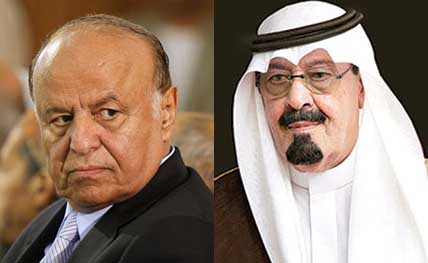
President Hadi of Yemen, left; King Abdullah of Saudi Arabia, right

In the space of 24 hours two countries on the Arabian Peninsula have seen a change, or at least anticipated change, in leadership. Yesterday President Hadi of Yemen, his Prime Minister Khaled Baha and the entire cabinet resigned after bowing to demands made by the Huthi leadership. The complicated political system ensures or at least suggests that he must remain in power for at least three months, although what power he actually has is severely limited. Not long after midnight King Abdullah of Saudi Arabia passed away at the estimated age of 90. The new Saudi monarch is Crown Prince Salman bin Abdulaziz Al Saud, who is 79, with Muqrin Bin Abdulaziz as the new crown prince. Given the fact that Sultan Qabus of Oman is in his mid 70s further change is possible as the years roll by. Qatar and the Emirates have relatively young rulers, so their stability does not appear to be in question.

Yemen is in free fall politically. The Huthis have taken control of most of the northern highlands and the capital city Sanaa, while they continue to battle local tribes in Marib and the Jawf. Hirak has, at least in spirit, seceded from the once-touted wahda. Al-Qaeda continues its attacks on Yemen’s military and the Huthis, while there are now reports that ISIS/ISIL is trying to muscle into Yemen as well. Hadramawt has also removed itself from any central authority. Only Socotra remains isolated from the potential for violence. This political quagmire is even murkier due to the behind-the-scenes (and at times quite overt) maneuvering of former President Ali Abdullah Salih, who remains a potent force and appears to have ambitions of regaining power. Yemen has no functioning government, the economy has ground to a halt, foreign aid from the Saudis has all but ceased and there are daily clashes that take the lives of ordinary Yemeni citizens. Yemen has not become another Iraq or Syria, but it is teetering on the brink. Continue reading Yet more change in Arabia