Category Archives: Yemen

Wavell in Yemen: “Of Fire and Sword”


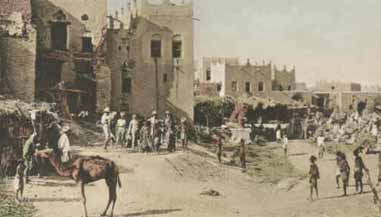
Market in Lahj, southern Yemen

[Note: Arthur John Byng Wavell (1882-1916) was a British soldier and adventurer who traveled in disguise to Mecca in 1908 and went on to Yemen in 1911 to witness fighting between the Zaydi imam’s troops and the Ottoman Turks. This account was originally published in 1912.]

The events in that country [Yemen] are worthy of a chapter in the history of these prosaic days. The counter-currents of human interest and activity that run up and down the Red Sea, linking the civilizations of the East and West, leave undisturbed this backwater. Western Europe knows little and cares less about what goes on there. Continue reading Wavell in Yemen: “Of Fire and Sword”

Wavell in Arabia: Face to Face with a Pasha


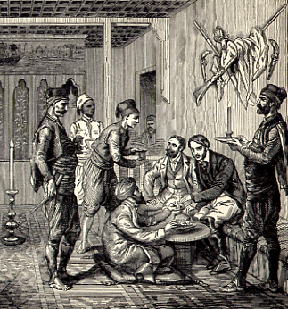
[Illustration, Guests in Turkey, from John Clark Ridpath, Ridpath’s History of the World (Cincinnati: The Jones Brothers Publishing Company, 1899), vol IV.]

[Note: Arthur John Byng Wavell (1882-1916) was a British soldier and adventurer who traveled in disguise to Mecca in 1908 and went on to Yemen in 1911 to witness fighting between the Zaydi imam’s troops and the Ottoman Turks. This account was originally published in 1912.]

The hour was late and the smoking room almost deserted when the conversation about to be reported took place. My companion the Pasha was a tall, heavy man, on whose sunburned and lined countenance a long life in the open air and many hard-fought campaigns in tropical countries had left their traces. He had been a field marshal once, but that was in the days of Abdul Hamid, when as some one said after the American civil war, “you could not spit out the window without hitting a major-general.” It was to this latter rank that the reshuffle which followed hard on the constitution had reduced him… Continue reading Wavell in Arabia: Face to Face with a Pasha

Bury Me Not on the Lonesome Yemeni Plain

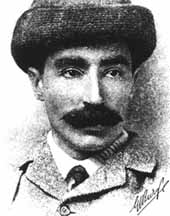
There are not as many travel accounts by Western authors visiting the Middle East as sand particles in the great Arabian desert, but the number is considerable just the same. One of the younger visitors, arriving in the British held port of Aden in 1896, at the age of 22 was G. Wyman Bury, whose intrigues and failed attempt to navigate the so-called “Empty Quarter” left him a broken man and brought him to an early death at age 46. It did not start out that way. Spending a year in Morocco, the young English lad described himself there as a “callous youth just out of his teens dropping in haphazard on a real tribe accompanied by a mission-taught Moor and a large liver-coloured pointer who had more sense than his master.” Continue reading Bury Me Not on the Lonesome Yemeni Plain

Mocha, Port of Coffee

[Joseph Osgood was a Black American sailor who visited the Yemeni port of Aden about a dozen years before the start of the American Civil War. He offers a rich, descriptive account, including information on the coffee cargo that may have brought his ship to this Red Sea port in the first place. The following is his rendition of a popular origin tale for the popular brew.]

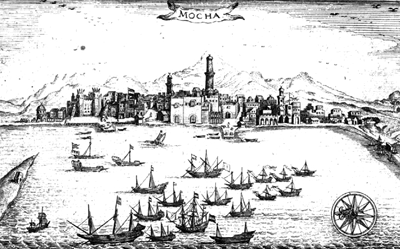
Any communicative Arab will tell the following story about the early history of Mocha, with more or less modification.

A little over two centuries ago, there dwelt near the beach, enclosed by two sandspits forming the harbor, a worthy fisherman, whose learning, wisdom, and pious observance of all the tenets of the Moslem faith, had collected around his humble hut the dwellings of a band of devoted pupils to be instructed in the religion of their great Arabian legislator and prophet. One day a ship from India, and bound to Jiddah, was driven by adverse winds into the cove, and, while there detained, the crew visited the settlement near the beach, and were entertained by the holy Sheik, who regaled them with coffee, a beverage till then unknown to his guests. The Sheik, learning that the captain was ill on board his vessel, extolled the sanative virtues of coffee, and sent some as a present to the captain, by the returning crew. The prescribed medicine was taken, the captain recovered his health, visited the shore, made confidence with the people, bartered his cargo for coffee and sailed for home, where the worth of the rare and newly discovered product was quickly acknowledged, and successive voyages soon established a lucrative commerce, and thus founded and gave a world wide repute to the city of Mocha and many of the neighboring inland towns. Continue reading Mocha, Port of Coffee

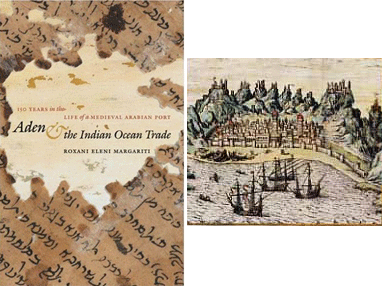
In and Out of Aden

[The following is an excerpt from a recently published historical analysis of the Yemeni port of Aden in the 13th and 14th centuries by Roxani Margariti (Emory University), who reconstructs port life vividly through archival records in the Cairo Genizeh, relevant Arabic texts and archaeological research. This is a fascinating look at one of the most important medieval ports in the Red Sea/Indian Ocean trading network that ultimately linked Europe with the Far East before Portuguese galleons changed the complex equation of global trade.]

by Roxani Eleni Margariti

In the current era of giant container ships, GPS, and e-commerce, a single vessel can carry forty-eight hundred trailer-sized containers of merchandize from Bremen, Germany, to Elizabeth, New Jersey, in a single voyage. The exact position of a ship is knowable at the push of a button and the blink of any eye, and one can place an order one minute and have confirmation of its receipt in the next. It is therefore difficult to grasp the medieval dimensions of dimensions and time. A respectably sized medieval Arab ship held the equivalent of about two trailer-sized containers. Continue reading In and Out of Aden

A Sailor and His Camel Ride


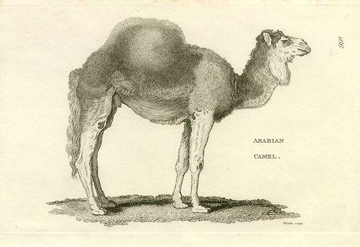
[Illustration: Arabian Camel from George Shaw, Zoology (1801)]

[Joseph Osgood was a Black American sailor who visited the Yemeni port of Mocha about a dozen years before the start of the American Civil War. He offers a rich, descriptive account of his visit to the Yemeni coast, including a sailor’s view of the ship of the desert.]

No wheel carriages are used here, the most general mode of transportation being by camels, for which the males along are serviceable. The flesh of the camel forms a staple article of food, the head and neck being excepted, because one of the race unwittingly rendered these parts unholy by obtrusively poking his head and neck into Mahomet’s tomb. Wellsted says that a camel is welcomed at its birth, by the Arab, with “another child is born unto us.” Continue reading A Sailor and His Camel Ride

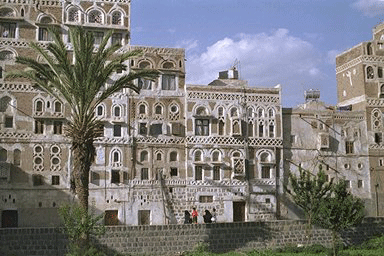
The Book of Sanaa

One of the Arab World’s most important modern poets is the Yemeni ‘Abd al-‘Aziz al-Maqalih. Dr. al-Maqâlih received his Ph.D. from ‘Ayn Shams University in 1977. He was President of Sanaa University from 1982-2001. He has received the title of “Knight of the First Rank in Arts and Letters” in 2003 from the government of France. The poem (translated here by Bob Holman and Sam Liebhaber) was written during the 70 day siege of Sanaa in 1968 when the poet was 31 years old. Sanaa is the capital of the modern Yemeni nation state, as it was for the Zaydi imamate when Dr. al-Maqalih was born.

The 26th Qasida
By ‘Abd al ‘Aziz al-Maqalih

Where are the gardens of Sanaa?
Dusty souqs have killed them,
covered them with corruption.
Nothing remains of their walls,
no one marched in their funeral.

Continue reading The Book of Sanaa

Reflections on Fieldwork in Yemen


Reflections on Fieldwork in Yemen: The Genealogy of a Diary in Response to Rabinow’s Reflections on Fieldwork in Morocco
by Daniel Martin Varisco


[Anthropologist at rest with cat, al-Ahjur, Yemen, 1978]

[The following excerpt is from an article recently published in Anthropology of the Middle East (Volume 1(2):35-62, 2006).]

Abstract: In preparation for writing an ethnographic monograph on fieldwork in Yemen, I compare and contrast my field diary, written in 1978–9, with Paul Rabinow’s ‘Reflections on Fieldwork in Morocco’ (1977). The underlying question is what post-fieldwork reflections reflect meaningfully about the immediacy of ethnographic fieldwork. I criticize the reflexivist trope of privileging ‘writing culture’ over the significance of ‘being there’ in the field. Point by point, I examine the implications of graduate training in anthropology, culture shock, health problems, language skills, the unreflective male voice, visual ethnography and the rhetoric of narrative writing.

Keywords: culture shock, ethnography, fieldwork, reflexivity, Visual Anthropology

Continue reading Reflections on Fieldwork in Yemen