Category Archives: Yemen

Al-Qaeda in the Arabian Peninsula


The Amir [leader] of al-Qa’ida in the Arabian Peninsula, Abu Basir Nasir al-Wuhayshi (also transliterated, “Abu Baseer Nasir al-Wahayshi”), in front of a photograph of the al-Aqsa mosque, one of Islam’s holiest shrines, in Jerusalem. The text reads, “At al-Aqsa We Meet.”

Exploiting Grievances: Al-Qaeda in the Arabian Peninsula

Executive Summary
THE PAPER IN A NUTSHELL

• Al-Qaeda in the Arabian Peninsula (AQAP) has been remarkably adept at exploiting the grievances of ordinary Yemenis. The group’s rhetoric, however, only goes so far and has not yet translated into a widespread base of support. In order to prevent AQAP from becoming more deeply entrenched, the Yemeni government must move swiftly to increase governmental visibility and improve the delivery of services at the local level. Failure to do so risks a growing al-Qaeda presence on the Arabian Peninsula with grave consequences for regional and international security.

VITAL STATISTICS
• Al-Qaeda in the Arabian Peninsula (AQAP) is the product of a merger between al-Qaeda’s Saudi and Yemeni branches.
• Estimates of the size of AQAP in Yemen vary from 300 to several thousand. The lower figure likely represents the number of active militants within the organization, while the larger figure includes supporters not actively involved in the group’s day-to-day operations.
• AQAP employs targeted messaging that is consistent with the core tenets of al-Qaeda’s ideology but infused with themes that resonate locally within Yemen.
• According to AQAP, Muslims are suffering at the hands of foreign powers that prop up illegitimate and corrupt local regimes that have failed to provide for their citizens. Continue reading Al-Qaeda in the Arabian Peninsula

Ibn Abī Bakr al-Azraq on Massage Oils: #1


The Arab physician Ibrāhīm ibn ‘Abd al-Rahman ibn Abī Bakr al-Azraq, wrote an important medical text near the end of the 9th century A.H./fifteenth century C.E. This is his Tashhīl al-manāfi‘ fī al-ṭibb wa-al-ḥikma, which was published in Cairo in the late 19th century and has been republished many times since then. One of his chapters deals with adhān, that is oils and lotions that were rubbed on the body either in the hot bath or just for general health. Here is my translation of his account on oils.

Section on the Benefit and Influence of Oils (adhān)

The Prophet, may Allah bless him and grant him salvation, said: “Eat olive oil (zayt) and rub it on the body.” It is a remedy for seventy illnesses, one of these being leprosy (judhām). He said: “For forty nights, Satan will not come near anyone who has olive oil applied.” Zayt is the extraction of the olive, according to al-Dīwān. Cold and wet, but said to be hot. It softens (yadbughu) the stomach, strengthens the body, energizes movement, and there is benefit for one in old age in applying it to the eyes against dimming of vision. According to Ibn ‘Amr the Prophet, may Allah bless him and grant him salvation, said: “Use it to season bread and rub it on the body, because it comes out of the blessed tree (al-shajara al-mubāraka). Continue reading Ibn Abī Bakr al-Azraq on Massage Oils: #1

Berbers out of Yemen?


Why they thought the Berbers came from Yemen

by Lameen Souag, Jabal al-Lughat, June 23, 2010

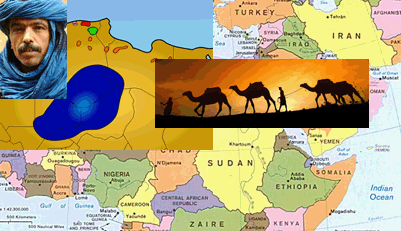
A long-standing tradition in North Africa, convincingly rejected by Ibn Khaldūn but perpetuated by poets and curricula alike, claims that some major Berber tribes descend from Yemeni Arabs through semi-mythical pre-Islamic kings and their wholly mythical vast conquests. This idea has little to support it, and probably became popular because it allowed these tribes to claim prestigious connections in the context of a high culture dominated by Arab ideas; but why should the connection be specifically Yemeni, rather than, say, North Arabian or perhaps Persian? Linguistics suggests a possible answer. Continue reading Berbers out of Yemen?

Ibn al-Mujâwir and the al-Huthi Rebellion


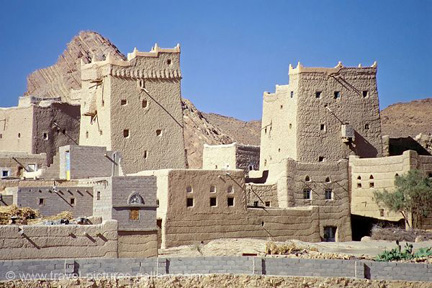
Traditional buildings in Sa‘da, Yemen

Over the past few years a major civil war has been simmering, at times brewing over into neighboring Saudi Arabia, in the north of Yemen. It has been called the al-Huthi rebellion and much of the fighting took place around the historic town of Sa‘da, the main entry of the Zaydi imams in the 10th century C.E. The exquisite travel text of Ibn al-Mujâwir, penned and quilled in the early 13th century, has a brief account of the overall region. Here is what Ibn al-Mujâwir, as ably translated by G. Rex Smith, said:

A description of these areas. The [previous] informant, [al-Kirmani], informed me as follows: All these areas [are made up of] settlements similar in size to one another to a greater or lesser degree. Each settlement has its own people. Every Arab tribal group and even bedouin section is [represented] in a settlement. As a result of their behaving badly [towards others], no one can settle with them, either on a temporary or a permanent basis.

A stronghold of stone and plaster has been built in every settlement and everyone living in the settlement has a store in the stronghold in which he keeps all his possessions, taking only from it what he needs on a daily basis. the inhabitants of the settlement surround the stronghold on all four sides. Each settlement is ruled over by an old shaykh of some power, clever and intelligent. When he gives a ruling, no one else shares in, nor opposes, what he advises them to do and what judgement he gives. There is no other authority ruling over all those in these areas and they pay no tax, nor do they hand over any levy at all, except whatever one wishes. thus they are constantly fighting, one getting the better of another’s wealth and the relatives of Zayd taking the wealth of ‘Amr. They do this all the time.

Their crops are wheat and barley; their trees are vines, pomegranates and almonds. All [kinds] of fruits and choice things are to be found among them. Their food is ghee and honey and they [bask] in their God[-given] ease and security. They are tribes who go back to Qahtân and others in their family trees.

Quoted by Ibn al-Mujâwir in his early 13th century travel text, translated by G. Rex Smith, A Traveler in Thirteenth-Century Arabia: Ibn al-Mujâwir’s Târîkh al-Mustabsir (London: The Hakluyt Society, 2008), p. 65.

Horn Talk in Lamu


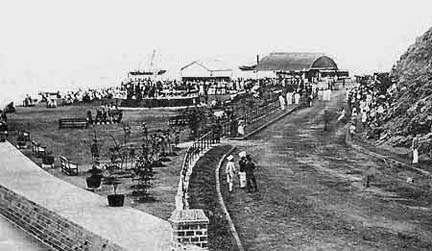
Dhow near Lamu at sunset

I am writing this from the exquisite Island of Lamu in Kenya. As someone who has spent over thirty years rambling around Yemen, across the Gulf of Aden, it is quite eye-opening to take a look up at the southern part of the Arabian Peninsula from an African perspective, especially a view that has been influenced in many ways by earlier generations of migrants from Yemen. It would be nice if I was here only because it is such a beautiful tourist spot with a rich cultural heritage, and indeed all this is nice, but I am actually attending an annual seminar on the Horn of Africa hosted by the Rift Valley Institute. The organizers recognized that cultural history and contemporary politics in the Horn can hardly be separated from Yemen, which lies so close across the Red Sea and Gulf of Aden. Hence I was invited to contribute on the links between Yemen and the Horn and also to discuss the relevance of Islam and the contentious issue of “Islamism.” Continue reading Horn Talk in Lamu

Anwar Al-Awlaki: The Jim Jones of Islam

by Kamran Pasha, The Huffington Post, May 23, 2010

As a Muslim and an American, let me say this loudly and clearly — Anwar al-Awlaki is a servant of evil and a traitor both to Islam and to America. He is intent on misleading the world by spreading the lie that Islam permits the killing of civilians. It does not.

Prophet Muhammad forbade the killing of non-combatants and reacted with horror when he heard of civilian deaths on the battlefield. In order to expound his own political agenda, Al-Awlaki is defaming the Prophet and the global Muslim community, which rejects terrorism. And in the process, he is revealing himself to be a modern Jim Jones — a narcissist creating a death cult.

In 1978, Jim Jones led 900 of his devoted followers to mass suicide by forcing them to drink cyanide mixed in a fruit beverage. The term “drinking the Kool-Aid” has since become synonymous with people who blindly follow their leaders to their doom. And it is clear that al-Awlaki’s followers are very much drinking his brand of Kool-Aid. Indeed, the alleged Fort Hood shooter, Major Nidal Malik Hasan, was apparently a follower of al-Awlaki before he turned on his fellow soldiers in an orgy of murder. Like Jim Jones, al-Awlaki has remarkable charisma and uses it to lead his followers down a very dark path.

I say all of this with great grief. Al-Awlaki was once a highly regarded Muslim scholar who taught a message of peace and brotherhood. But his story is like that of the archetypal villain of the movie Star Wars — Anakin Skywalker, a defender of justice, who devolves into Darth Vader, a monster who cares only for his own twisted quest for power. Continue reading Anwar Al-Awlaki: The Jim Jones of Islam