Category Archives: Yemen

Eid Pictures

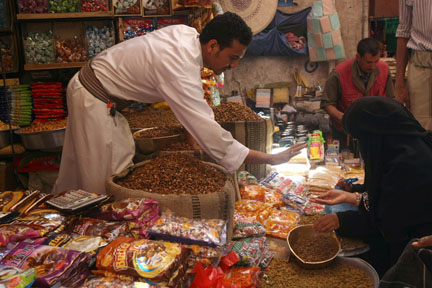
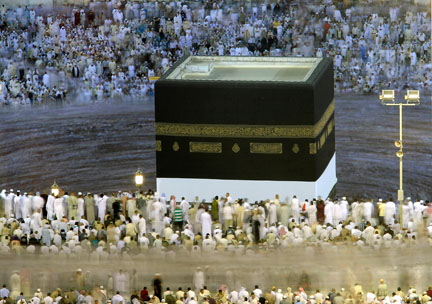
There is a very nice photograph montage on Boston.com about the recent hajj and preparations for Eid al-Adha. Here are two of the photographs:


Yemenis shop at a market in Sanaa on November 3, 2011, in preparation for the Eid al-Adha feast, or Feast of Sacrifice, which marks the end of the annual hajj pilgrimage for Muslims worldwide. (Mohammed Huwais/AFP/Getty Images)


Tens of thousands of Muslim pilgrims move around the Kaaba (center) inside the Grand Mosque in Mecca, Saudi Arabia on November 3, 2011. (Hassan Ammar/AP)

Thugs join the protests

Yemen Post is reporting that the thugs hired by the government to attack and molest the protesters in Yemen are now themselves protesting because the government is not paying them what it promised. As one Yemeni doctor noted, “I don’t know whether to cry or laugh! Have Yemeni stoop so low that criminals dare now protest? Is there anything sacred anymore, any shame at all left in this country.”

Lecture in New England


On Monday, October 24, 2011, I will be delivering a lecture entitled “What’s Happening in Yemen?” at the Portland campus of the University of New England in WCHP Lecture Hall at 6 pm. For more details click here.

This talk will focus on the impact of the “Arab Spring” political protests that started in Yemen, located at the southwestern corner of the Arabian Peninsula, in February. These led to unrest that brought the country to the brink of civil war and economic collapse. Yemen has been ruled by a military leader, Ali Abdullah Salih, who came to power in 1978. In 1990, North and South Yemen were united, followed by a brief civil war in 1993. Before the recent protests there was a secessionist movement in Yemen’s south and an open tribal rebellion near the border with Saudi Arabia. In the past decade the United States has given millions of dollars in aid to President Salih to theoretically combat al-Qaida in Yemen. Questions addressed include the influence of conservative Saudi-backed salafism, the nature of Yemeni tribalism, the role of youth and students in protesting for their own future in a democratic Yemen, and the exaggerated fears about Yemen as a terrorist haven. President Salih once remarked that ruling Yemen was like dancing on the heads of snakes. Now that the snakes have bitten, what is next?

The Peace Push and Shove

As readers of Tabsir can easily see, I am no friend of dictators or military rulers masquerading as democratic demagogues. The fall of Ben Ali, Mubarak and Qaddafi is a welcome sign, even though it is not clear that the people will be able to achieve the kind of government most want. In Yemen the handwriting and a smatter of twittering is on the wall for Ali Abdullah Salih. He has held on to power far too long, allowing for an ugly power grab that could have been avoided if he had done the noble thing and stepped aside earlier, when given ample chance. But Salih is not Asad and Yemen is not Syria. The swell of the Arab Spring has somehow thrown all the dictators into one soup, one overly ladled with self-righteous indignation. Hatred for the man at the top is clouding the pragmatic need for effective political reform.

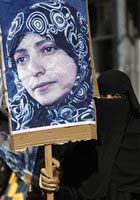
Yesterday the recent Nobel Peace Prize recipient, Tawakkul Karman, came to New York and demonstrated outside the U.N. It should be noted that her efforts in Yemen, as one among many individuals organizing the widespread protests, have not yet resulted in the exit of Salih or the emergence of a new viable government. Since she is now center stage as a symbol of peaceful protest, it is strange that she would leave Yemen and vow to stay in New York until Salih’s assets are frozen and he is put on trial in The Hague. Does she really think that this is a bargaining point? Receiving a peace prize is indeed a great honor, but it hardly makes someone into an effective powerbroker. The last thing Yemen needs at this time is for the United Nations or the United States to meddle into the political mess by dictating rather than working with the various Yemeni parties in negotiation. Karman is opposed to the GCC transition proposal because it grants immunity to Salih, but is it really so important to seek revenge on the man at the top when the entire governmental system has been corrupt and military men like Ali Muhsin have as much blood on their hands as the president? Continue reading The Peace Push and Shove

Salih and Groucho: “Hello, I must be going”


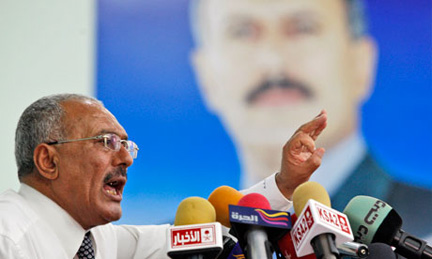
Get ready to roll the dice again. The almost off-again, persistently on-again Ali Abdullah Salih has once again signaled his stage exit. After some seven months of his citizens shouting “Irhal, ya Ali,” the embattled president of Yemen is once again on the ropes. When he announced yesterday that he would be handing over power, most Yemenis were somewhat skeptical. The old phrase “three times and you are out” rings true in American baseball but hardly in contemporary Yemeni politics. Nor does “the third time’s the charm” charm the majority of Yemenis who want a major change at the top. Does he mean it this time?

There is something about the roller coaster politics in Yemen this year that makes a perfect Marx Brothers (and I don’t include Karl in this family) movie. When I heard Salih’s latest swan song, I could not help but think of the classic song by Groucho Marx as Captain Spaulding: “Hello, I must be going”:

Hello, I must be going.
I cannot stay,
I came to say
I must be going.
I’m glad I came
but just the same
I must be going. Continue reading Salih and Groucho: “Hello, I must be going”