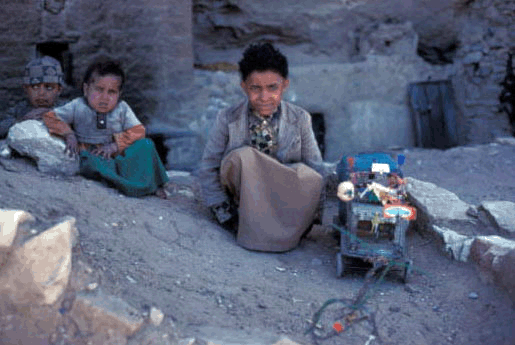
Boys and toys, Husn al-Arus, 1978; Photo by Daniel Martin Varisco
Category Archives: Yemen
Dance at Alwan
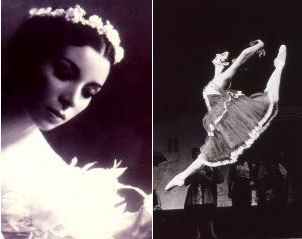
Magda Saleh, “Giselle”, Studio Portrait, Cairo, Egypt, 1968, left; Magda Saleh in “Don Quixote”, Guest Artist, Bolshoi Ballet, right
Panel Discussion: Dancing Culture and Controversy: Professional Women Dancers of the Arab World
Monday, June 4, 2012 6:30 pm at Alwan for the Arts
Join renowned professional dancers Magda Saleh of Egypt, Leila Molaei of Arab-Iranian descent, and dance anthropologist Najwa Adra, for a panel presentation and discussion on women professional dancers of the Arab world and diaspora.
Dance by women is the most controversial of all performance arts, because it is the body, the basis for construction of gender difference, which creates it. Traditional or culturally specific dances especially embody cultural ideals and taboos related to the female body.
Panel Discussion 6:30-8:30
$5 at door (Free for members.)
Magda Saleh will share vignettes of her trailblazing career path of classical dance, becoming Egypt’s beloved Prima Ballerina with the Cairo Ballet Company. She will also present footage of her 1979 documentary film, “Egypt Dancesâ€, highlighting women performers of Egyptian traditions such as zar, haggalah and others.
Leila Molaei, expert performer and teacher of raqs sharqi, Iraqi kawleya, and one of a handful of Arab professional dancers of these forms in diaspora, will speak to how she negotiates cultural challenges of performing female solo dances. Leila will also discuss gender issues in performance of dances such as kawleya and khaleegy, including demonstrations of relevant technique and issues such as costuming and context.
Leila will also be teaching a workshop on Iraqi dance and performing in NYC, presented by Mark Balahadia. For more information on the May 31 show, or June 2 & 3 workshop, visit www.markbalahadia.com.
Najwa Adra, cultural anthropologist specializing on dance in the Middle East region will serve as the panel respondent.
About the Artists: Continue reading Dance at Alwan
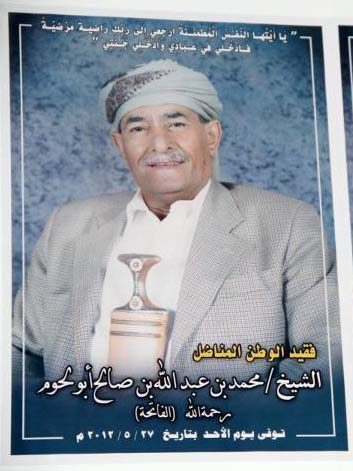
Shaykh Abu Luhum (1938-2012)
*يمن برس – متابعات
وصل جثمان الÙقيد المناضل الشيخ Ù…Øمد عبدالله ØµØ§Ù„Ø Ø£Ø¨Ùˆ Ù„Øوم إلى العاصمة صنعاء أمس الخميس والذي واÙته المنية ÙÙŠ Ùرنسا يوم الأØد الماضي.
وتم الصلاة على جثمانه ØµØ¨Ø§Ø Ø£Ù…Ø³ الخميس بعد نقل جثمانه من مطار صنعاء ÙÙŠ جامع مستشÙÙ‰ جامعة العلوم والتكنولوجيا، واوري الثرى ÙÙŠ مقبرة خزيمة.
الشيخ Ù…Øمد عبدالله ØµØ§Ù„Ù„Ø Ø£Ø¨Ùˆ Ù„Øوم من مواليد منطقة نهم، شمال العامصة صنعاء عام 1938ØŒ درس ÙÙŠ الكلية العسكرية ببغداد ÙˆØصل على دورات عسكرية متعددة.
وتولى عدة مناصب عسكرية ومدنية، Øيث بدأ Øياته العملية كبيراً للمعلمين ÙÙŠ مدرسة المدرعات، ثم قائداً لكتيبة المدرعات والمدرعات الاØتياطة، قبل أن يكون عضواً ÙÙŠ مجلس القيادة وقائداً للواء السادس.
وعين الÙقيد رØمه الله لاØقاً Ù…ØاÙظاً لمØاÙظة Øجة ثم سÙيراً مقيماً لليمن ÙÙŠ باريس وعضواً ÙÙŠ مجلس الشورى.
نسأل الله أن يتغمد الÙقيد بواسع رØمته وأن يسكنه ÙØ³ÙŠØ Ø¬Ù†Ø§ØªÙ‡ ويلهم أهله وذويه الصبر والسلوان, وإنا لله وإنا إليه راجعون.
Al Qaeda in Yemen
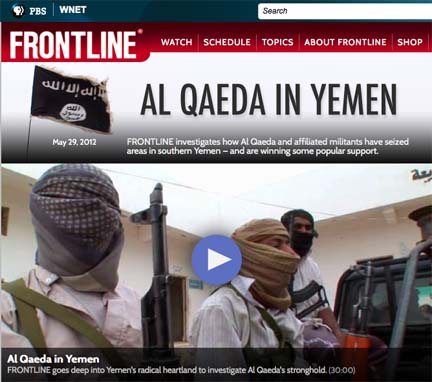
Frontline aired an interesting program on Al Qaeda in Yemen last night. It features the Iraqi journalist Ghaith Abdul-Ahad, who was able to visit the towns of Jaar and Azzam in southern Yemen, both as they were controlled by Ansar al-Sharia. It is clear from his reporting that some of the fighters are from outside Yemen, as he specifically mentions Somalis and Afghans. At the end of his report he visited Lawdar, where the local Yemeni tribesmen drove out the militants and are defending the town from them. The Yemeni tribes do not support either al Qaeda or Ansar al-Sharia, whose strict interpretation and high-handed ways go against tribal customary law. Although the government troops are currently suffering internal conflict, the days of Ansar al-Sharia are surely numbered. You can watch the program online.
Yemen Scenes
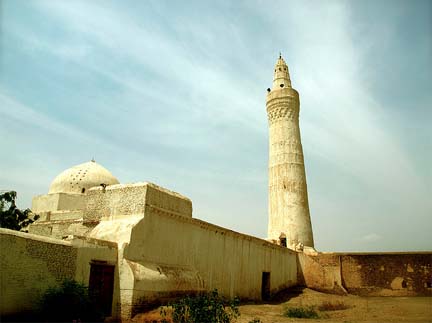
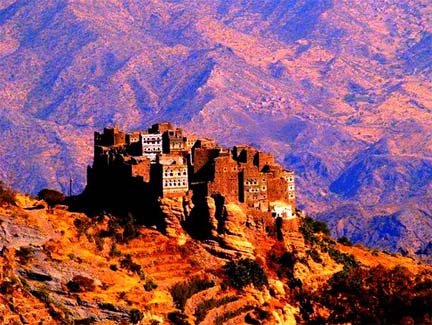
Haraz village
In celebration of the birthday of the Yemeni photographer Raiman al-Hamdani on Tuesday, here are two of his photographs from his FLICKR site.
Billions for Millions
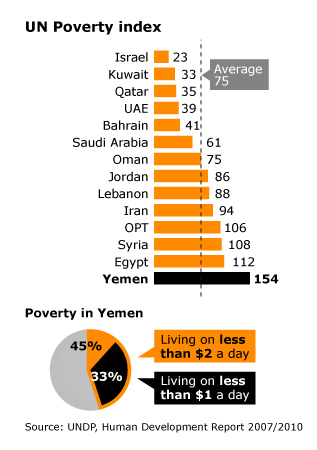
Yemen is about to be gifted with 3.25 billion dollars in aid from Saudi Arabia, according to Al Jazeera. With about 24 million people in Yemen, this is quite a hefty donation. Other donors will kick in to round it up at 4 billion. So the question now is who will benefit from all this money and how will such a vast amount actually be channeled into the public sector. There is no question that Yemen faces a severe humanitarian crisis with rising levels of malnutrition and health problems due to the insecurity and economic quagmire following the dictatorial rape of Yemen’s wealth by the late President Ali Abdullah Salih and his cronies. If the money is really funneled into health, education and needed infrastructure, this will be a valuable boost to getting the country back on track. But it is a big “if” given the continuing unrest throughout the country, the violence of Ansar al-Sharia in the south and the lack of a viable governmental civil service. How much of this aid will continue to end up in the pockets of officials, since corruption became endemic during the Salih regime?
And what are the strings to such a vast amount? Yemen has a diverse religious history with both Zaydi and Shafi’i followers who have lived in relative peace, separated by politics rather than doctrinal fighting, for centuries. But the influx of conservative Wahhabi cum Salafi views with Saudi financial backing threatens to create greater tension over religious affiliation. Do the Saudis simply want to extend their royal influence to the south or are the leaders genuinely concerned about the plight of Yemen’s population?
There is an old phrase in American English: “Don’t bite the hand that’s feeding you.” This is good advice as long as the hand is only feeding you and not at the same time grabbing you by the neck and forcing you to be something else than you want to be. It remains to be seen how the aid money will be spent, but Yemen is clearly the beneficiary of largesse that other struggling countries in the region have not received; Sudan and Somalia, for example.
But, as another American saying goes, “Don’t look a gift horse in the mouth,” even if it has a Saudi brand.
What and who are not working in Yemen
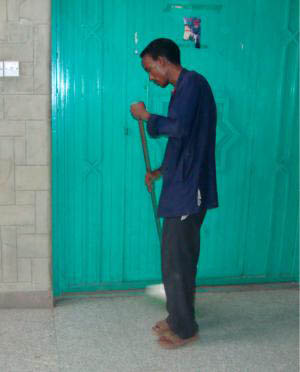
a Yemeni worker; photo by Amira Nasser
Severe working conditions with no way out
Amira Nasser, Yemen Times, May 17, 2012
Despite the revolution which exploded last year in Yemen with demands for human rights and opportunities, thousands of Yemenis still work in slave-like conditions with little hope of escape.
Surviving in Yemen’s harsh economy with limited choices has forced countless Yemenis to take work that affords them little social mobility, and leaves them drowning in debt.
Tight circumstances
Waheeb Abdul-Wahab, a 13-year-old, works in a mechanic shop with his 7-year-old brother, Majed, from 7a.m. to 4p.m. daily. They each make YR 1000 , less than 5 US dollars, for a long day of strenuous labor.
“My brother and I give some of the money to my mother and we keep about YR 600 for ourselves.”
Waheeb added that he alone makes roughly YR 8000 to 9000 in profits for the shop owner on a daily basis, but he keeps only YR 1000 for himself.
He and his brother are an example of thousands of Yemeni children who are forced to work demanding jobs in order to sustain their families. Continue reading What and who are not working in Yemen
In the Sanaa Suq
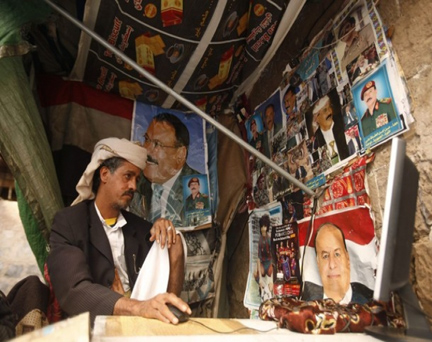
A vendor works on his computer at a market in the Old Sanaa city May 16, 2012
Here is an extraordinary photograph from the Sanaa suq of a merchant, holding a mouse that roars louder for Yemen’s future than the images of the Presidents on the surrounding walls.