Category Archives: Yemen

Yemen’s Transition


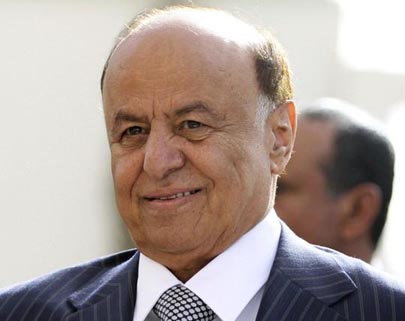
Yemeni interim president Al-Hadi

Yemen’s transition: a model to be followed?

by Helen Lackner, Open Democracy, June 19, 2012

What is actually happening in Yemen? It is either presented as a ‘solution’ which could be a model for Syria, or as a ‘phoney’ change that only conceals continuation of the previous regime

In the current environment where the success of the ‘Arab revolutions’ to bring about genuine democracy to their countries is more than doubtful, there is value in examining in some detail the situation in Yemen. Where Egypt seems to be poised between a military or a fundamentalist regime, Libya is at risk of being divided between a multiplicity of various armed factions, Bahrain continues on its bloody confrontation between a minority regime and the demands of the majority of its people, early hopes for Tunisia are dwindling in the face of more aggressive fundamentalists and Syria is suffering civil war with a death toll of hundreds each weak, what is actually happening in Yemen? It is either presented as a ‘solution’ which could be a model for Syria, or as a merely cosmetic change which conceals a continuation of the previous regime.

After many months of procrastination, Ali Abdullah Saleh was forced to sign the so-called Gulf Cooperation Council Transitional agreement on 23 November 2011. While he attempted to continue ruling from behind the scenes, his power has been very dramatically reduced over the months. First, his former Vice President, Abdul Rabbo Mansour Hadi was elected president through an overwhelming popular endorsement on 25 February 2012 when more people came out to vote for him than had participated in the previously ‘contested’ presidential elections of 1999 and 2006. While the outcome was in no doubt as he was the only candidate, the fact that over 6 million Yemenis bothered to come out and queue to vote showed their desire for change and to get rid of the old regime – even if many of them were voting more against AAS than for ARMH – gave him a popular legitimacy which helps him develop a genuine power base which he previously lacked. Continue reading Yemen’s Transition

Iconclasm Again


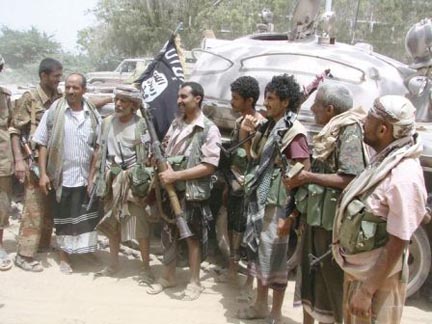
Once again AQAP/Ansar al-Shari’a shows its mean spirit, not only destroying the lives of the living but resorting to desecrating the dead. Before pulling out of Ja’ar in southern Yemen, several of the iconclasts destroyed the shrine of al Ja’dani in Al Tareyyah, among other shrines. Ibrahim Suleiman al Rubaish, a former detainee at Guantanamo Bay and now a senior AQAP leader, issued a video taking credit for the demolition work. Here is what he is reported to have said:

“Here are the mujahideen by the grace of Allah the Great and Almighty carrying out what Allah commanded them to do and reviving their jihad in the Cause of Allah…. So, just as they fought democracy and representative councils which make laws alongside Allah, they are destroying the domes which are being worshipped other than Allah, along with the graves and mausoleums, which people try to get close to other than Allah the Great and Almighty.”

“We fight the idolatry of the palaces and the graves – both are the same.”

The idolatry he does not see is his own intolerance, as though Allah has made him a successor of the prophet. Yemen’s south is dotted with shrines, reflecting the generations of Sufis and other devout scholars who have lived in Yemen over the centuries. Rubaish, who is in fact a Saudi and not Yemeni, places himself above all these Yemenis of the past. Like the other AQAP leaders, he is not likely to last long, but the destruction he touts adds salt to the wounds of the current turmoil in Yemen. Yemen has a rich Islamic history of monuments and saints tombs. Unlike the Taliban blasting in 2001 of the Buddha images at Bamiyan, also a senseless act, Rubaish cannot even claim to be destroying an image from another religion. He thinks he is fighting “the palaces and the graves,” but he is really fighting against time and doing more to harm Islam than promote it.

Yemen’s Beauty


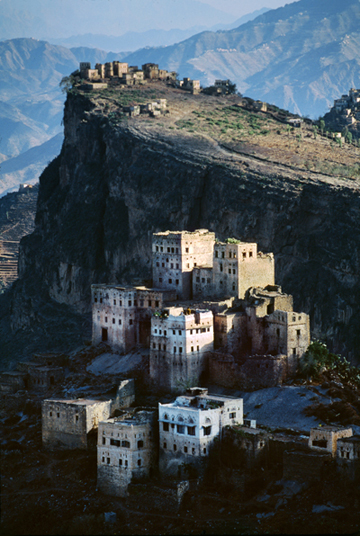
Photograph by Steve McCurry

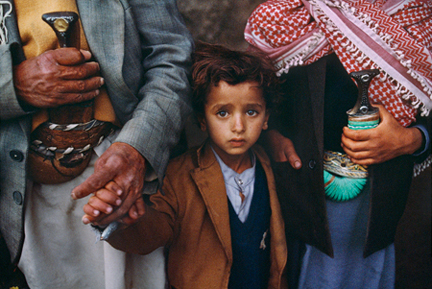
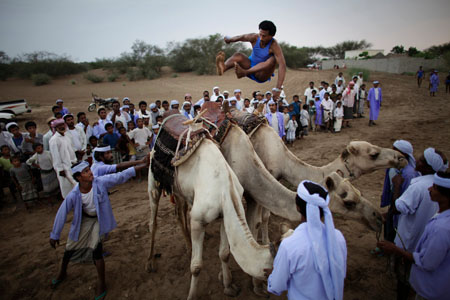
The photographer Steve McCurry has published some incredible pictures of Yemen on his blog. It is well worth checking out the pictures, but it is necessary to avoid the captions, which are neoconnish and ill conceived. When they say a picture is worth a thousand words, it can also be in reference to the kinds of words used. As long as the little boy is in the hands of his tribal family and values, he is most unlikely to be any kind of terrorist.


Photograph by Steve McCurry

Power corrupts and corrupts


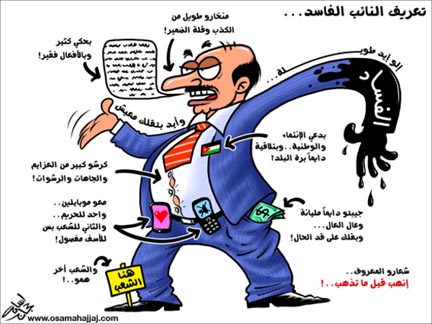
Yemen Press is reporting that they have uncovered documentation that the head of military finances in Yemen from 1998-2009, ‘Abd al-Mun‘im al-AdÄ«mÄ«, appropriated about 281 million riyals for his own use during the Salih regime. As his name suggests, he was indeed a slave to the role of benefactor, but not in the hallowed religious sense. Such corruption is not unique to Yemen, as dictators and monarchs do the same all the time. Power corrupts, as it has since records have been kept. The political cartoon accompanying the article speaks for itself…

Ansar al-Sharia on the Ropes?


The news today is that Yemeni government troops and local tribal militia have finally dislodged the ultra-conservative Ansar al-Sharia from their base in the southern towns of Ja’ar and Zinjabar. These cities had been under de facto control of the rebels for over a year, with the military weakened during the long drawn-out political turmoil that eventually led to the removal of Ali Abdullah Salih. According to al-Jazeera, “Since the offensive began, 485 people have been killed, according to an AFP tally combined from different sources. This includes 368 al-Qaeda fighters, 72 soldiers, 26 local armed men and 19 civilians.” Without question this is a major blow to a group that used foreign fighters and was increasingly at odds with local tribes. During their tenure both towns had become virtual ghost towns where a distinctively non-Yemeni form of Islamic law was mandated by force. Details thus far are rather skimpy. but it appears that the remaining individuals of Ansar al-Sharia fled east to al-Shaqra.

The question remains, of course, of whether this is a major blow to Ansar al-Sharia and its affiliated partner al-Qaida in the Arabian Peninsula or a skirmish. Given the massive external support now being given to the central government, I strongly suspect that this is the beginning of the end for Ansar al-Sharia as a fighting force. It has survived thus far on weapons looted from the army with almost no direct outside support apart from an influx of foreign fighters from Afghanistan and Somalia. The agenda of Ansar al-Sharia, like that of AQAP, has failed to find fertile ground among the bulk of the population with outright antagonism from most tribal leaders. It has flourished primarily due to the weakness of the government over the past year. Continue reading Ansar al-Sharia on the Ropes?

Meanwhile in Socotra


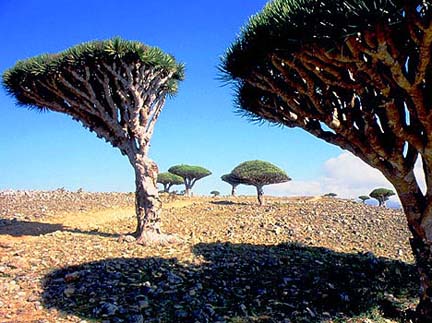
The famous dragons blood tree; Photo by Valerio Pandolfo

Revolution in Socotra: A Perspective from Yemen’s Periphery
by Nathalie Peutz, Middle East Report #263, Summer 2012.

At the beginning of 2012, as Egyptians and Syrians marked the second year of their revolts, protesters also took to the streets of Hadiboh, the tumbledown capital of Yemen’s Socotra archipelago (pop. approx. 50,000). Like demonstrators elsewhere, the Socotrans were calling for both local administrative change and national political reform. While the Socotran protests, occurring since March 2011, were small, they were no less significant than the more spectacular rallies in the epicenters of Arab revolution. Indeed, the spread of revolution to Socotra, the largest and most populated of the archipelago’s four islands, shows the extent to which the events of 2011 have resonated even at the very margins of the Arab world. Moreover, it demonstrates how socially and culturally empowering these events have been for a people who have long been politically subjugated, economically marginalized and, unlike many in mainland Yemen, unarmed.

For if revolution has reached Socotra, as many young enthusiasts in Hadiboh would claim, it is manifest not merely in the biweekly gatherings of male protesters marching through the dusty market to the familiar slogan, “The people want the fall of the regime.” It is evident also in the way that Socotrans have begun to speak openly and forcefully about their preferences for Socotra’s political future. And it was measurable in the islands’ largest cultural event, a five-day festival during which nine Socotran wordsmiths vied for the title of “poet of the year.” Now in its fourth year, the festival, which began on the eve of 2012, featured poem after poem, in the islanders’ native Suqutri tongue, reflecting on the Arab revolts, the turmoil on the mainland and the fate of the archipelago. Where political discontent long found expression in ruminations on a pastoral past, today it is articulated in contending verses on the prospects for Socotran sovereignty.

For the full article, click here to read it on the MERIP website.