Category Archives: Yemen

More beauty in Yemen


http://www.free-syria.com/

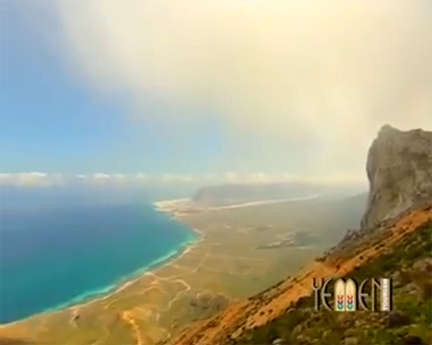
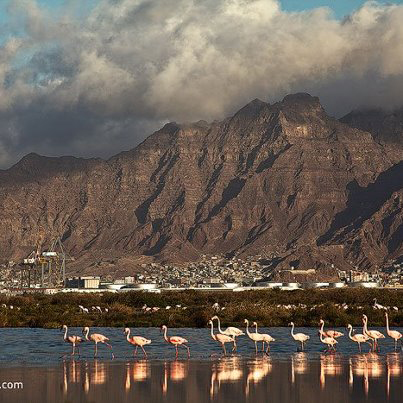
The constant news about fighting and violence in Yemen obscures the extraordinary beauty in the country. Here is a short video with spectacular views, the pristine nature being sold somewhat soiled by the appearance of tourists. If you ignore this aspect, especially the rather distorted account of tourism amenities, it is worth watching.

Travels with Ibn al-Mujabbir #3


Sailing Seasons in the Red Sea and Indian Ocean:
The View from Rasulid (13th-14th Centuries) Aden

by Daniel Martin Varisco

[This is a lecture presented at the Red Sea Trade and Travel Study Day of the Society for Arabian Studies at the British Museum, October 5, 2002, and subsequently published in Yemen Update. For Part 1, click here; for Part 2, click here.]

Thursday, 15 Sha‘ban, 691, August 1, 1292

We are now but a day’s sail away from safe haven in Aden, if God wills and the wind does not cease to obey his commands. It has been a good journey thus far. No major storms or pirates, though we did see a shipwreck on the reefs south of the Farasan Islands. Our pilot, praise God, knows his way over the shoals, even if blindfolded, I think. In the morning we took aboard some fresh water at al-‘Ara, after coursing around the tip at Bab al-Mandab and leaving Bahr al-Qulzum. After my noon prayer, when the sun beat down so mercilessly and I was sorely tempted to jump into the water with all my clothes on, I suddenly remembered that this was the midpoint of Sha‘ban with only two weeks left until the holy fasting month. Today is the anniversary of the day the Prophet, peace be upon him, was instructed to make Mecca the qibla rather than Jerusalem. God willing, I will make the pilgrimage in the coming year. Even thinking of the well of Zamzam made the warm water in the fantash all the more sweeter.

As night fell, I remembered an earlier trip, when a tormenting monsoon tore our sail and nearly capsized the ship as we departed Zayla‘ for Bab al-Mandab. These were the ‘awasif winds, fouling us with the stench that only Iblis breaking wind could send. That turning point is a dangerous point. An old sailor on board, who has often traveled along the African coast from Mogadishu, told me that only ships like our jalba can make the passage safely; no boat with iron nails could sail past, for God, our Protector, has ordained a magnetic mountain to attract hand-wrought nails and split an intruding vessel asunder. But only the infidel Christians defy nature with such innovations. May God protect the holy cities from the ravenous appetites of crusader cannibals. Continue reading Travels with Ibn al-Mujabbir #3

Travels with Ibn al-Mujabbir #2


Sailing Seasons in the Red Sea and Indian Ocean:
The View from Rasulid (13th-14th Centuries) Aden

by Daniel Martin Varisco

[This is a lecture presented at the Red Sea Trade and Travel Study Day of the Society for Arabian Studies at the British Museum, October 5, 2002, and subsequently published in Yemen Update. For Part 1, click here.]

Monday, 13 Rajab, 691 (June 30, 1292)

Bismillah al-rahman al-rahim. I, Ibn al-Mujabbir, begin this diary full of hope, a pilgrim sure of his destination, not a lost soul adrift. Who but God in his indescribable mercy could have provided a calmer sea and more willing wind to our sails than our good fortune holds aboard this ship, Hut Yunis. As Jonah was saved in God’s good time, so I trust in that very God to set foot once again in my homeland. There are three ships under the protection of the Karimi assurances, traveling together for safety and among the last of the season bound south for Yemen. I humbly beg forgiveness from the One before whom I submit, who knows the danger in every unseen shoal.

In two hours time, before the evening prayer, the captain informs me we will put ashore in a safe place. We sail by day in sight of land, but at night we rest. As God is our only guide, the wisely guided do not lead themselves into temptation. There are many dangers here, for they say the devil himself is master of the sea when darkness settles and the afarit do his bidding. Even Solomon, wise and powerful as God made him, took precaution when traveling to see Sheba’s beauty queen. Should I, a poor Yemeni born in Zabid, and now a stranger to no land where freshly minted Kamiliya dirhams are valued, do less. There are, I trust, no monsters in these depths, but the jinn inhabit all seven climes and more, if there be more. Continue reading Travels with Ibn al-Mujabbir #2

Travels with Ibn al-Mujabbir #1


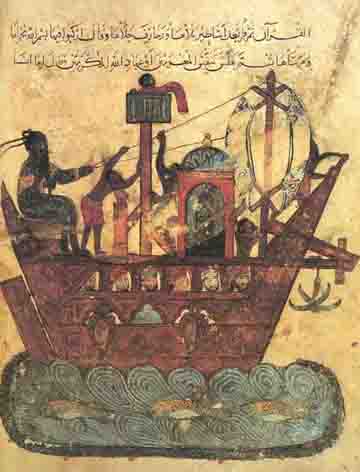
13th century illustration of an Arab ship in the Indian Ocean

Sailing Seasons in the Red Sea and Indian Ocean:
The View from Rasulid (13th-14th Centuries) Aden

by Daniel Martin Varisco

[This is a lecture presented at the Red Sea Trade and Travel Study Day of the Society for Arabian Studies at the British Museum, October 5, 2002, and subsequently published in Yemen Update.]

The province of Aden is governed by a king, who bears the title of soldan… The soldan of Aden possesses immense treasures, arising from the imposts he lays, as well upon the merchandise that comes from India, as upon that which is shipped in his port as the returning cargo; this being the most considerable mart in all that quarter for the exchange of commodities, and the place to which all trading vessels resort… Marco Polo, reflecting in a prison cell on information he obtained at the close of the 13th century.

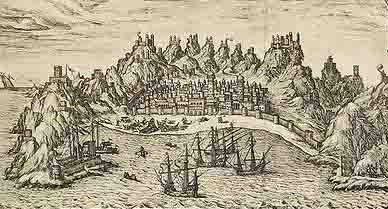
The subject of my talk today is the view from a vital hub of the vibrant Red Sea and Indian Ocean trading network, the view from the Rasulid port of Aden; more specifically, a fresh re-view of what it might have been like to be an Arab merchant sailing to and from Aden at the same time as Marco Polo set out to return from his epic sojourn under the immense Oriental pleasure dome of Kublai Khan. I invite you to return with me to the year 1292 of the Christian Era – as it is commonly known – for a fleeting Arab businessman’s eyeview from the deck of a trading dhow bound from Aydhab on the Egyptian Coast to Aden, the best natural harbor on the South Arabian coast. Let us call this tajjir (merchant) Muhammad Ibn Mujabbir, a Yemeni by birth and at the time a successful merchant employed by the Karimi syndicate out of Egypt. He is about 35 years old, young enough to marvel at the outrageous tales told by sailors and fellow travelers, old enough to know better than to believe any of them. We will join him aboard ship sailing south of Aydhab and follow his diaried notes until he lands with his entrusted consignment of wares in Aden customs. We shall, in effect, sail through a narrow stretch of commercial maritime history with a seasoned traveler at the helm. Continue reading Travels with Ibn al-Mujabbir #1

What (who) drives Muslim women


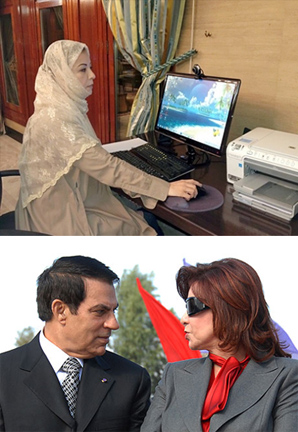
top, Leila Trabelsi in Saudi Arabia; bottom, Leila Trabelsi with Ben Ali in Tunis, pre-Jasmine Revolution

The West has long had a fascination with Muslim women, from the Oriental harem beauties of Ottoman seraglios to immigrants who wear niqab in Europe. As some critics have noted, perhaps those who laud or victimize the role of women in Islam (as though there could be “the” role), should look at the patriarchy in their own societies. The ability to go out in public with less of the body covered may be a sign of freedom in mobility, but it is not automatically symbolic of equality in economic or political terms. Ethnographic study for almost a century has illustrated the kinds of social contexts in which women and men are closer to being egalitarian, but there is no one factor (including religion) that is causal. The books and commentaries on women in Islam continue to proliferate and will into the foreseeable future. But what about the situation today within Islamic countries?

By today, I mean the totally unscientific sense of an arbitrary internet experience. In checking out several websites this morning to see what I might comment upon, several items caught my attention. First, a Yemeni website shows a photograph of Leila Trabelsi, the wife of the exiled Tunisian president Ben Ali; both are now living in Saudi Arabia (top picture, above). The picture is pregnant with interpretive possibilities. The former elegant first lady is now regaled in hijab while mouse-clicking her way through cyberspace. In that vast digital archive, she can easily come across previous pictures of herself, like the one shown below her new Saudi makeover look. So is one of these pictures of Leila more Islamic than the other? Does the veil indicate intent; does living in Saudi Arabia signify a closer relationship to Allah? Perhaps if we knew what websites she was surfing, we would have more clues. Continue reading What (who) drives Muslim women

Timbuctu too…


A Tuareg nomad stands near a 13th century mosque in Timbuktu in this file photo [Reuters]

There is an old saw in English: cutting your nose to spite your face. The sorry lot of vigilante Ansar extremists have already desecrated several Muslim saints’ tombs in southern Yemen, but now come reports of lawless fanatics destroying saint shrines in the famed city of Timbuktu in Mali. Al Jazeera is reporting that many, if not all, of the shrines there on the World Heritage List have been damaged or destroyed. These are ritual attractions considered sacred by local Muslims for several centuries, not replicas of the Buddha or foreign idols. So who exactly do these fanatics hate? If you think they are doing this because they hate America and its freedoms, think again.

Iconoclasm has a long history that is hardly unique to the Middle East. The modus vivendi is the idea that if you don’t like something, just get rid of it no matter what other people think. Tolerance and dialogue might as well be Satanic in this twisted worldview. It is important to observe that in both the Yemeni case and now in Timbuktu the destruction takes place because of an almost total breakdown of security. No government, responsible or not to world opinion, is behind this action to such a sacred Islamic site. It is very much a replay of the Wahhabi wave that swept across Arabia with the sword of the Sa’ud clan. The Wahhabis, considered fanatics at the time by most other Muslims, wanted to turn back the clock to a narrow understanding of what they thought life was like in the time of the Prophet. Were ‘Abd al-Wahhab, who died in 1792 (just six years before Napoleon invaded Egypt and proclaimed himself a true Muslim come to rescue Egypt from its corrupt rulers) to come back from the dead and see the palaces, shopping malls and gentrification of the ka‘ba as these have evolved with the vast oil wealth of the Saudi elite, he would no doubt follow Balaam and curse the day he ever met Ibn Sa’ud.

Timbuktu, as a major African center of Islamic education, is also a rich treasury of Islamic manuscripts. Will these fanatics torch the handwritten copies of the Qu’ran, traditions and other religious books in the libraries? ‘Abd al-Wahhab is not about to be resurrected, but there is a need for a modern day Muslim Balaam to get off his ass and curse such sacrilege.