Category Archives: Yemen

Karim Ben Khelifa at Harvard


Harvard University has announced its 2013 International Nieman Fellows. Among them is the superb photographer Karim Ben Khelifa, whose work can be seen here.

Karim Ben Khelifa is a photojournalist and the co-founder and CEO of Emphas.is, a website designed to promote crowdfunded visual journalism. For the past 12 years, he has covered conflicts in the Middle East and Africa and other stories around the world. His work has appeared in The New York Times, The Washington Post, The Wall Street Journal, Vanity Fair, Time, Le Monde and Stern. He has exhibited his photos on four continents and has won numerous photography awards including the 2004 Fujifilm Young Reporter Award. He also was selected for the 2000 World Press Photo Joop Swart Masterclass in the Netherlands. At Harvard, Ben Khelifa will conduct research on journalist-audience engagement, analyze the behavioral economics linked to crowdfunding and study new business models promoting the diversification of visual storytelling. He is the 2013 Carroll Binder Nieman Fellow. The Binder Fund honors 1916 Harvard graduate Carroll Binder, who expanded the Chicago Daily News Foreign Service, and his son, Carroll “Ted” Binder, a 1943 Harvard graduate.

A New War on Women?


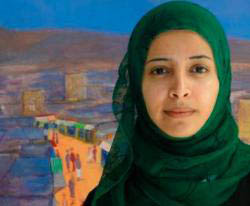
Bushra Al-Maqtari

by Sama’a Al-Hamdani, Yemen-iati, August 3

“The Arab Awakening protest movement encouraged religious tolerance among its participants, while in some instances, the resulting political crisis provided a context that stoked existing religious tensions” – Yemen’s Religious Freedom Report

Is it possible that the Arab Awakening opened doors for a new war on women? is there a new form of sexism that is declared in the name of religion?
Women all over the Middle East have been demanding political equality and while we await their democratic freedoms to expand, newspapers are reporting rapes from Libya, sexual assaults in Egypt and deaths in Syria. Sexism is not the least bit a phenomenon in the Middle East; however, the utilization of religion as a tool of war against women is becoming a trend. Religion, which was once implemented with care and knowledge, is now used in most political conflicts.

In Yemen, the political war between the Houthis and the government has become about religious ideology. Underneath the religious facade, it is mostly about power to rule. This war even invited unwanted political involvement from Iran and Saudi, threatening the security of the nation with a proxy war; all in the name of religious authenticity. This July, the United States Department of State released the International Religious Freedom Report for Yemen and declared that religious freedom in Yemen is not ideal yet not too problematic. The report focused on religious pluralism and sectarian violence, but it failed to recognize Yemeni women as victims of religious partiality.

Should Yemeni women be fearful? Perhaps, if they are to choose to have a voice and challenge Yemeni culture. Case in point, Bushra Al-Maqtari, a 31 year-old divorcee from Taizz. Bushra, a journalist, wrote an article about the revolution. In this article, she expressed her thoughts about the bloody battle of Khidar (Dec. 2011) between the demonstrators and pro-Saleh forces. She shared her feelings by saying that she questioned whether God was witnessing everything. While some may agree and many may disagree, religious extremists in the country declared Bushra an infidel who questioned the existence of God. In response, Bushra clarified that she is believing Muslim and that she did not question the existence of God but rather his presence in all situations. Regardless, what Bushra wrote may be a reason for many people to dislike her, but what happened after that made this about all women. Continue reading A New War on Women?

Thank God it’s Friday? Not in Yemen these days


“We want imams to discuss our problems, discuss government decrees and oppose oppression.”

Friday sermons not relevant
by Mohammed Al-Samei, Yemen Times, August 2, 2012

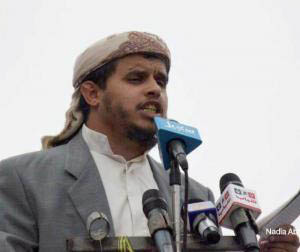
Yemenis have been critical of the performance of imams because of the topics they address in Friday sermons.

They say that the imams do not address the relevant issues from which residents suffer. Moreover, they don’t discuss new topics in their sermons.

Fathi Abu Al-Nassr, a Yemeni journalist, said that many imams don’t touch on the problems of society or new developments among residents. He added that the core of the sermon ought to be the concerns of Yemenis.

Abu Al-Nassr described imams as “parrots who address expired issues.” He pointed out that they are one of the most important reasons behind the ignorance of society.

Although some imams attempt to address different issues, they are discouraged by society members who refuse to discuss such topics.

Khaled Al-Hada’i, an imam who appears in various mosques in Sana’a, told the Yemen Times that many imams don’t shed light on local problems; instead they address religious issues.

He explained that bringing discussion of current affairs to the sermons is a slow process due to the complicated situation in Yemen and lack of awareness among residents. Continue reading Thank God it’s Friday? Not in Yemen these days

In whose interests?


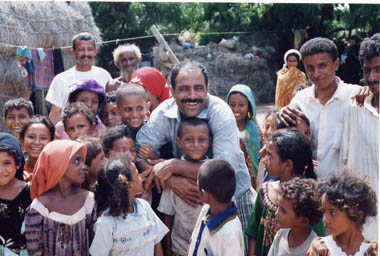
Yemeni children in the Tihama coastal zone; photography by Daniel Martin varisco

The struggle for security and against terrorism in Yemen: in whose interests?

by Helen Lackner, Open Democracy, 20 July 2012

When Yemen features in the news, it is usually due to the supposed activities in Yemen or outside of Al Qaeda in the Arabian Peninsula [AQAP], the group said to be a follower of Osama Bin Laden’s similarly named organisation. The most prominent such events have been the 2010 ‘underpants bomber’ who was trained in Yemen, the 2011 ‘cartridge’ bombs which were sent from Yemen and – most important for Yemenis – the occupation of a Southern Governorate [Abyan] by AQAP and its associate Ansar al Shari’a between May 2011 and June 2012, when they were ousted.
AQAP and Ansar al Shari’a[1]

While the first two of these events are of limited interest to the average Yemeni, the presence of AQAP is one of the many security issues which Yemenis have to face on a daily basis. Although AQAP had been present and active in many remote parts of the country [Shabwa, Mareb and Abyan Governorates] since the beginning of the century, this presence only became a direct serious threat to the population in the last year when they occupied all the major towns of Abyan as well as some in Shabwa. Although earlier their presence had made it difficult for development and aid agencies to operate, these occupations led to mass displacement of over 200,000 people who have taken refuge either with relatives in neighbouring governorates [eg al Baidha] or moved to Aden where they settled in schools and other facilities and became Internally Displaced Persons [IDPs] recognised as such by UNHCR and other humanitarian agencies. These groups were successfully ousted from their positions between May and mid-June 2012 after holding the area for a year.
Continue reading In whose interests?

Travels with Ibn al-Mujabbir #4


Gold dinar of the Rasulid sultan al-Malik al-Mansur ‘Umar b. ‘Ali

Sailing Seasons in the Red Sea and Indian Ocean:
The View from Rasulid (13th-14th Centuries) Aden

by Daniel Martin Varisco

[This is a lecture presented at the Red Sea Trade and Travel Study Day of the Society for Arabian Studies at the British Museum, October 5, 2002, and subsequently published in Yemen Update. For Part 1, click here; for Part 2, click here; for Part 3, click here.]

Monday, 19 Sha‘ban, 691 (August 5, 1292)

Most travelers that I know complain of the lack of fresh water here in Aden, but I think the more serious omission is basic intelligence. Perhaps the unbearable heat drains their brains as well as their bowels. Instead of unloading our ship on the third day, we were kept waiting a full extra day before finally being allowed into customs. One would think their interest in picking our pockets would speed up rather than prolong this unpleasant process. I was under orders to take the gift directly to the sultan, and I am half tempted to write a letter immediately to the master of this land and apprise him of the inattention that seems to plague his servants in the port. After all, I represent the Karimi, not some cheap junk from Serendib! Continue reading Travels with Ibn al-Mujabbir #4

Habari Ya Lamu, the Story of Lamu


Lamu; Photograph by Daniel Martin Varisco

by Irena Knehtl, Yemen Post, April 15, 2012

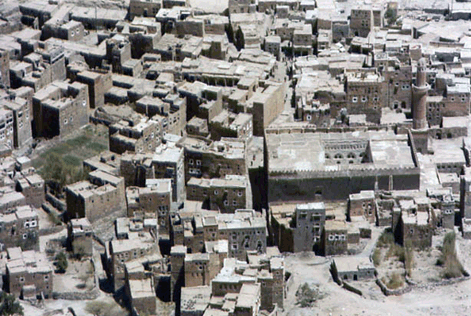
One of the city-states founded by Yemeni Hadhrami Arabs was Lamu, an island off the present Kenyan coast, a world heritage site

Throughout its history Yemen has been a seafaring nation, famed for boat building and its mariners navigation skills. While the Yemeni sailors harnessed the monsoon winds to reach distant ports, inland its farmers harnessed water to develop life-sustaining agriculture adopting to a harsh and often formidable environment.

Archaeologists are still investigating these long gone civilizations that have played a major role in transforming global history. These ancient civilizations introduced deep-sea sailing vessels capable of long distance travel and trade. At this time writing, banking, shareholding were established and developed societies were formed for perhaps the first time over.

Linen, cotton, wool and metal were taken to China, where cargoes of silk, camphor, musk, spice were exchanged and Yemen acquired ceramics. Southern Arabia was on cross roads on the trade routes between China and India to the East, and the Red Sea and East Africa to the southwest providing merchants with a huge and lucrative markets. One of the city-states founded by Yemeni Hadhrami Arab travelers was located on the island just off the northern coast of present day Kenya called Lamu. Continue reading Habari Ya Lamu, the Story of Lamu