
Category Archives: Yemen

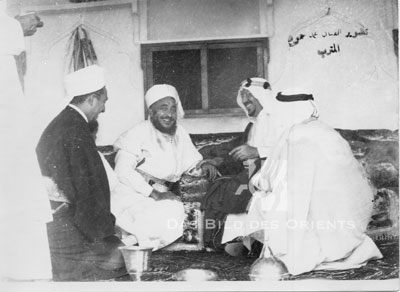
Yemen: can southern separatists break up Yemen?


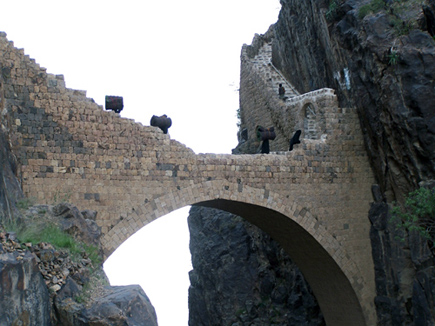
Photo in southern Yemen by Adam Reynolds

by Helen Lackner, Open Democracy, October 23, 2012

Yemeni unity in 1990 was greeted with enthusiasm by Yemenis at large, whether from the former Yemen Arab Republic (YAR) or People’s Democratic Republic of Yemen (PDRY). Although there was considerable discussion and disagreement in the leadership about the form it took, there is no doubt that for ordinary Yemenis the possibility of travelling anywhere in the country was welcome.

While many women in the YAR had looked forward to the spread of the PDRY’s Family Law to the whole country, many men and women everywhere hoped to see the same for qat consumption laws, and southerners were looking forward to economic liberalisation, all were swiftly disappointed when the economy collapsed after the sanctions taken against Yemen by neighbour states following Iraq’s invasion of Kuwait. In addition, after the initial flourishing freedom of expression through a multiplicity of new parties and newspapers in the first years of enthusiasm, the political situation rapidly deteriorated as tension developed between the two former ruling groups. Starting with some clearly targeted assassinations of Southern leaders, this eventually brought about the 5 months Civil War of 1994 which was decisively won by Sana’a’s forces. Continue reading Yemen: can southern separatists break up Yemen?

Yemen Conference at Harvard


This past Friday and Saturday a conference was held on “Yemen in Transition.” While I was originally scheduled to give a presentation, I was not able to attend. But here is an overview of the conference, with complete details on the conference website.

Date: October 19, 2012 (All day) – October 20, 2012 (All day)
Speaker: various
Yemen in Transition: Challenges and Opportunities
Organized by Steven C. Caton, Harvard University, and the Yemen Working Group, this conference brings together Yemeni American professionals and academics along with some of their counterparts from Yemen, and academics from the U.S., Europe, and Yemen to discuss the future of Yemen and what might be done to help the country as it transitions into its new historical phase. It also brings together students from Harvard and the Boston area who are from Yemen. The main topics to be discussed are: women and youth, economic development, politics and political reform, and the water crisis. As an academic conference, the focus will be on theory and analysis, though concrete proposals and recommendations will also be presented.

The panels and the keynote address are open to the public. These presentations will be videotaped and made available on the website of the Harvard Center for Middle Eastern Studies but they will not be published as part of a conference proceedings. The use of recording devices by anyone other than the organizers is strictly prohibited.

On Drones


The Center for Civilians in Conflict and Columbia Law School’s Human rights Clinic have recently produced a report on the impact of drones on civilians. Below is the abstract; the full report can be found in pdf format here.

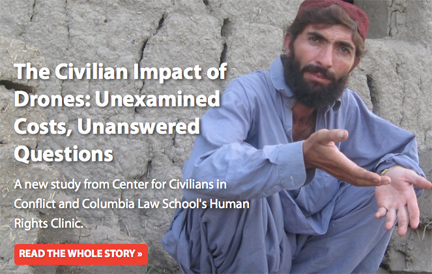
The Civilian Impact of Drones: Unexamined Costs, Unanswered Questions
Publication | 29 Sep 2012

This joint report from the Center for Civilians in Conflict and Columbia Law School’s Human Rights Clinic is an in-depth look at the US government’s covert drone program and its impact on civilian populations. Our objective is to critically assess US government procedures and standards for ensuring civilian protection and responding to civilian harm from drone strikes conducted both outside of full-scale military operations and with a degree of secrecy. The study is based on a review of publicly available materials, interviews with current and former government officials, responses to requests for information from agencies, and previous field interviews by Center for Civilians in Conflict.

Drones are touted as the most precise and humane weapons platform in the history of warfare. The technological advance is significant, but covert drone strikes carry costs for civilians and local communities even as they become a policy norm. Blinded by the promise of this technology and reports of short-term effectiveness in killing militants, policymakers are failing to ask hard questions of the drones program, including whether other tactics or strategies are more appropriate to counterterrorism strategy, and whether US expansion of strikes to new places and against new groups is truly justified.

Challenging the Norm


Q&A: Boushra Almutawakel
Challenging the Norm

The Economist, Aug 16th 2012, by S.B.

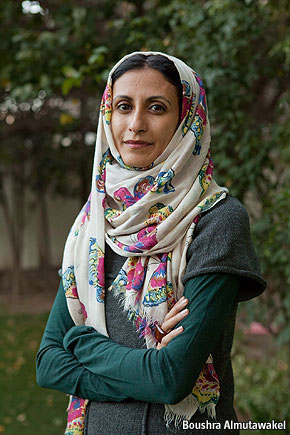
BOUSHRA ALMUTAWAKEL, a Yemeni photographer, aims to provoke discussions about social norms and question the ways people and cultures judge one another. Her stylised portraits, mostly of Middle Eastern women, challenge the view held by many in the West that the veil is a symbol of oppression. Issues of identity are central to her work. Though she is skeptical of veils that completely obscure the individual, she draws similarities with the way some women hide behind heavy make-up: in both cases, a woman is concealed behind a social mask of sorts, often for her own comfort. Ms Almutawakel (pictured below) is openly critical of certain social expectations of women in Yemen, yet she wears a long black abaya in public because she “wouldn’t feel comfortable otherwise”. This ambivalence pervades her work.

Having studied in America, Ms Almutawakel has returned to live and work in Sanaa in Yemen. Her photographs—controversial among Yemenis—seem designed mainly for a Western audience. But some can now be seen in a show of regional artwork at the National Museum of Yemen in Sanaa.

Ms Almutawakel recently met with The Economist to discuss her photography, her views on women and the role artists play in revolutionary Yemen.

Tell us about the art scene in Yemen.

When I started in the 1990s I was supposedly the first female photographer. There were only a few artists throughout Yemen and we formed a network to hold exhibitions. Now there are many more because digital cameras have made photography more accessible and schools and universities teach design. But the scene is still limited and goes up and down with the economic and political situation. We need support to have our work exhibited locally and internationally. Continue reading Challenging the Norm

Ali Abdullah Salih: Not invincible, not invisible


A little over six months ago, Ali Abdullah Salih finally resigned himself to the fact that he was no longer wanted by the people of Yemen or the international community as president-for-life in Yemen. But instead of taking his stashed away millions to exile in Saudi Arabia, which has open-armed several past dictators with Muslim names, or bribing a poor country to host him and his family, he remains in Yemen. I suspect when someone is in power for as long as Salih was, that delusion is the normal path. Perhaps he thinks that if things keep on getting worse (ignoring the fact that the problems are largely his own creation), Yemenis will bring him back. Perhaps he has heard those Iraqis who say things were better under Saddam? Perhaps, but his delusion contributes to the problem as long as he is living in Yemen.

Salih played the “dancing on the heads of snakes” game throughout his tenure at the head of the Yemeni state. He built a family-run state, allying himself with tribal powerbrokers like Shaykh Abdullah al-Ahmar, and shaping the military into a private army. Corruption was rampant and few Yemenis were fooled by the state-tun media myth of Salih as the father of his country. His triumph of uniting north and south was a ruse from the start, extending his control rather than actually caring to build a united country. But his downfall is largely due to backing the extremists, the Jihadis back from Afghanistan, those whose ideology he could never uproot for his own advantage. When his troops took over Aden in the 1994 civil war, Salih allowed northern zealots to raze religious shrines and demolish the one beer factory in the country. As the zealots shouted “Allahu Akbar” the guy in the presidential palace could only think of himself as the “akbar.” Building a monster mosque in the capital, not unlike Saddam’s architectural piety, could hardly disguise the fact that here was a man who worshipped himself. He was not the first to do so, is not alone in doing so, and will not be the last. Continue reading Ali Abdullah Salih: Not invincible, not invisible

Revealing the News


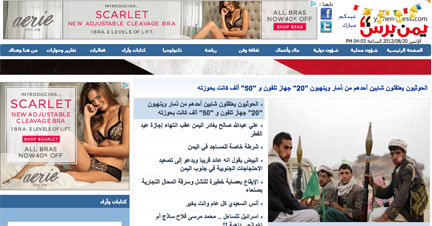
In attempting to keep up with the news in Yemen, I surf a number of Yemeni news sites. When I tried the usually reliable almasdaronline.com this morning, I was redirected to a commercial site called Mojo Pages. So I switched to yemen-press.com, where the top story was about the Huthi forces arresting two individuals in Sa‘da. While reading the article I realized that it was impossible to ignore the Gestalt of the total screen page, which I reproduce above. Here is a scene of several Yemeni fighters, clearly in a qat-chewing mode, and holding what I suspect (not being a military expert) are grenade launchers. What struck my attention was the advertisement adorning the banner and taking a prominent space on the left of the screen: Scarlet, the new adjustable cleavage bra. I have not been in the market for a bra, so I do not think the ad showed up due to any sophisticated Facebook-style marketing strategy. But I am male, so perhaps the assumption is that any Western viewer is in the market for a bra, since the ad is in English after all. And ten minutes later a new ad took its place: this time for a car rental place in New York.

Then a couple of hours later I happened across an article on Haaretz and there she was again: dear Scarlet hawking her gawking adjustable discount bra. Perhaps I am a victim of cookies twisting, but what a coincidence that is probably not a coincidence. Criss-crossing the endemic violence in the Middle East, the ongoing plight of the Palestinians and the voices in the Zionist wilderness of left-leaning Israelis there is the seductive power of an ad, as if politics did not really matter. In this case the bra fits all sizes of religious persuasions and the model is available to be ogled by anyone, at least from a Western computer. How ecumenical can commercial immodesty get.

It is the multifarious irony of these pages that weighs me down. I will focus on the Yemen website, since that was the first encounter with Scarlet. First, how ironic that I devour news by scouring multiple websites, most of which do not explicitly state their de facto bias. While there are a couple of Yemen News sites that are available in English (like Yemen Times and Yemen Post), they tend to be days old and in need of better English editing. Yemen Times, for example has a most recent post of August 15, five days ago, which is hardly Time Magazine timely. Yemen Post has a story only a day old, but its presentation is nowhere near as slick as any of the major Yemeni sites in Arabic. Irony #1 is that what is available but not in Arabic is old and out-of-date internet-wise. This is only an irony for the hubris with which English-speakers assume that news must be packaged in their native language.

The second irony is the critical crux. Where else can you find images of a seductive woman in a bra revealing cleavage (and at 40% off) counterposed with a truckload of qat-chewing Yemenis holding grenade launchers or on a major Israeli online newspaper in English? Continue reading Revealing the News

Yes, Yemen has bananas


One of the great novelty Vaudeville songs of the early 20th century was “Yes, We Have No Bananas,” a number one hit for the singer Eddie Cantor in 1923. I have the Edison 1923 recording sung by Billy Jones, Arthur Hall and Irving Kaufman, which is also on Youtube. The song made fun of Italian accents, like the one my Sicilian Grandfather no doubt had as a boy. But it seems that in this case, almost a century later, unlike the Little Italy vendor in the song, Yemen does have bananas and very good ones at that.

Here is the report from Yemen’s Saba News Agency:

Yemen comes first among 45 countries exporting bananas

SANA’A, July 24 (Saba)- Yemen has came the first among 45 countries exporting bananas at the Regional Roundtable for exporters of banana products, held in Geneva during the period (July 20-21).

Yemen has sent varieties of bananas from some farms in the Yemeni provinces famous for the production of bananas, through the U.S. Agency for International Development (USAID), which is the mediator for this product in the Regional Roundtable for exporters of bananas, Official of the agricultural export activities at the Small and Micro Enterprises supported by the Social Fund for Development, engineer Samar Abdullah, told Saba.

Samar said that this win motivates the banana growers in Yemen to compete in the improvement of banana production and its cultivation as it has health benefits, and enables Yemen to enter into the global markets of bananas exporters.