There are quite a few old postcards of Aden circulating on the internet. Here are a few for those who have never seen Aden or at least never saw this Aden.
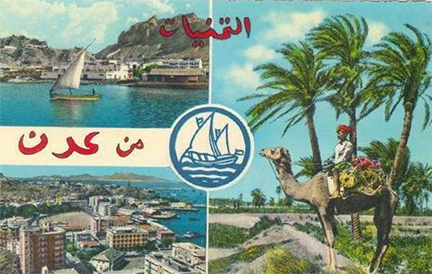
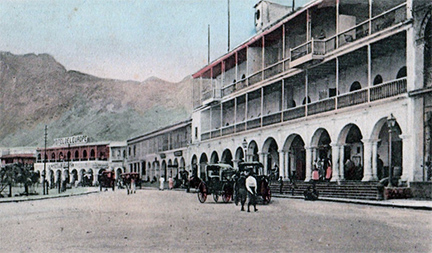
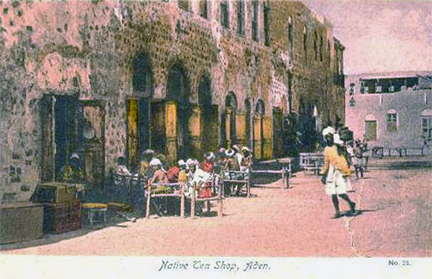
There are quite a few old postcards of Aden circulating on the internet. Here are a few for those who have never seen Aden or at least never saw this Aden.
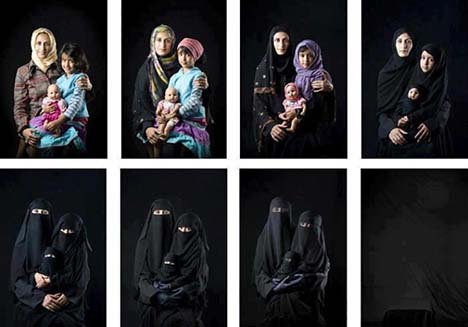
Photography by Boushra al-Moutawakel
from Yemen Times, June 24, 2013
It’s a sensitive subject in this conservative and religiously observant country. Who is talking about safe sex? In a recent online survey carried out by the organization Time to Talk, lasting 11 days—from May 11 to May 22, 2013—the organization asked 300 Yemenis that question, among others. Here are the results of their survey:
More men than women completed the survey, approximately 93 percent men and 7 percent women, all of them holding Yemeni nationality and spread over different age groups, with the largest prevalence among the 19-25 age group (28 percent), and less participation on the part of people in the age of 15-18 (6.12 percent).
The Yemeni respondents cannot be considered to be a representative sample of the Yemeni population because while there are currently as many males resident in Yemen as there are females, the number of men who voluntarily took part in our survey outnumbered the women, with an account for approximately 93 percent of all respondents.
However, almost all age groups present in the Yemeni population are well represented in our group: 19-25 (28.57 percent), 26-30 (19.39 percent), 30-35 (23.24), 36-40 (13.27 percent). The Yemeni age groups least well-presented were young people aged between 15-18 (6.12 percent) and the over 40’s (9.18 percent). Of those who responded to the survey, 54.17 percent are single and 45.83 percent are married. Continue reading Sex Education in Yemen
For those who are still enthralled with parodies of Gangnam style, here is a sample of Yemeni selections over the past year from La Voix du Yémen.
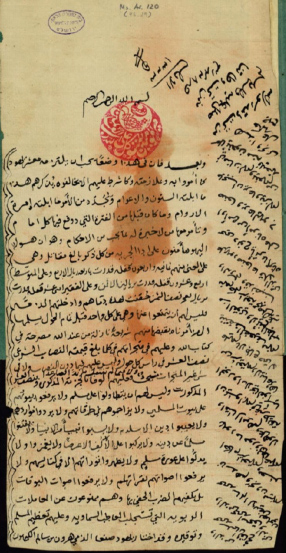
Imam Yahya’s “NiẓÄm al-YuhÅ«d,” ms.ar.120 from the National Library of Israel
There is a new study out on the statute on Yemeni Jews by Imam Yahya in 1323/1905 by the historian Kerstin Hünefeld. This is published in Chroniques du manuscrits au Yémen, in the July 2013 issue, which is available in download as a pdf. Hünefeld provides both an edition and an annotated translation.
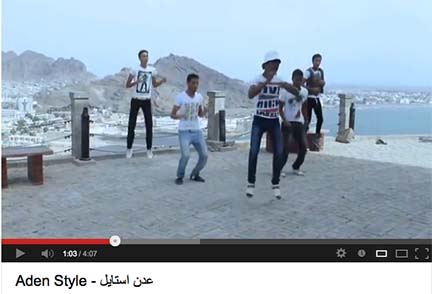
And now for a musical interlude… from Aden. It appears that after I posted this, it was not possible to see it, but this one works. So here is some Aden Rap.
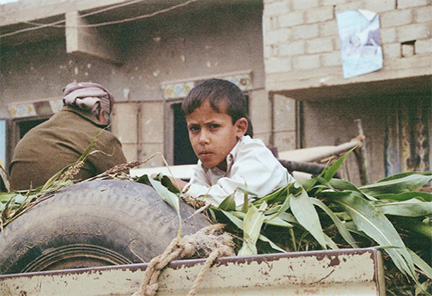
Market on road to Tihama from Hajja
There are a number of promising young Yemeni photographers. Today I highlight the work of Raiman al-Hamdani, from his Flickr site. My thanks to Raiman for permission to post these photographs.
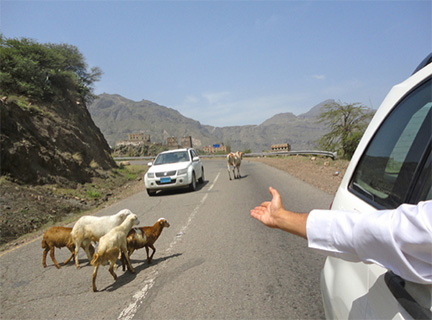
Nagil Haraz, leading to Wadi Surdud in Al-Mahwit
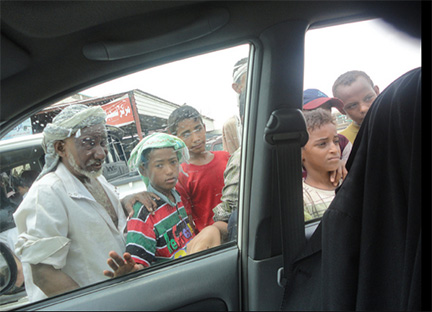
Qat market in ‘Abs, near Hajja
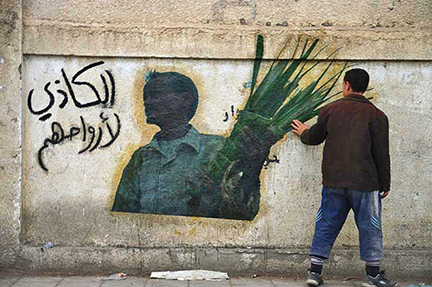
Pasted photography on wall, Sana’a 2012; photograph by Jameel Subay
From Street Politics to Street Art in Yemen
By Anahi Alviso-Marino, Nafas Art Magazine, July 2013
In January 2011, demonstrations inspired by the contentious mobilizations taking place in Tunisia and Egypt started to be carried out in Yemen. Gradually, anti-governmental demonstrators came to modify old repertoires of contention, such as the demonstration or the sit-in, into what became a permanent camp and a new space of contention in Sana’a named “Change Square.” Among the self-proclaimed “revolutionary youth” of a sit-in that lasted until April 2013 were a number of visual artists. Their presence in the Square contributed in giving political demands an artistic expression, alongside using artistic practices as a means of contention. Contributing to the symbolic aspects of this mobilization, artistic practices developed inside and outside the tents. As a continuation of street politics acquired in the Square, certain visual artists incorporated dissent, transgression, and civil disobedience in their artistic practices. Among such cases, street art techniques such as graffiti, free writing, mural painting or stenciling participated throughout 2011 in reproducing political slogans that aimed to overthrow Ali Abd Allah Saleh’s regime.
In 2012 this contentious street art underwent certain changes. Continue reading Street Art in Sanaa
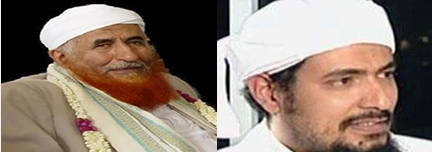
Al-Zindani, father and son
The winds that ushered in the “Arab Spring” were less a simoon, in the sense of a gust that stirs up everything in sight, than they were variable. Regime change has not been the same in every case. Take the case of Yemen, where Ali Abdullah Salih was ousted after three decades in power, but still remains free and influential in Yemen. Such a situation would be impossible for Mubarak, Ben Ali, Qaddafi and especially Bashar al-Asad. Although lives were lost in the Yemeni protests, these were few compared to the bloodshed that rocked Libya and Syria and escalates in Egypt with the recent protests against President Morsi’s removal by the military. Currently Yemen is in the process of a “National Dialogue.” This is admittedly a financially bloated endeavor that only the United Nations could create, but it has brought in a broad array of Yemeni views and has proceeded peacefully and with dignity.
Dialogue is always a plus. Monologue is the problem, whether it is a military dictator or a self-important religious cleric. Now the National Dialogue has been compromised by an irrational monologue carried on by Sheikh Abd al-Majid al-Zindani, a Salafi whose henna redness in his beard is in direct contrast to any common sense and good will. Al-Zindani reminds me of the “moral majority” preacher Jerry Falwell, who founded his own university and soaked up all the lavish praise his accolades could offer. Al-Zindani founded and runs, in his spare time it would seem, al-ImÄn University, which teaches hate more than it professes tolerance. The United States considers him a “Specially Designated Global Terrorist”, for his links to al-Qaeda, but this has not stopped his constant monologue of self-promotion.
Apparently upset that he was not getting enough attention in the media, al-Zindani has written a letter to the Yemeni people claiming that the National Dialogue is against Islam and that the only constitution possible is that of the shari’a (I suspect he has long forgotten about the Constitution of al-Madina). Continue reading Irrational Monologue vs. National Dialogue in Yemen