Category Archives: Yemen

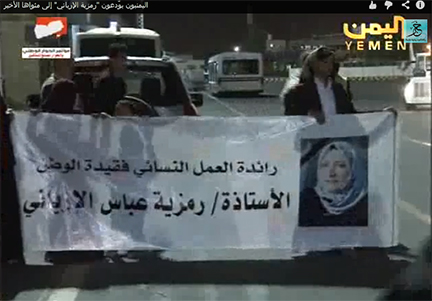
Ramziyya Abbas al-Iryani

The Yemeni literary figure Ramziyya Abbas al-Iryani, who recently passed away, is given tribute in this video with recollections by her students and other Yemenis who knew and respected her.

اليمنيون يوّدعون “رمزية الإرياني” إلى مثواها الأخير السبت, 16-نوفمبر-2013 صنعاء Ù€ خبر للأنباء: – استقبلت جموع اليمنيين، مساء السبت، جثمان فقيدة الوطن رمزية عباس الارياني – عضو اللجنة العامة للمؤتمر الشعبي العام.. رئيسة اتحاد نساء اليمن، الذي وصل مطار صنعاء، على متن طائرة تابعة للخطوط الجوية اليمنية قادماً من جمهورية ألمانيا الاتحادية. ويودع جموع اليمنيين، وفي مقدمتهم قيادات وكوادر المؤتمر الشعبي العام والفعاليات الوطنية الرسمية والحزبية ومنظمات المجتمع المدني والجموع الشعبية، غداً “الأحد” الجثمان الطاهر للفقيدة، إلى مثواه الأخير بمقبرة الرحمة ظهر الأحد بالعاصمة صنعاء بعد الصلاة عليه بجامع التوحيد. وخسرت اليمن واحدةً من أعظم قياداتها النسائية البارزة، حيث وافاها الأجل في احد مستشفيات العاصمة الألمانية برلين إثر إصابتها بجلطة دماغية. وكانت الفقيدة — رحمها الله — من أبرز أعلام النضال الوطني ولها حضورها المتميز في كافة المجالات وفي مقدمتها الدفاع عن حقوق المرأة اليمنية. وقد نعت رئاسة الجمهورية، وقيادة المؤتمر الشعبي العام، ومؤتمر الحوار الوطني، والوزارات، والأحزاب والمنظمات السياسية والمجتمعية، ومنظمات حقوق الإنسان، الفقيدة الراحلة. وعبرت البرقيات عن تعازيها الحارة للأسرة الكريمة، سائلة المولى العلي القدير، أن يتغمدها بواسع رحمته، ويلهم أهلها وكل محبيها الصبر والسلوان. إنا لها وإنا إليه راجعون

Chilling Prospects for the Arab Spring

by Daniel Martin Varisco, Middle East Muddle, Anthropology News, November, 2013

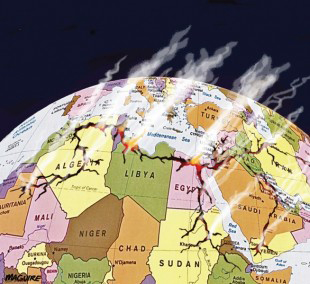
As President Franklin Delano Roosevelt prophesied, December 7th, 1941 is a day that lives in infamy, even some seven decades after the event that triggered United States entry into the Second World War. Another date of more recent infamy is December 17, 2010, when a harassed Tunisian vegetable hawker named Mohamed Bouazizi set himself on fire in front of the municipal building in the picturesque town of Sidi Bouzid. Although badly burned, he survived until January 4, just ten days before Ben Ali, the Tunisian dictator for some 23 years, boarded a plane for exile in Saudi Arabia. The first kind of infamy was the beginning of a devastating war, the second became the stimulus for what was hoped to be a sweeping political revolution across the Middle East. Three years later it seems to be politics as usual, a chilly seasonal change from the jasmine scent of the Arab Spring that blew across Tunisia, Egypt, Libya and Yemen and now swirls through the political maelstrom enveloping a surviving dictator in Syria, ongoing instability in Iraq and Afghanistan and a new regime outlook in Iran.

Seasoned pundits know that in many parts of the world spring’s prospects yield to the heat of summer, the cooling autumn and eventually the chilly reality of winter in a never-ending cycle. The Arab Spring is not one season fits all, but the overall effects have been more chilling than thrilling this year. In Tunisia the Islamic party leading the country is in a state of national paralysis following the July killing of opposition MP Mohamed Brahmi. In Egypt the elected president, Muhammad Morsi, remains in military custody and his major party of support, the Muslim Brotherhood, has been banned. The military, under General Sisi, has reinstated martial law in a move that most Egyptians, it seems, support. In both Tunisia and Egypt, the transition to power by Islamic groups who promised not to dismantle the civil state structure has angered a wide range of groups, especially secularists and more moderate Muslims. Continue reading Chilling Prospects for the Arab Spring

Hailing Hellfires


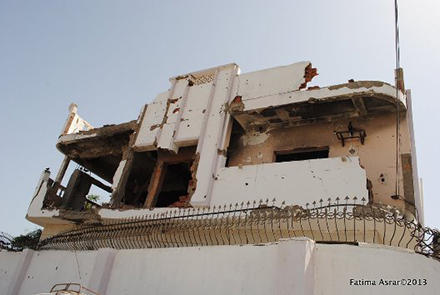
A destroyed building as a result of fighting between AQAP and the Yemeni government in 2012, taken in June 2013. (Photo: Fatima Abo Alasrar)

by Fatima Abo Alasrar, Atlantic Council, October 30, 2013

Apart from the Yemeni National Dialogue Conference that has been generating good news in the press, the country is on a rapidly deteriorating course toward uncertainty. On October 18, al-Qaeda in the Arabian Peninsula (AQAP) launched a suicide attack targeting a military installation in al-Ahwar district of Abyan governorate which killed twelve soldiers and left several others wounded. This was the same governorate that fell under control of the terrorist group of Ansar al-Sharia during the Arab Spring uprising in 2011. Despite the liberation of Abyan from the terrorist occupation, the group still conducts terrorist acts, through planting land mines in schools, kidnapping aid workers, in addition to their usual suicide tactics against military installations and local popular committees that guard the city.

The danger of AQAP in Yemen is real, but so are the drone attacks which intensified during the Obama administration. The weapon meant to target terrorists caused great harm to Yemen in a number of ways. Human Rights Watch issued a report on October 22 highlighting the devastating effects of air strikes. The report examined six drone strikes since 2009. Although the number of investigated cases is not a representative quantitive sample on the drone strikes in Yemen (various sources document an estimated eighty-two to ninety-two drones attacks during this period), the qualitative sample made one important point abundantly clear: no matter how precise the drones, they still generate civilian casualties, destruction, fear, trauma, motherless children, loss of income, and increasing rage towards the United States. Continue reading Hailing Hellfires

Politics and the Evolution of Takfeer in Yemen

By Sama’a Al-Hamdani and Afrah Nasser for The Atlantic Post, Yemeniati, October 12, 2013

I was declared an apostate at the end of April 2013 because of a political seminar on women’s empowerment hosted at my college in Taiz. In this gathering, I stated that Islam’s most stringent provisions – whether in the Qur’an or the Sunnah – are meant to refine rather than to terrorize. A radical cleric twisted my words and said that I called the Prophet Mohammed a liar and based on it, I was labeled a Kafir (apostate). – Sally Adeeb, age 21, law school student.

Since the overthrow in Yemen of former president Ali Abdullah Saleh in 2011, 11 people have been accused of apostasy (see chart 1 below) in the practice referred to as Takfeer. One of them, Jamal al-Junid, was detained by the police in May 2013 for 15 days and finally was released after the staging of several protests. Another accused “apostate” is Ahmed Al-Arami, a literature and arts lecturer who was labeled a “secularist” in April 2013 and subsequently fled the country because of serious threats and the possibility that he might be executed. The sensitivity of offending religion is a stumbling block in the quest to return Yemen to stability.

NDC and the Evolution of Takfeer

Yemen’s National Dialogue Conference (NDC), which was launched in March 2013 and is part of a Gulf Cooperation Council plan for a negotiated transition for Yemen, has been targeted for accusations of apostasy by one of the country’s leading clerics. Abdul Majeed Al-Zindani, Yemen’s influential Muslim Brotherhood/Wahhabist cleric who is also listed as a “specially designated global terrorist” by the United States Treasury Department in 2004, recently released a YouTube video in which he condemned the current NDC political process. The video presentation discussed the framing of the state’s legislation being managed by “the State Building Committee” and claimed that the majority of the committee’s members had voted that Islam is “the state’s main source of legislation” instead of “the state’s only source of legislation.” Continue reading Politics and the Evolution of Takfeer in Yemen

The Damning of Dammaj


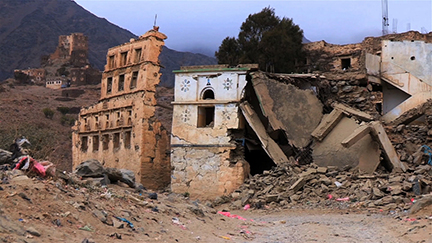
Destruction in northern Yemen caused by the civil wars with the Houthis, 2004-10 ; Photo: Mike Healy/IRIN


“Catastrophic” humanitarian situation in Yemen’s Dammaj

DUBAI, 6 November 2013 (IRIN) – A fresh outbreak of sectarian fighting in northern Yemen between militants of the Houthi-led Shia movement and (Sunni) Salafists has entered a second week with at least 50 people killed, according to a senior government health official, and aid workers getting little access to the besieged village of Dammaj, a Salafist stronghold.

Humanitarians are concerned that thousands of vulnerable civilians, some of them injured and sick, are unable to flee as Houthi forces continue to bombard the village from surrounding hills. In a statement last week the Houthis said a Salafi religious centre in Dammaj, Sa’dah Governorate, was being used to recruit Sunni fighters.

Attempts at a ceasefire on 5 November failed, and a further six people were reported killed overnight, with further fighting today, according to the government hospital in Dammaj.

“The humanitarian situation is catastrophic. There is no food, no medicine, no fuel, artillery shelling is non-stop and they are using all kinds of arms,” said Ahmad al-Wade’i, director of the hospital. “Diseases are spreading in a catastrophic way. Every day that passes the suffering of the people increases.”

The fresh fighting puts at risk a fragile truce that ended the civil war in the north in 2010. An escalation of the conflict around Dammaj could spill over to the neighbouring governorates of Hajjah, Amran and Al Jawf. Continue reading The Damning of Dammaj

Democracy … the West … and Islam: Part Two


By Samira Ali BinDaair, Sanaa, Republic of Yemen

[for Part One of this essay, click here]

Islam and Democracy

“Al-adala” (Justice) is a keyword in Islam, and Islam like the great religions preceding it came to regulate man’s life on earth and Allah sent many prophets to admonish the people who had gone to excesses and violated “Nawamis al-kawn” (Allah’s laws governing human interaction with the cosmos). Islam came to complete all the preceding messages in its being comprehensive, encompassing both the spiritual and material. When it is said in the Holy Quran that Allah has created man and jinn to worship Him, obedience to Allah’s laws of how man is to conduct himself on earth is part of that process of worship. In reading the Hadith literature (sayings of the Prophet PBH) and the Sira (biography of the Prophet,PBH), one can see how Islamic teachings were operationalized and exemplified, and what stands out is the absolute sense of justice in Islam.

The way Islamic affairs are to be conducted is through a consultative process (Shura) and in fact the concept of Shura is so important in Islam that a whole Sura (chapter) has been devoted to Shura. In Surat al Shura (ayya 38), it says: “Those who hearken to their Lord and establish regular prayer ….. who conduct their affairs by mutual consultation”. In choosing their leaders, Muslims should undertake the “Mubaya” ( declaring allegiance through the process of “Ijmaa” ( general consensus). No one practiced Shura more than the Prophet (PBH) himself. He always consulted with young and old on all matters. He consulted with Um Salama and Zainab bint Gahsh (wives of the Prophet) and respected their opinions. When the message was first revealed to him, he consulted with Khadija (his first wife) who reassured him and allayed his fears and consulted with her couisin Waraka ibn Nofal Christian monk at the time) who in turn reassured him that it was the angel Gabriel who had also been sent to prophets before him. During the battle of the “Khandak” (trenches) Salman Al-Farisi had informed the Prophet(PBH) about building trenches in battles as practiced in Persia where he came from; this was then adopted by the Muslims. The Prophet(PBH) was not autocratic and left some worldly matters to others who knew better than him. When when farmers in Medina asked him about cross pollination in date planting, his answer was:”You know better about these affairs”. Continue reading Democracy … the West … and Islam: Part Two

Democracy … the West … and Islam: Part One


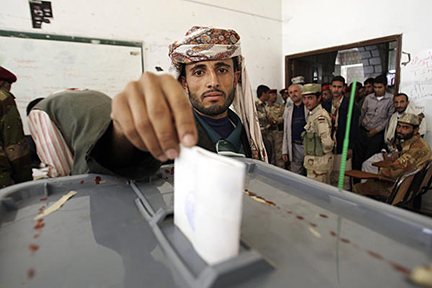
Yemeni man voting; photo by Hani Mohammed/AP

By Samira Ali BinDaair, Sanaa, Republic of Yemen

This essay is an attempt at shedding some light on the relationship between democracy, Islam and the Western world and in the process dispelling some of the misconceptions about the chasm between Islam and democracy. It is nowhere easy for the entire society to have unanimity on any given issue let alone such a complex one as what constitutes good governance and the best political system to be adopted. The Arab world has tried it all but I would like to point out that any system when transplanted and adopted without the necessary conditions for its success is bound to fail, leading to the condemnation of the system rather than analysis of the causes of failure in implementation.
Democracy as a pure concept

I would like to start with the concept of democracy which some Muslims have rejected on the basis of its emanating from the West within secular governments and secular ideas. However, if one examines the concept in its pure form it simply means rule of the people by the people for the people. To demystify it further, what it simply boils down to is that people have a voice in national affairs and choice of their leader and by virtue of the same fact are able to remove the leader through general consensus and legal means if the leader proves to be incapable of living up to the responsibilities entrusted to him/her. Continue reading Democracy … the West … and Islam: Part One

Women picturing women


A lieutenant in the elite female counterterrorism unit patrols the women’s barracks in Sanaa, Yemen. Photo from the “Women of Vision” exhibit. Photography by Stephanie Sinclair

Associated Press, WASHINGTON (AP) – The National Geographic Museum in Washington has a new exhibit featuring the photography of 11 award-winning female photojournalists.

The exhibit is kicking off a three-year tour for “Women of Vision: National Geographic Photographers on Assignment.” It features nearly 100 photographs depicting a variety of cultures and topics. The exhibit is on view in Washington until March 9.

The photographers tackled subjects ranging from memory and teenage brain chemistry to social issues like child marriage and modern-day slavery. Visitors will also see how National Geographic magazine photo editors work with photographers to select images to tell a story.

The photographers featured in the exhibit are: Lynsey Addario, Kitra Cahana, Jodi Cobb, Diane Cook, Carolyn Drake, Lynn Johnson, Beverly Joubert, Erika Larsen, Stephanie Sinclair, Maggie Steber and Amy Toensing.


Women – mostly widows – train for police force jobs at a firing range near Kabul, Afghanistan. Photo from the “Women of Vision” exhibit. Photography by Lynsey Addario

For all the pictures, click here: