Category Archives: Yemen

Yemen’s Houthi-Ahmar sectarian framing


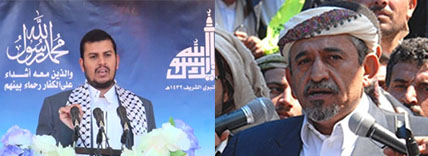
Abd al-Malik al-Huthi, left; Hashid Shaykh Sadiq al-Ahmar, right

by Abdullah Hamidaddin, al-Arabiyya Online, February 8, 2014

Framing matters. It shapes the way we react to a story. It focuses our attention to some details and distracts us from others. It connects a story to another set of stories, and separates it from others. Framing can make a story relevant or irrelevant. Ideally framing would be made through a serious process of observation and analysis. But more than often it is guided by the interests of those framing or their audiences.

Sometimes writers lack the sophistication to see the complexity of the world, so they select simple frames. Other times politicians see that a certain frame serves their interests more than another. Thus they only hear stories framed in their preferred way.
Sticking to Nonsense

I am saying this because of the ways the conflicts in the Middle East are framed as a Sunni/Shiite conflict. And I keep asking myself; why this insistence on retaining such a superficial way of analyzing the region and its conflicts? Why insisting on reincarnating Huntington’s clash of civilization thesis albeit in a ‘clash of sects’ variety? Continue reading Yemen’s Houthi-Ahmar sectarian framing

Qabilis and Huthis in Amran

رجال قبائل والحوثيون يوقعون اتفاقاً لوقف الاقتتال في عمران وإخراج المسلحين الوافدين إلى المنطقة

المصدر أونلاين – خاص
الثلاثاء 4 فبراير 2014 05:38:47 مساءً

قالت مصادر محلية إن اتفاقاً جرى توقيعه اليوم الثلاثاء بين قبائل حاشد وجماعة الحوثيين المسلحة لوقف الاقتتال في محافظة عمران وإخراج المسلحين الوافدين إلى المنطقة وتأمين الطرقات.

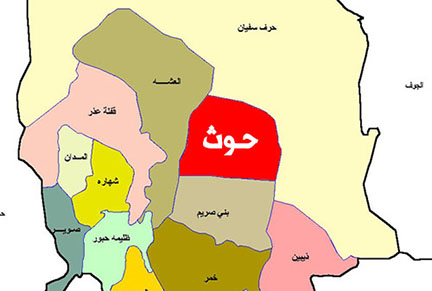
وذكرت المصادر لـ”المصدر أونلاين” إن القبائل والحوثيين اتفقوا على إخراج المسلحين الوافدين الى المنطقة، وفتح وتأمين الطريق العام وعدم التجوال بالأسلحة الثقيلة، ونشر قوات الجيش في عدد من المواقع في منطقتي خيوان وحوث.

وجاء الاتفاق برعاية اللجنة الرئاسية المكلفة بإيقاف إطلاق النار برئاسة قائد قوات الأمن الخاصة اللواء فضل بن يحيى القوسي وأمين العاصمة عبدالقادر هلال.

ونص الاتفاق على انسحاب الطرفين من مواقع الاقتتال، وعدم العودة إليها لاحقاً أو استحداث مواقع أخرى، وكذا منع الطرفين من “أي أعمال تثير الفتنة”.

كما نص الاتفاق على إعادة المهجرين من مديرية حوث إلى قراهم وبيوتهم وأموالهم.

لكن مصدراً قبلياً قال لـ”المصدر أونلاين” إن الشيخ حسين الأحمر غادر عمران بعدما حصلت ما وصفتها بـ”الخيانات”ØŒ من قبل عدد من مشائخ ريده وخيوان وحوث، الذين أعلنوا عدم محاربة الحوثيين والسماح لهم بالدخول إلى مناطقهم.

ونفى المصدر قيام الحوثيين بتطبيق الاتفاق، قائلاً إنهم يتجولون بأسلحتهم الخفيفة والثقيلة، ويتوسعون بشكل كبير، فيما لم تنتشر القوات العسكرية الا في مناطق محدودة.

وفي دنان، قالت مصادر محلية لـ”المصدر أونلاين” إن الحوثيين عرضوا على أهاليها توقيع صلح معهم، مقابل عدم الدخول في حرب معهم.

وأضافت المصادر أن الأهالي وافقوا على عقد الصلح مع الحوثيين، خشية من الدخول في معارك جديدة معهم.

وسيطر الحوثيون خلال اليومين الماضيين على مناطق في مديريتي (حوث، والخمري) بعمران بعد معارك عنيفة خاضوها مع رجال قبائل حاشد المسلحين أسفرت عن سقوط عشرات القتلى والجرحى من الجانبين.

Yemen: Ready for Change?

Yemen: Ready for change?
by Peter Salisbury, Al Jazeera Online, February 3, 2013

Yemen’s national dialogue has concluded, but the country remains beset by a slew of smouldering conflicts.

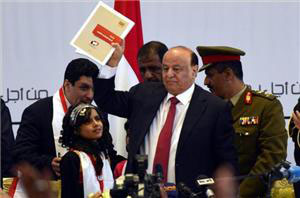
Yemen’s President Abd Rabbu Mansour Hadi is not known for his skill as an orator. During interviews and at public events he seems stiff, ill at ease and disconnected. He rarely speaks freely, choosing instead to read out pre-written comments. But at a recent meeting in Sanaa, Yemen’s capital, he was passionate, and seemed at several points to be on the verge of bursting into tears.

“I need you to stand by me, for the sake of Yemen,” he said in a rare moment of unscripted candour. “Serious decisions are going to be made.” Like many of those in the room at the upmarket Movenpick hotel, the president was carried away by a moment that many in Yemen had begun to doubt would ever come. The National Dialogue Conference, a months-long series of peace talks aimed at the creation of a new constitution, had finally come to an end.

Four days later, on January 25, at a ceremony held to formally conclude the talks, Hadi held a copy of the agreement in the air, to rapturous applause. Describing the conference as an “unprecedented success”, he also sounded a warning that summed up the mood in the room. “Some people say that the problem is not in writing laws, it is implementation,” he said. “This is relatively correct… There is a big difference between our past and our future.” Continue reading Yemen: Ready for Change?

Huthis vs. Hashid


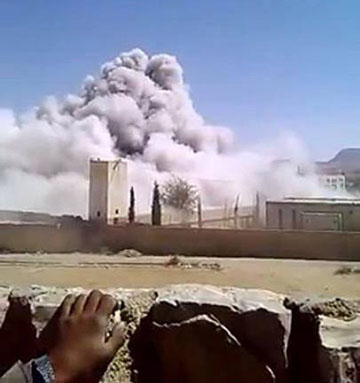
Embattled residence of Husayn al-Ahmar

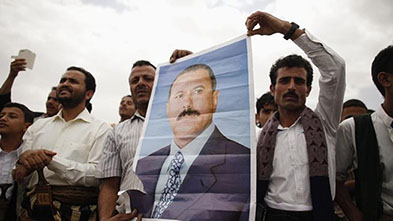
I wish this was a commentary about rival football clubs in Yemen, but it is not. The news this morning is that Huthi forces have battled the tribal guard of the al-Ahmar clan, specifically the home of Husayn of al-Ahmar. Husayn is the son of the late Abdullah al-Ahmar, who passed away in 2007 but had been paramount shaykh of Hashid since the execution of his father by Imam Ahmad. Before the revolution that toppled the Zaydi imamate, the two tribal confederations of Hashid and Bakil were said to be the wings of the imamate, cautiously manipulated by the last dynasty of Zaydi imams in the north. While tribal identity, and more importantly tribal values embedded in an honor code of qabyala, is still of major importance in Yemen today, the importance of Hashid and Bakil as major political blocks has weakened. This is due in part to the efforts of Ali Abdullah Salih, Yemen’s last president, to create loyalty to his regime. But it is also a result of imported views of Islam, including the Saudi-funded Salafis.

Yemen is beset with internal strife, fueled in large part by outside interests. The recent National Dialogue Conference has recommended a resolution to the current political stalemate along the lines of a federalist state. The expansion of Huthi influence closer to the capital may be part of the jousting for position in determining the boundaries of new federal states. Whatever the reason, this escalation of violence only exacerbates the tension that exists between Yemenis in various regions. Assassinations now seem to be almost a daily occurrence and Yemen’s economy has ground to a standstill. It is reported that the agricultural lands near Sa’da have been destroyed due to the fighting there between the Huthis and their foes, both the military excursions that Salih sent and the Salafis based in Dammaj. In this unrest, the feeble AQAP is able to operate with virtual impunity, despite the continued use of drones to target suspected terrorists.

The Riya-lity of Power

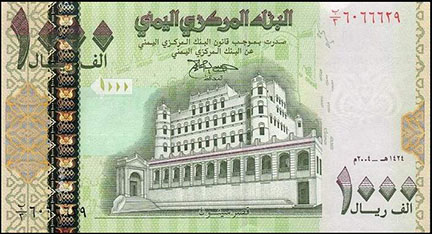
Michel Foucault, the French philosopher/historian, is oft quoted for equating knowledge (savoir) with power (pouvoir). Thanks to investigative reporting by Yemeni journalists, we now have knowledge about how Ali Abdullah Salih, the former President of Yemen, used his power to create riyal-ity, that is fabulous wealth skimmed off Yemen’s oil revenues in riyals. As reported in Yemen Press, Salih funneled millions of his wealth to the United Arab Emirates, also having villas built for his family. He has also distributed his vast wealth, as yet unaccounted for, to Morocco, France, Germany and Italy. It is reported that he did not use his own name, but those of family members.

So what else is new? Dictators, like kings and sultans of the past, have always enriched themselves while poor people starved on the streets. The more power tends to be absolute,or near absolute, the more the coffers get filled. Mamluk sultans in Egypt would periodically sack wealthy officials or merchants just to absorb their wealth. While most contemporary states have safeguards to prevent wholesale laundering of a country’s wealth, dictators generally define their own rules. While Asad hangs on to power in embattled Syria, there are no doubt several bank accounts full of cash if he ends up being forced out.

While it is true that there are various kinds of power, positive as well as negative, economics trumps the abstract notion of knowledge. Greed explains more than prejudice, although the two generally go hand in hand. Yemen is a special case in the seasonal shift following the Arab Spring. Continue reading The Riya-lity of Power

The Drone and the Wedding Party


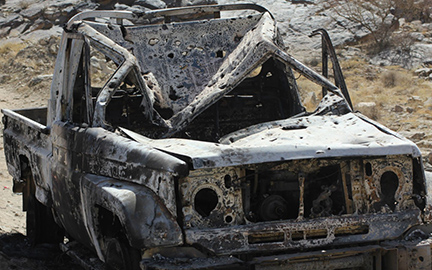
Right before the first missile struck this Toyota Hi-lux — fourth in the line of vehicles — all three of its occupants fled, including the man whom eyewitnesses thought was the apparent target of the strike. Iona Craig

A little more than a month ago on December 12, 2013 a drone sent four missiles into a wedding convoy in rural Yemen, apparently targeting a senior al-Qaida figure. In this attack 12 men died. The secrecy surrounding this tragic event has prevented an accurate accounting of what actually happened. This report by Iona Craig, an independent journalist based in Sanaa, provides a thorough analysis, based on interviews with the people involved. This is the best analysis of the event that I have seen. Check it out on al-Jazeera.

Birthers, chew on this …

President Obama has been stalked by birthers ever since his first run for the White House. But forget about placing his birth in Kenya, even though Kenya is a country where qat (Catha edulis) is chewed. A friend in Yemen sent me this photograph which should confuse the birther issue even more. If Obama can chew like a Yemeni, who knows where he was really born. Just think, how much qat is there in Hawaii?