Category Archives: Syria

Remembering Arab Spring Photographer Rémi Ochlik


Photographer Rémi Ochlik who was killed last year in Syria at the age of 28 (Photo: Corentin Fohlen)

By Adeline Sire, PRI’s The World, February 1, 2013

Many journalists have died covering the Arab uprisings.

Last year, 17 were killed in Syria.

One of them was award-winning French photojournalist Rémi Ochlik.

He was only 28-years-old.

Ochlik documented the revolutions in Tunisia, Egypt, and Libya.

Then last year, he headed out to Syria. Continue reading Remembering Arab Spring Photographer Rémi Ochlik

Tabsir Redux: The Cynical Dairy Farmer’s Guide to the New Middle East


BY Karim Sadjapour, Foreign Policy, June 15, 2011

How a couple of cows explain a changing region: equal opportunity offender edition.

In the early years of the Cold War, in an effort to simplify — and parody — various political ideologies and philosophies, irreverent wits, in the spirit of George Orwell, went back to the farm. No one really knows how the two-cow joke known as “Parable of the Isms” came about, but most students of Political Science 101 have likely come across some variation of the following definitions:

Socialism: You have two cows. The government takes one of them and gives it to your neighbor.

Communism: You have two cows. The government takes them both and provides you with milk.

Nazism: You have two cows. The government shoots you and takes the cows.

Capitalism: You have two cows. You sell one and buy a bull.

Over the years, the parables gradually expanded, using the two-cow joke to explain everything from French unions (You have two cows. You go on strike because you want three cows.) to the Republican Party (You have two cows. Your neighbor has none. So what?). While in its original iteration the cows were a metaphor for currency, capital, and property, they later began to take on different meanings.

Today, the Middle East has replaced the Cold War as America’s primary foreign-policy preoccupation. As opposed to the seemingly ideologically homogenous communist bloc, however, the 22 diverse countries that compose the modern Middle East are still confusing to most Americans. Why can’t the Israeli and Palestinians stop fighting already? What’s the difference between Libya and Lebanon again?

Herewith then is a satirical effort to simplify the essence of Middle Eastern governments so that, in the immortal words of George W. Bush, “the boys in Lubbock” can read it. And, rather than symbolizing property, the cows here symbolize people, which — funny enough — is how most Middle Eastern regimes have traditionally viewed their populations.

Saudi Arabia
You have two cows with endless reserves of milk. Gorge them with grass, prevent them from interacting with bulls, and import South Asians to milk them.

Iran
You have two cows. You interrogate them until they concede they are Zionist agents. You send their milk to southern Lebanon and Gaza, or render it into highly enriched cream. International sanctions prevent your milk from being bought on the open market.

Syria
You have five cows, one of whom is an Alawite. Feed the Alawite cow well; beat the non-Alawite cows. Use the milk to finance your wife’s shopping sprees in London.

Lebanon
You have two cows. Syria claims ownership over them. You take them abroad and start successful cattle farms in Africa, Australia, and Latin America. You send the proceeds back home so your relatives can afford cosmetic surgery and Mercedes-Benzes.

Hezbollah
You have no cows. During breaks from milking on the teat of the Iranian cow you call for Israel’s annihilation. Continue reading Tabsir Redux: The Cynical Dairy Farmer’s Guide to the New Middle East

The School of Mamlūk Studies


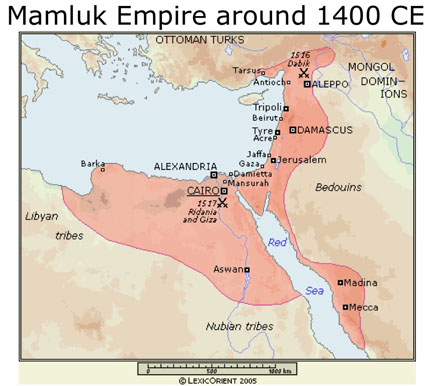
The School of Mamlūk Studies (SMS) is administered by the Universities of Chicago (Ill., USA), Liège (Belgium), and Venice (Italy), respectively represented by Marlis Saleh, Frédéric Bauden, and Antonella Ghersetti. It is currently based at the University of Chicago, where Mamluk-related projects such as Mamlūk Studies Review, the Chicago Online Bibliography of Mamluk Studies, and the Chicago Online Encyclopedia of Mamluk Studies are managed. The mission of SMS is to provide a scholarly forum for a holistic approach to Mamluk studies, and to foster and promote a greater awareness of the Mamluk sultanate (1250–1517). It aims to offer a forum for interdisciplinary debate focused on the Mamluk period in all its historical and cultural dimensions in order to increase, address, investigate, and exchange information and knowledge relevant to Mamluk studies in the broadest meaning of the term. Conceived as a meeting for scholars and graduate students working on any of the many aspects of the Mamluk empire, without neglecting its contacts with other regions, SMS offers to everyone working in the field of Mamluk studies the opportunity to attend annual conferences organized in turn by each of the three collaborating institutions.

The annual conferences will be organized around a general or a more specific theme which scholars will be invited to address. In addition, proposals for panels on other relevant subjects may be submitted by individuals, research teams, or institutions. Accepted panels will be held at the end of the thematic conference. On an irregular basis, SMS will also organize seminars in various fields (such as diplomatics, paleography, codicology, numismatics, epigraphy, etc.) which will be aimed at graduate students. These seminars will be planned to take place prior to or following the annual conference in the institution where the conference is held.

Papers presented at each conference on the selected theme will be published as a monograph, while papers presented at the panels will be considered for publication in Mamlūk Studies Review.

The first annual SMS conference is planned for 2014 in Venice. A call for papers will go out in 2013.

Tabsir Redux: Syrian Cuisine, Two Centuries Ago

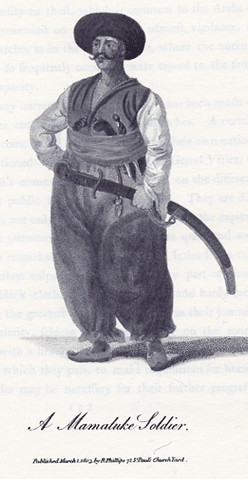
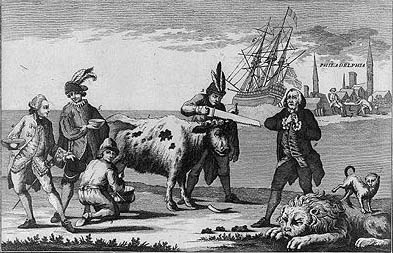
[Note: The following account is by the English traveler William Wittman, who commented on the foods and crops he saw while passing through the Levant in what was then Syria. The spelling is that of the original, from a time when proof reading was a distant concern and spelling was a democratic venture. The picture above is from the original 1803 edition.

Wherever the land is susceptible of cultivation, and has not been neglected, it affords abundant crops of wheat, barley, Indian corn (dourra), tobacco, cotton, and other productions. Fruits and vegetables are in equal abundance. Among the former are pomegranates, figs, oranges, lemons, citrons of an uncommonly large size, melons, grapes, and olives. The melons are large, and have a delicious flavour; as have also the grapes. of which we partook so late as the month of December, when we found they still retained their exquisite flavour. I have already adverted to the uncommon size of the water-melons, many of which weight from twenty to thirty pounds. they are a great and valuable resource to the inhabitants, who are so passionately fond of them, that, during the summer months, they form a great part of their subsistence. Notwithstanding they are as cooling and refreshing, as grateful to the taste, I was surprised to see the natives eat them in such immoderate quantities, without experiencing any unpleasant consequences. Continue reading Tabsir Redux: Syrian Cuisine, Two Centuries Ago

More of the Sham of al-Sham


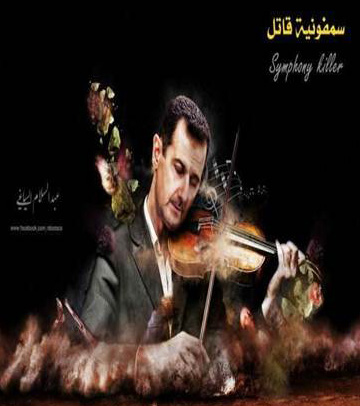
Image source: alhadath.yemen

The demise of Bashar al-Assad continues its downward spiral with bodies strewn all over Syria in the process. What makes him hang on? Can he not see what just about every pundit outside of Syria and increasingly most Syrians see in blood red letters: mene mene tekel upharsin? Even vain Belzhazzar saw the gig was up in Babylon when those lines cracked his banquet hall. Or is he raving mad in the style of Nero, who plucked his lyre while Rome burned? Or is he just a chicken without a head, but who is still trying to bury his head in the sand?

He hangs on for a variety of reasons. First and foremost, because for the time being he can. Russia has not yet told him he has to go and the United States has basically given him leave to do whatever he wants to his own people except gas them. The military has not yet deserted him in sufficient numbers and they are, thanks to Russia, very well armed. Even the hint from the U.N. envoy Lakhdar Brahimi that Assad has been in power long enough is not likely to move the last of the pre-Arab-Spring dictators (not counting kings, sultans and emirs for life) into retirement.

The Syria of 2013 is not that conquered by Umar ibn al-Khattab, not that of Ayyubid Saladin, nor that run over by the Mongols, nor that ruled briefly at the end of World War I by Faisal of Arabia (patron of Lawrence of Arabia and vice versa), nor that which joined the ill-fated United Arab Republic initiated by Gamal Abd al-Nasser in the 1960s. But there are indeed historically-stretched fault lines. Continue reading More of the Sham of al-Sham

Breaking the Syria Stalemate


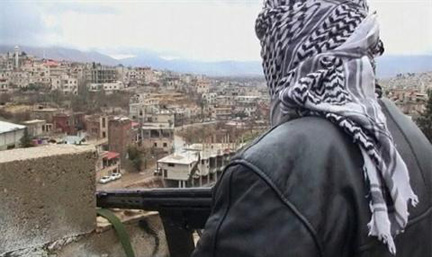
A member of the Free Syrian Army stands guard during a patrol in the western border town of Zabadani; photograph from The Daily Star

by Amr Al-Azm, The Cairo Review of Global Affairs, December 18, 2012

There are two possible trajectories for the current Syrian crisis. The first is a purely military scenario in which the opposition forces engage the regime in a bitter war of attrition until its annihilation. The success of such a course of action, however, is difficult to guarantee, and the cost to the country, its infrastructure and its civilian population is likely to be catastrophic. In fact the more probable outcome is a protracted bloody stalemate, leading to the collapse of the state, sectarian genocide and the fragmentation of the country with significant blowback into neighbouring states such as Lebanon, Jordan and Iraq.

The second trajectory would feature a political resolution. Negotiations would bring about the departure of the Bashar Assad’s regime along with a peaceful transition to democracy. Such a political outcome is the one clearly favored by the international community and was strongly endorsed at the latest friends of Syria meeting held in Marrakesh on December 12 both in statement and in action (by not publicly agreeing to the provision of any military assistance to the Syrian opposition). It is also the option that should be favored by the Syrian people since they too have no interest in seeing their country succumb to the fate described above.

There are certain conditions that must prevail in order for the preferred political outcome to have any chance of success. The first and foremost of these is that both sides must be prepared to engage in a political process with the ultimate outcome of a peaceful transition of power to a newly elected government. Currently, however, the situation in Syria is one of stalemate on political and military fronts; progress on both is needed simultaneously in order to break this stalemate. Continue reading Breaking the Syria Stalemate

New Syrian Schools in Lebanon


New Syrian Schools in Lebanon: between refugees’ empowerment and unwillingly fueled Social Alienation

by Estella Carpi

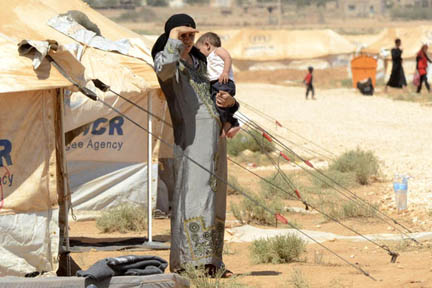
Last October 1, the school “Madrasat al-Iman al-Islamiyya” in Abu Samra in the city of Tripoli (North Lebanon) opened to “fresh off the boat” Syrian refugee kids and youth, in order to cope with the need of providing proper education in their everyday existential limbo.

The doors of this originally Lebanese Islamic school open daily to Syrian pupils from 4pm to 6pm in the afternoon, with the exception of Friday and Sunday, as established in the Tripoli district school calendar. When I visited the school on a Friday morning, the space was being used for playing volleyball and other entertainment activities were organized in class. The Back-to-School campaign has been quite large this year in Lebanon. To date, 4,942 children have been enrolled in schools, 1,650 of who are also supported by UNICEF, of a total refugee population of 162,050 individuals according to the most updated statistics provided by UNHCR.

“Soon we’re going to open new classes for high school students as well”, tells me A., administrative staff member of the school. The school director specifies that there will not be any coordination between the Syrian and the Lebanese school programme: “We made certain that, once the kids are done with their studies here and they will be able to get back to Syria in safe conditions, their certificate will be considered valid whatever the political system will be back home, with or without nizam al-Assad” (the current Syrian regime of Bashar al Assad). The school policies, hence, purvey the underlying intention of the whole Syrian refugeehood system to get back to Syria as soon as it is feasible. “We are going to translate all books from French and English – used in the Lebanese school system – into Arabic, and it’s going to be a big job”, explains to me the director of the school, who has been in Lebanon for 31 years, unlike the newly arrived Syrian teachers and the school’s administrative staff, who make up the vast majority. Continue reading New Syrian Schools in Lebanon