Category Archives: Countries

Tribalism in Yemen has changed deeply


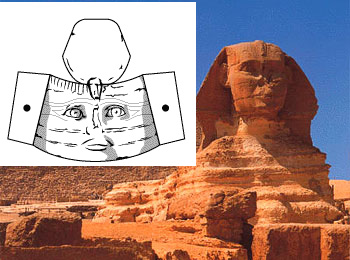
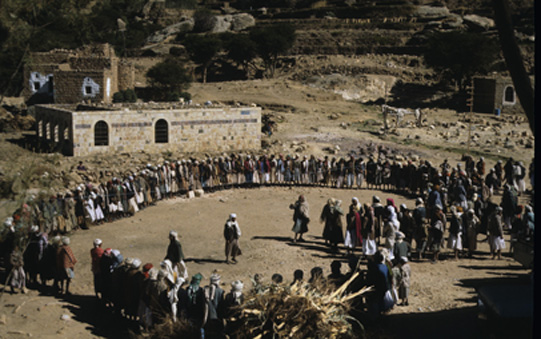
Tribesmen voting in al-Ahjur, Central Highlands, 1978

By Elham Manea, The Daily Star, April 6, 2012

February’s presidential election in Yemen by no means marks the end of the country’s troubles. However, the suggestion that the United States host a new arrangement based on decentralized negotiation between tribal and regional leaders is not the way to solve them.

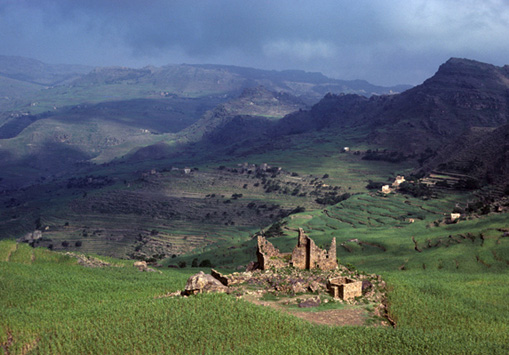
Such a call ignores lessons from Yemen’s past and underestimates the deep changes that have taken place in Yemeni society over the last decades. Although the tribal system continues to operate as the prevalent mode of social organization, it is crucial to recognize that the nature of tribal networks and institutions has changed drastically.

Historically, tribal networks compensated for the state’s lack of capacity. The tribe assumed the role of protector and provider: securing tribal territory, protecting water wells, and resolving conflicts between its members or with other tribes. In many ways, the tribe was the institution of first resort for financial backing and social support in times of crisis. It is perhaps very telling that Aden – where the nuclear family has displaced the tribe as the main social unit – is more affected by poverty than regions that have preserved tribalism, such as Shabwah, Mahra and Al-Dali.

Tribal sheikhs were also once accountable to their constituents: They were elected and could be voted out. Thus, a sheikh was often regarded as a first among equals, rather than an absolute ruler. Custom (Irf) governed the mediation of conflict within or outside the tribe and could not be violated without loss of honor – a distinct disgrace – and threat of severe penalty. Continue reading Tribalism in Yemen has changed deeply

“My Name is Khan” déjà vu


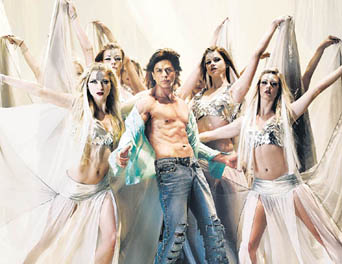
Shah Rukh Khan as sex symbol

Someone really needs to read the riot act to The Patriot Act. Yes, the threat of terrorism is real and we millions of passengers dutifully take off our shoes and spread out our arms for see-through scanning or pat-down frisking in airports. But screening does not have to be irrational. How many times must a world-famous actor like Shah Rukh Khan be detained by security when he enters the United States? This is not the first time. What status is there to check out? Does the image above look like a serious threat? Would Salman Rushdie be rushed into detention?

Here is the report on Al-Jazzera :

He is one of the most famous men on the planet. Adored by millions. His films are almost always box office smashes. But when Bollywood star Shah Rukh Khan travelled to the US on Thursday, he was detained by security for two hours while they checked out his “status”.

Ironic, considering his biggest hit film was the story of a man determined to visit the US president and give him a very simple message: My Name is Khan and I’m not a terrorist.

The film is a powerful look at what it means to be Muslim in the land of the free and the home of the brave. I wonder if he told Homeland Security that he wasn’t a terrorist.

He says he feels angry and humiliated. I know how he feels. In the last three years I have travelled to the US six times. Each time, bar one, I was stopped. I was asked to go to a holding facility and my passport was taken. You are asked to sit down by a polite but hostile official. Continue reading “My Name is Khan” déjà vu

Winter in Syria


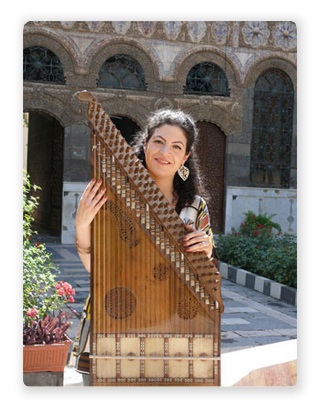
Maya Youssef, Syrian kanun player

Amidst all the strife that the Syrian people have been suffering over the past year, imagine a musical break. Imagine Vivaldi in Syria. Imagine a performance of Vivaldi’s “winter” from his Four Seasons. Imagine this played by the Syrian National Orchestra and accompanied by a kanun. Well, imagine no more. You can listen to Maya Youssef playing this right now. Enjoy.

For more information on Maya Youssef, click here.

For Whom the Death Toll tolls


“John Donne and 1664 Dutch map of the world

“No man is an iland, intire of it selfe; every man is a peece of the Continent, a part of the maine; if a clod bee washed away by the Sea, Europe is the lesse, as well as if a Promontorie were, as well as if a Mannor of thy friends or of thine owne were; any mans death diminishes me, because I am involved in Mankinde; And therefore never send to know for whom the bell tolls; It tolls for thee….”
John Donne, Meditation 17, Devotions upon Emergent Occasions, 1624

What was true some four centuries ago for the English metaphysical poet John Donne is timeless, even if his writ shows its linguistic age. Today it can also be said that no country is an island unto itself, no matter where or how you spin the globe. This is certainly the case for the United Sates, with our military still on the ground in Iraq and Afghanistan, targeted drones over Pakistan and Yemen, the smoldering aftermath of the bombs that brought down Qaddafi in Libya, the stench of made-in-the-USA arms just about everywhere. If, as Donne eloquently reflects, the death of any man (or woman or child) diminishes us, then why are we so hell-bent on adding to this diminishing by arming thugs and sending our military to die in other countries?

First, it is important to realize how much the death toll drones on daily. Take today, for example. On Al-Jazeera we learn there are “many dead in Afghanistan suicide blasts,” 18 dead and 45 wounded by the numbers. As the nominal peace part still fails to protect the dictator-weary people of Syria, reports are that some 9,000 have been killed so far by the Assad regime, including refugees over the border in Turkey. There are also “Pakistanis dead in apparent sectarian attack,“adding six more to the thousands who have been killed in the ongoing violence that plagues Pakistan. The see-saw fighting in Yemen’s troubled south leaves “Dozens killed in attack on Yemen army base.” And a few days ago “Hamas hangs three Gaza prisoners“. Continue reading For Whom the Death Toll tolls