Category Archives: Countries

Letters from Abbottabad


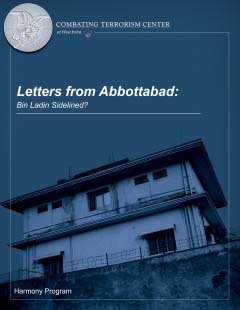
The Combating Terrorism Center at West Point has just issued a report on the letters found at Bin Laden’s compound in Pakistan. This is: Letters from Abbottabad: Bin Ladin Sidelined?
The authors are Don Rassler, Gabriel Koehler-Derrick, Liam Collins, Muhammad al-Obaidi, and Nelly Lahoud. Here is the description and it can be downloaded here.

This report is a study of 17 de-classified documents captured during the Abbottabad raid and released to the Combating Terrorism Center (CTC). They consist of electronic letters or draft letters, totaling 175 pages in the original Arabic and 197 pages in the English translation. The earliest is dated September 2006 and the latest April 2011. These internal al-Qa`ida communications were authored by several leaders, most prominently Usama bin Ladin. In contrast to his public statements that focused on the injustice of those he believed to be the “enemies” of Muslims, namely corrupt “apostate” Muslim rulers and their Western “overseers,” the focus of Bin Ladin’s private letters is Muslims’ suffering at the hands of his jihadi “brothers”. He is at pain advising them to abort domestic attacks that cause Muslim civilian casualties and focus on the United States, “our desired goal.” Bin Ladin’s frustration with regional jihadi groups and his seeming inability to exercise control over their actions and public statements is the most compelling story to be told on the basis of the 17 de-classified documents. “Letters from Abbottabad” is an initial exploration and contextualization of 17 documents that will be the grist for future academic debate and discussion.

Dear David Horowitz, stop the slander and come to Palestine


by Mark LeVine, PhD Dept. of History, UC Irvine, posted on Al-Jazeera, May 1, 2012

Dear David,

It’s been too long. I was a little surprised that I was not part of your just published list of dangerous, Jew- (self-) hating, Nazi-loving supporters of Boycotts, Divestments and Sanctions against Israel. Maybe I’m not good – sorry, evil – enough to have made the A-list of Israel-bashers featured in your April 24 New York Times ad . But not even your full list, with 1,004 professors, journalists, artists, activists and organisations? Was there really no room for me, one of your original 101 most dangerous professors?

Indeed, the new list, like the old one, is much longer than the sample you’ve presented. You’ve only scratched the surface; you should hire more interns. Let me help you a bit; you can add me now.

While adding my name, perhaps you might consider the implications of so many people from all walks of life joining the BDS movement: they have decided that decades of illegal Israeli occupation, massive settlement construction, the destruction and theft of much of the natural resources of the West Bank and Gaza – from olive trees to precious water resources – and the systematic detention, torture and murder of tens of thousands of Palestinians, have done grave harm to Palestinian society. These crimes against the Palestinians involve such a wide spectrum of Israeli society and government that calling for the boycott of Israeli institutions, divestment from the Israeli economy and sanctions against the government is both a necessary and moral response to this situation.

You argued in the New York Times ad that supporting BDS is akin to supporting the Nazi attacks on Jews in the years leading up to the Holocaust. You have labelled anyone who accuses Israel of murdering Palestinians – which is actually a statement of fact, not an accusation – a terrorist or supporter of terrorism. This is, of course, nonsense. Continue reading Dear David Horowitz, stop the slander and come to Palestine

The Real War on Women


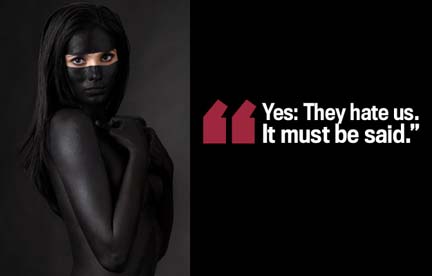
One of the most revered journals on the political front has taken a cue from Sports Illustrated: Foreign Policy now has a sex issue, indeed what is billed as “the sex issue.” Someone forgot to tell the editors that there is such a thing as “gender,” since there is very little bedroom-variety “sex” revealed in the articles. If a review of “Women in Politics” is about “sex,” then the journal misses out on the real sex going on, like politician John Edwards cavorting while running for President and several secret servicemen strip clubbing the night away in Columbia. And if what is going on from India to Iran is “the new politics of sex,” it looks a lot like the old. The reader might even accuse the journal of false advertising, since the seductive pose of a model clad in hijab black on the cover suggests more politically incorrect eye candy inside.

The lead article by the journalist Mona Eltahawy has launched a barrage of commentaries and counter commentaries in the academic community. Echoing the cover tag, she asks “Why do They Hate Us?” with a less than subtle subtitle of “The Real War on Women is in the Middle East.” Were this “really” the case, it might be seen as good news, since I have always been under the impression that the real war on women was more or less worldwide. How wonderful that women in Africa, Asia and Latin America no longer have to worry about real warfare. Of course, we all know the real war against women ended in Europe when the wielders of the Malleus Maleficarum burned the last witch and in the United States when women started voting in 1920. And I am sure the GOP is quite relieved to know that the war on women announced for the upcoming election is phony.

I understand the author’s frustration at the lack of progress for promoting women’s rights in the aftermath of the now rather chilly “Arab Spring.” Her experience in Tahrir of being groped and sexually assaulted is despicable. But to assume that those men stand for all Egyptian men and that all Egyptian women are hated is what one says in anger. The “real war” here is not about groping; it is a battle for minds, not bodies. The “real” enemy is a politics charged with a dogmatic rhetoric that is less about what men and women do in the bedroom than how they conform to an imposed tyranny that benefits the proverbial one percent, be they dictators or clerics. Continue reading The Real War on Women

Tribal Governance and Stability in Yemen


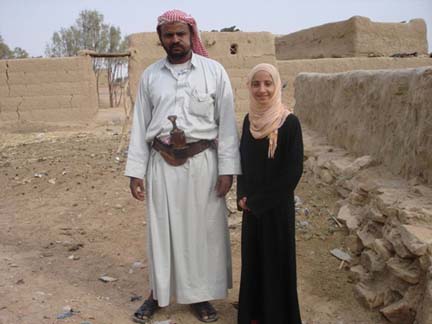
Nadwa Al-Dawsari (with her tribal shiekh colleague)

by Nadwa Al-Dawsari, Carnegie Paper, April 2012

The power-sharing deal signed by Yemen’s President Ali Abdullah Saleh in November 2011 mentioned presidential elections, the formation of a national unity government, and a military commission to reform the armed forces. It was at best the first step in Yemen’s recovery from the protracted turmoil and instability that wracked the country for months.

In this uncertain period of transition, as the new government struggles to establish legitimacy and address its most pressing issues, tribal law and traditions will play an important role in restoring a degree of stability because government capacity is extremely limited. This is particularly true given increasing conflicts and emerging sectarian and political divisions in the country. State and rule of law institutions are not only weak and ineffective outside of the main cities but also widely untrusted.

Yemenis have relied on indigenous tribal traditions to regulate conflict and establish justice for centuries, if not millennia. Tribal law has effectively handled conflicts between various tribes, between tribes and extractive companies, and between tribes and the government. It has successfully prevented and resolved conflicts over resources, development services, and land, and has sometimes managed to contain complex revenge-killing cases. Nationally, tribal mediators have played an important role in promoting political dialogue and building consensus among political groups. During the past year, where government forces withdrew, tribes took responsibility and managed to provide a reasonable level of security within their territories and along the main roads that connect tribal governorates. Continue reading Tribal Governance and Stability in Yemen

Anger over female circumcision in a Muslim sub-sect in India

NY Daily News, Tuesday, April 24th 2012

Over 1,600 Bohra Muslim women in India have signed an online petition calling for an end to the practice of female circumcision in the community. The community’s insistence on “Khatna” (the excision of the clitoris) sets it apart from other Muslims in the Indian subcontinent.

Eleven years ago, Farida Bano was circumcised by an aunt on a bunk bed in her family home at the end of her 10th birthday party.

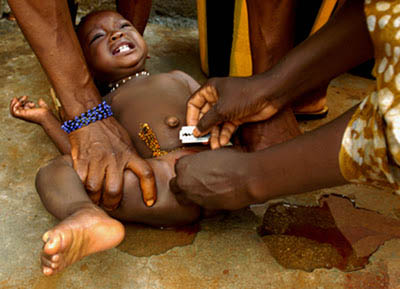
The mutilation occurred not in Africa, where the practice is most prevalent, but in India where a small Muslim sub-sect known as the Dawoodi Bohra continues to believe that the removal of the clitoris is the will of God.

“We claim to be modern and different from other Muslim sects. We are different but not modern,” Bano, a 21-year-old law graduate who is angry about what was done to her, told AFP in New Delhi. She vividly remembers the moment in the party when the aunt pounced with a razor blade and a pack of cotton wool.

The Bohra brand of Islam is followed by 1.2 million people worldwide and is a sect of Shia Islam that originated in Yemen. While the sect bars other Muslims from its mosques, it sees itself as more liberal, treating men and women equally in matters of education and marriage.

The community’s insistence on “Khatna” (the excision of the clitoris) also sets it apart from others on the subcontinent. “If other Muslims are not doing it then why are we following it?” Bano says. Continue reading Anger over female circumcision in a Muslim sub-sect in India

Tabsir Redux: Mocha Musings #1: Mecca and Arabia

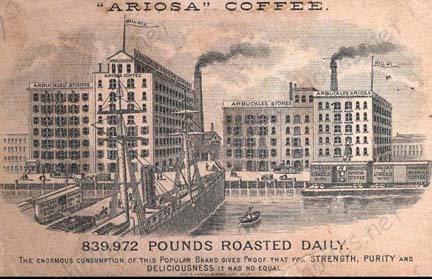
Arbuckles’ Ariosa (air-ee-o-sa) Coffee packages bore a yellow label with the name ARBUCKLES’ in large red letters across the front, beneath which flew a Flying Angel trademark over the words ARIOSA COFFEE in black letters. Shipped all over the country in sturdy wooden crates, one hundred packages to a crate, ARBUCKLES’ ARIOSA COFFEE became so dominant, particularly in the west, that many Cowboys were not aware there was any other kind. Keen marketing minds, the Arbuckle Brothers printed signature coupons on the bags of coffee redeemable for all manner of notions including handkerchiefs, razors, scissors, and wedding rings. To sweeten the deal, each package of ARBUCKLES’ contained a stick of peppermint candy. Due to the demands on chuck wagon cooks to keep a ready supply of hot ARBUCKLES’ on hand around the campfire, the peppermint stick became a means by which the steady coffee supply was ground. Upon hearing the cook’s call, “Who wants the candy?” some of the toughest Cowboys on the trail were known to vie for the opportunity of manning the coffee grinder in exchange for satisfying a sweet tooth.

While sorting through a bevy of late 19th century advertising cards and magazine illustrations collected by my great, great aunt in several yellowing albums, I came across several for the Middle East that were published for Arbuckle’s coffee. Continue reading Tabsir Redux: Mocha Musings #1: Mecca and Arabia

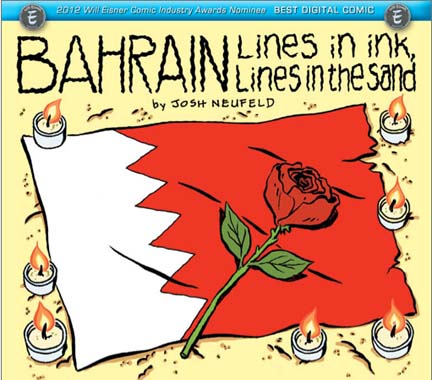
Tabsir Redux: A Rose for the Last Days

by Rana al-Tonsi [Translated from Arabic by Sinan Antoon]

On one foot
like a humiliated beggar I limp
past all the swinging doors
and the flags that are taken down from their masts . . .
The sidewalk was never my friend
but it embraced me those times
when the crying was tough and bitter

In my country
soldiers go to a war
where they never fight
In every coffeehouse or square
under the feet of the sick, the sad and insane
you can glimpse the trace of a rose
thrown into the arms of nurses
in lonely rooms inhabited by wailing,
a rose drawn in blood. Continue reading Tabsir Redux: A Rose for the Last Days