Category Archives: Countries

Iconclasm Again


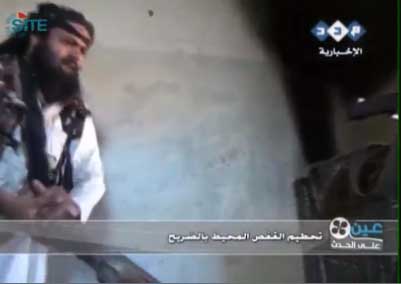
Once again AQAP/Ansar al-Shari’a shows its mean spirit, not only destroying the lives of the living but resorting to desecrating the dead. Before pulling out of Ja’ar in southern Yemen, several of the iconclasts destroyed the shrine of al Ja’dani in Al Tareyyah, among other shrines. Ibrahim Suleiman al Rubaish, a former detainee at Guantanamo Bay and now a senior AQAP leader, issued a video taking credit for the demolition work. Here is what he is reported to have said:

“Here are the mujahideen by the grace of Allah the Great and Almighty carrying out what Allah commanded them to do and reviving their jihad in the Cause of Allah…. So, just as they fought democracy and representative councils which make laws alongside Allah, they are destroying the domes which are being worshipped other than Allah, along with the graves and mausoleums, which people try to get close to other than Allah the Great and Almighty.”

“We fight the idolatry of the palaces and the graves – both are the same.”

The idolatry he does not see is his own intolerance, as though Allah has made him a successor of the prophet. Yemen’s south is dotted with shrines, reflecting the generations of Sufis and other devout scholars who have lived in Yemen over the centuries. Rubaish, who is in fact a Saudi and not Yemeni, places himself above all these Yemenis of the past. Like the other AQAP leaders, he is not likely to last long, but the destruction he touts adds salt to the wounds of the current turmoil in Yemen. Yemen has a rich Islamic history of monuments and saints tombs. Unlike the Taliban blasting in 2001 of the Buddha images at Bamiyan, also a senseless act, Rubaish cannot even claim to be destroying an image from another religion. He thinks he is fighting “the palaces and the graves,” but he is really fighting against time and doing more to harm Islam than promote it.

Where is the salam dunk?


The epitome of Arabic greetings is salam alaykum, peace be upon you, but it seems that the Middle East harbors more harb (war) than peace these days. It can be argued that this is hardly new for a region that has seen more warfare over time than any other. Perhaps the characterization of the region as the Holy Land has as much to do with the amount of human blood spilled on its soil as for the number of prophets preaching peace. But today’s news cycle is particularly sad because nowhere does there seem to be much hope for furthering the peace that most people are dying to achieve. The violence drones on and on.

As former President Mubarak lies in a coma, many Egyptians are once again flooding Tahrir Square to contest the military’s coup-like takeover of political power, although perhaps it should be styled a makeover, since they have held de facto power all along and will continue to do so no matter who is elected. To Egypt’s south far less individuals took to the streets in Khartoum, protesting the Sudanese government. Although Somalia has been pushed out of the major news cycle, the situation there remains as volatile as ever. Crossing over into Sinai, an Israeli construction worker was killed a few days ago and in the escalating tension Hamas has fired rockets at Israel and Israel has launched air raids in Gaza. Syrian violence continues but without the pretense of powerless monitors and the repaired helicopters that were being shipped from Russia. In Iraq pilgrims continue to be targets of bombs and pay for their devotion with their lives. In Yemen the military commander of the brigade that drove Ansar al-Sharia out of their southern base was killed earlier in the week by a suicide bomber. Even in Turkey there has been recent violence from Kurdish nationalists.

Long ago one of the prophets in this region said the immortal words: Blessed are the peacemakers. But how can they be blessed if they are absent? Why does the curse of the warmakers seem to outweigh efforts at peace? If Indeed we recently witnessed an “Arab Spring,” the reality is that spring is part of a seasonal cycle and not eternal. The “fall” of dictatorial regimes is still playing out, but the cold sectarian winds blowing out hopes for peace and the frosted rhetoric of intolerance do not bode well for the tender blossoming of sought freedoms. The region needs a Gandhi, not an Osama or an Assad. The region needs a salam dunk, not a harb to the right. But, if history is any gauge, there will still be no blessings to confer in tomorrow’s news cycle.

Yemen’s Beauty


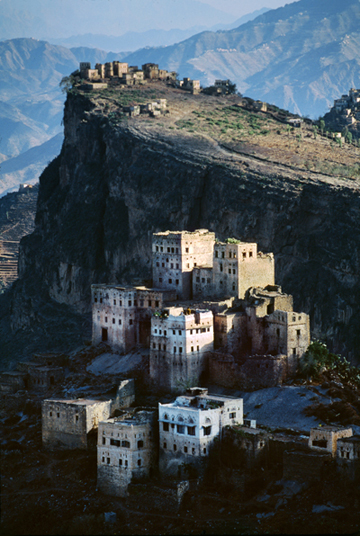
Photograph by Steve McCurry

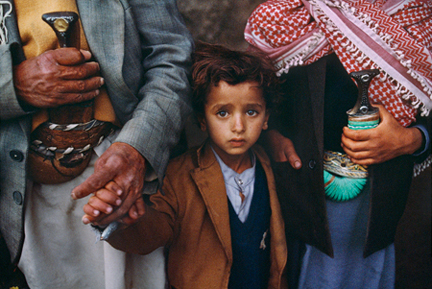
The photographer Steve McCurry has published some incredible pictures of Yemen on his blog. It is well worth checking out the pictures, but it is necessary to avoid the captions, which are neoconnish and ill conceived. When they say a picture is worth a thousand words, it can also be in reference to the kinds of words used. As long as the little boy is in the hands of his tribal family and values, he is most unlikely to be any kind of terrorist.


Photograph by Steve McCurry

And the winner is?


The polling is over in Egypt, but the dust has not yet settled. Given the simoon of recent political events, it is not likely to settle soon. Unofficial tallies place the Muslim Brotherhood backed candidate, Mohammed Morsi, with the lead. But the official results will not be released until June 21. Yet, it is possible to ask if there can be any real winner, since the ruling military council has ensured that it will continue to call the shots and ride oversight on any new government. The stage is now set for either a confrontation between supporters of the Brotherhood and the military or a marriage of convenience. I suspect the latter. The military is not about to lose power, not has it gambled away its prestige by engaging in ruthless slaughter as has happened in Syria.

Egypt, as most people know even if they only read their King James Bible, has a long history. Relics of the pharaohs dot the landscape; the pharaohs were gods on earth, the absolute dictators of their day, and they generally got along fine with the religious framers. When Akhenaten tried to go against the grains of the gods and call for the worship of one God, Aten, it was a short-lived moment. The rulers in the Islamic era were also not on the side of democracy. When the Mamluks, foreign mercenaries who wreaked havoc on the locals, took over in the 13th century, they played the religion game and adopted devout-sounding names, but their lust was for power and revenues and not to glorify Allah. It is tempting to view the continuing role of Egypt’s military as a Mamluk ploy, only from within. The military today is thoroughly Egyptian and has vast economic assets as well as the ability to channel politics. Continue reading And the winner is?

Power corrupts and corrupts


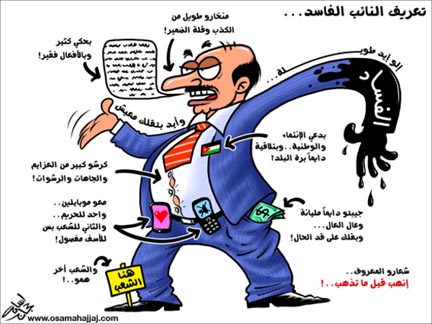
Yemen Press is reporting that they have uncovered documentation that the head of military finances in Yemen from 1998-2009, ‘Abd al-Mun‘im al-AdÄ«mÄ«, appropriated about 281 million riyals for his own use during the Salih regime. As his name suggests, he was indeed a slave to the role of benefactor, but not in the hallowed religious sense. Such corruption is not unique to Yemen, as dictators and monarchs do the same all the time. Power corrupts, as it has since records have been kept. The political cartoon accompanying the article speaks for itself…

Arab Love Songs


The Library of Congress has archived many of the Gramophone recordings from the early part of the last century. This includes several vaudeville songs about Arabs. One of these, about Egypt, is “Arab Love Song” sung by Harry Macdonough for Victor Records, made possibly as early as 1908. My personal favorite is “Sahara (we’ll soon be dry like you),” a prohibition era song recorded by Esther Walker in 1919. There are also comedy routines, like the schtick by Charles G. Widden on “Peterson at the Turkish Bath”. Then if you want a one-step from 1918, try “Arabian Nights” by the Waldorf Astoria Dance Orchestra or the fox trot “Oriental Love Dreams,” recorded in 1924 by Coon-Sanders Original Nighthawk Orchestra or “Harem Life” recorded in 1919 by the Paul Biese Novelty Orchestra.

Qatar’s Social Divide


Qatari women as depicted on the main website of the Qatar Chamber of Commerce

Qatar’s social divide: hindering a pathway to the future?

By Michael Stephens, Open Democracy, June 10, 2012

When considering what Qatar might have in common with Arab countries which experienced revolutions following December 2010, one might get easily confused. There was no Arab Spring here, people did not take to the streets in protest. Indeed, most Qataris hold a genuine affection for the Emir, something which cannot be said for many other Arab nations.

It follows then that Qatar must be unaffected by the macro social processes that led to the outbreak of the Arab Spring. For if Qatar did not experience any of the symptoms it surely did not suffer from the illness, right?

Wrong, Qatar, like every Arab country in the world is struggling to deal with a number of social issues,ranging from a youth demographic boom, to political Islam, to inherent tribalism which pervades the public sphere.

Of most importance is the struggle between traditionalism and modernity, between the values of a mostly Bedouin orientated society clashing against western ideas. The struggle that many of the country’s young population go through on a daily basis is painfully obvious, as they attempt to combine the expectations of their families with growing up in a globalised world which their parents fundamentally do not understand.

This social cleavage leads to a society which awkwardly steps into the future, leading the ruler Sheikh Hamad Al Thani to plot a course which combines a mix of modernising polices on one hand with concessions to conservative forces on the other.

In recent years, this process has begun to accelerate. Continue reading Qatar’s Social Divide