Category Archives: Countries

New Online Issue of CyberOrient


CyberOrient, the online journal of the Middle East Section of the American Anthropological Association, has just published its 2012 issue on “The Net Worth of the Arab Spring.” The guest editor is Ines Braune, who writes in the Introduction:

When I was asked to be the guest editor of the current issue of CyberOrient, I realized this is a welcome opportunity to arrange and re-sort some aspects, points, and arguments about the role of the media during the Arab Spring. In the course of the events late in 2010 and early in 2011, I felt enthusiastic and overwhelmed – not primarily as a scholar with a background in Middle Eastern and media studies, but as someone who was part of the peaceful German revolution in 1989 as a young teenager. Upon reflection, I took up the role of a media researcher considering how the use of media shaped these events. Though much has already been said and written about the media and Arab Spring, it would be worthwhile after a bit more than a year to reflect and reevaluate the relationship between the media and revolutions. Due to my involvement in this edition, and after numerous discussions with colleagues, and students in my media seminar in the summer term, I frequently came across the following three points: the significance of mediatization processes, the online-offline dichotomy, and various kinds of amnesia.

The articles discuss the role of social media in Egypt, Iran, and Al Jazeera, along with two book reviews.

Buried Cities Recovered #4


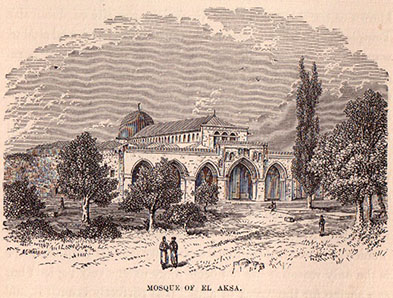
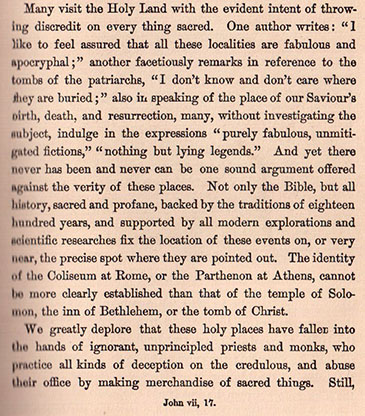
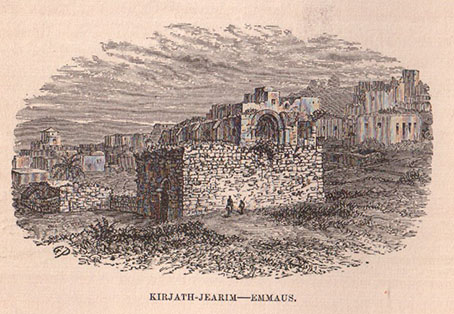
In a previous post I continued a thread on a 19th century Bible Lands text by Rev. Frank S. DeHaas. Now it is on to Jerusalem, holiest of the holiest places for this Protestant pilgrim. Yet again he has a hard time seeing past the poverty and destruction. But then he is consoled by the fact that such ruin was all according to prophecy. Unfortunately for a century more than this book, facts are indeed stubborn things and the artifacts DeHaas thought so compelling turn out not to be very factual.


Continue reading Buried Cities Recovered #4

Syrian Refugees in Lebanon


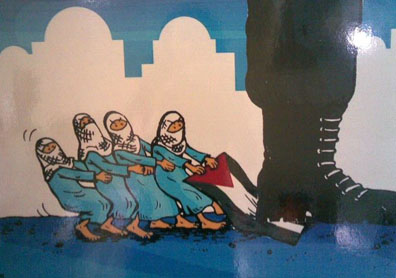
Image from Museum of Resistance in Lebanon; photograph by Estella Carpi

Syrian refugees in Lebanon: when the Apollonian cannot expect anything from the Dionysian

by Estella Carpi

While based in Lebanon, I personally find no way of getting out of the emotional whirlwind of suffering that the Syrian revolution, the merciless state repression and the subsequent armament of the revolutionaries have been giving rise to for 18 months. Without aiming at prematurely assessing the size of the emergency response to the “Syrian humanitarian crisis”, I would like to discuss here the Lebanese phenomenological approach to the current events by using the Syrian refugees’ lens.

Although used to regarding Syria as a model of stability and harmony, and as a place where people allegedly identify through the imposed order, the Lebanese suddenly find themselves taking care of the Syrian Leviathan. If Lebanon has always embodied the Dionysian, with its several war scars, social open wounds and its incontrollable emotionalities, Syria has always represented the rational, organized and balance-keeper Apollonian to the outsider’s eye. Continue reading Syrian Refugees in Lebanon

Finally, Indonesian Outrage Looks Productive


by Kevin Fogg

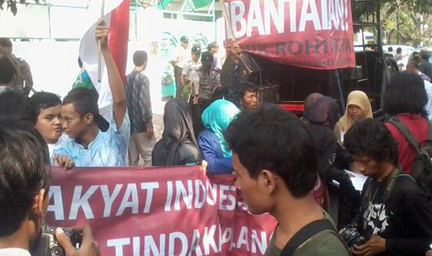
In the last week, as protests have flared around the Muslim world about the film Innocence of Muslims, Indonesia has not been left out. Protests in Jakarta and Surabaya (the capital and second largest city, respectively) on Friday and Saturday were led by the group Hizbut Tahrir. Today more violent protests flared at the US Consulate in Medan and again at the US Embassy in Jakarta, where police arrested four instigators from the frequently-unruly group Front Pembela Islam (Islamic Defenders’ Front).

Since democratization in 1998, Indonesians (especially those in Jakarta, but also in other cities) have not been shy about protesting. Protests in front of the American Embassy (which also faces the central square in Jakarta and the site of most major protests) are not uncommon, but other countries are also frequently the target of protests, including majority-Muslim countries like Malaysia. Most of these protests about overseas issues have no impact on government policy, or on the issues that they are protesting about, but one case this summer shows the flip side of the coin: protests that became productive in international relations

Indonesians were outraged at news in June and July about sectarian clashes involving the Muslim Rohingya minority in Burma. These deaths were not the worst in the ongoing struggles of the Rohingya–involving denied refugee status, limitations on international aid, years of discrimination, and other woes–but the opening of the press in Myanmar allowed news on the conflict, which fed into Indonesian Muslim outrage. Not sparing anyone in their anger, Indonesians even loudly criticized Nobel Prize Winner Aung San Suu Kyi for not paying enough attention to this issue. This led in August to several demonstrations across the country, even including the leader of the national Indonesian Ulama Council. Indonesian attention has kept up since the initial news, too, with the largest Islamically-minded paper in the country hosting a special page for news on the “Rohingya Tragedy,” with new articles almost every day. Continue reading Finally, Indonesian Outrage Looks Productive

Islam Without Red Lines

By Anouar Majid

The violence that erupted in the wake of the YouTube on the Prophet Mohammed is a wake-up call to all who care about the future of human civilization and, particularly, that of Arabs and Muslims living in Muslim-majority nations. (Muslims living in the United States are having the time of their lives—the land of what Iranian mullahs call Great Satan is the best place on earth for them.) Still, Muslims everywhere have been unable to unbind their ties to religious orthodoxy, clinging tenaciously to the decrees of religious scholars in mosques, as well as to the fatwas pronounced on the tube and the net alike.

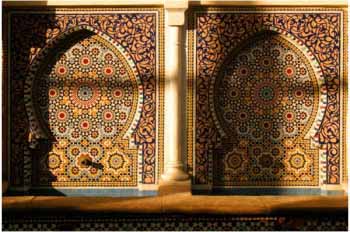
I arrived in Morocco, arguably the most liberal country in the Arab world and a reliable partner of the West for decades, on the eve of the YouTube trailer controversy. As soon as I heard about the murders in Libya and the violent protests in Egypt and elsewhere, I chose not to be silent in the face of Islamist fury. I spent time explaining to cab drivers, unemployed youths, poorly educated workers, and highly educated professionals that the US government can’t control what people post on the Internet. I tried to get my interlocutors to understand that Muslims are laughably easy to manipulate—all one only has to do is draw a caricature of the Prophet or make a film about him to turn them into the world’s laughingstock. Continue reading Islam Without Red Lines

Newsweak


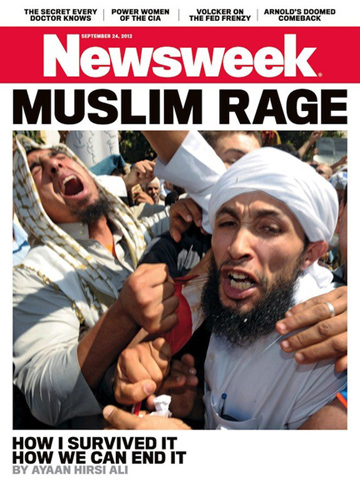
Edward Said wrote a poignant critique of media coverage of the Iranian hostage crisis just over three decades ago. He called it “Covering Islam.” The subtitle was “How the Media and the Experts Determine How We See the Rest of the World.” Once again Islam is being covered, the latest being the “cover” on Newsweek Magazine. Said’s [Covering Islam (1997 edition), p. lv.] assessment is as relevant as ever today:

For the right, Islam represents barbarism; for the left, medieval theocracy; for the center, a kind of distasteful exoticism. In all camps there is agreement that even though little enough is known about the Islamic world there is not much to be approved of there.

The latest Newsweek cover demonstrates just how weak its sense of responsible news reporting is. The trope of “Muslim Rage” conflates the cultural dimensions of politics with a religious faith. When Israeli planes bomb Hamas in Gaza, no major newspaper calls this “Jewish Rage.” When Terry Jones burns a Quran or when Anders Behring Breivik shoots fellow Norwegians, I have yet to see a headline of this act as one of “Christian Rage.” Rage is almost always political at base and the events subsumed under a blanket umbrella of “Muslim Rage” are local politics to the core. The fact that we see these images on CNN and the Internet tells us more about the audience than it does about those engaged in the activities.

The photograph captures “rage” to be sure, but the choice of turbaned and bearded protesters (when the majority in Cairo at least are young clean-shaven men in Western clothing lobbing rocks at the police) identifies rage with a style of dress and a style of dress with a violent religion. Ironically, the voices of those who are enraged are not to be heard anywhere inside the story. Instead, the cover boasts an article inside by Aayan Hirsi Ali, a controversial Somali whose claim to fame was posing naked with Quranic verses on her body and then becoming a darling of the Islamophobic mob. Her knowledge of Islam is so immature and biased that the very idea she might have something to contribute to the issue staggers my imagination.

I see little difference between this cover photo and that on the French tabloid Closer, which brandished the privately bared royal breasts of British princess Kate Middleton. Continue reading Newsweak

Buried Cities Recovered #3


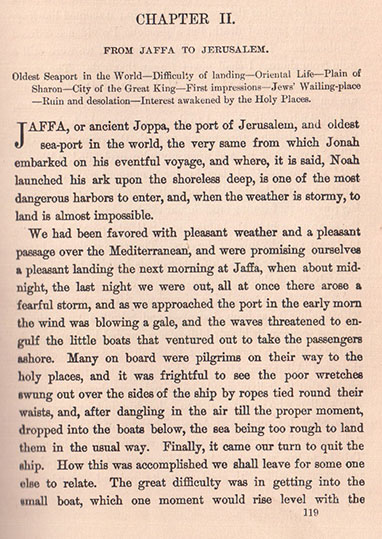
In a previous post I continued a thread on a 19th century Bible Lands text by Rev. Frank S. DeHaas. His account covers Egypt and Palestine. He entered Palestine at the port of Jaffa and discusses his disembarking, which he compares to the turmoil surrounding Jonah on the same sea, in the following passage. But it seems the crowded streets of Jaffa did not inspire the kind of reverence he wanted from traversing on holy ground. So he was quite glad to be out and out where the patriarchs trekked…


Continue reading Buried Cities Recovered #3

Foot[ball] in mouth disease


A division of labor: ultras wage parallel battles to shape Egypt’s future

By James M. Dorsey, The Turbulent World of Middle East Soccer, September 16, 2012

Militant soccer fans of arch rival Cairo soccer clubs Al Zamalek SC and Al Ahly SC represent two sides of the same coin in the forefront of a struggle for the future of Egypt.

Militants of the Ultras White Knights (UWK), the Zamalek support group, are locked near the US embassy in Cairo into vicious street battles with police and security forces, one of a string of confrontations since last year’s toppling of president Hosni Mubarak. In the ultimate analysis, their struggle aims to force reform of Egyptian law enforcement, the country’s most despised institution, which is widely seen as the brutal enforcers of Mr. Mubarak’s repressive regime, even if those on the battlefield often express their goal in simpler terms of revenge and settling scores.

On the other hand, Al Ahly militants, who together with UWK played a key role in ousting Mr. Mubarak as well as in subsequent street battles that have left scores dead and thousands wounded, have turned their ire on the management of their club in an effort to combat corruption in Egyptian soccer.

Neither battle is easy but achieving victory in the struggle in which UWK has taken the lead is likely to prove far more difficult than turning soccer into a model for the fight against corruption in Egypt and removing the remnants of the Mubarak era. Continue reading Foot[ball] in mouth disease