Category Archives: Countries

The Price of Freedom


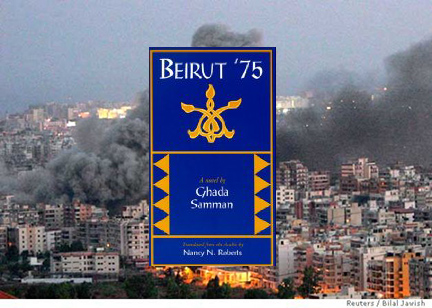
The Price of Freedom: A Reading of Ghada al-Samman’s Beirut ’75
by George N. El-Hage, Ph.D.

“Beirut has ruined me, that’s all!”

“That’s not true,” he replied, “You women all accuse Beirut of ruining you when the truth of the matter is that the seeds of corruption were already deep inside you. All Beirut did was to give them a place to thrive and become visible. It’s given them a climate where they can grow.”

“She wondered to herself…if they had allowed my body to experience wholesome, sound relationships in Damascus – would I have lost my way to this extent?”

A sense of alienation, pessimism, and ultimate nihilism, which stems from al-Samman’s existential viewpoint, envelops the main characters in Beirut ‘75. The protagonists (Yasmeena, Farah, Ta’aan, Abu’l-Malla, and Abu Mustafa) feel trapped, alone, and disconnected from each other and from society. Each character’s personal struggle sheds light on some negative aspect of Lebanese society as seen by al-Samaan in 1975. Each character is exploited in some way, either sexually, politically or economically. Although these underlying evils of Lebanese society may have existed, al-Samman only shows a unilateral view colored by her own perception of reality. She fails to offer a multidimensional and more realistic view of the society at that time. In addition, she fails to successfully convey the depth of existential crisis that each of her characters endures, consequently resulting in characters that remain shallow and who do not convince the reader that their tragic demise is warranted.

The first chapter of the novel repeatedly foreshadows the characters’ impending doom; nevertheless, the reader is still left with a sense of bewilderment at such an astonishing and violent end to an otherwise ordinary set of characters. Did they really merit such a catastrophic conclusion of events? Several reviews have been very critical of such a sensational conclusion, and some critics, as well as many readers, have been shocked and dismayed. The author loves to admit, though, that she herself was puzzled with this conclusion as she tries to justify it to the public: Continue reading The Price of Freedom

7000 Manuscripts in Zabid


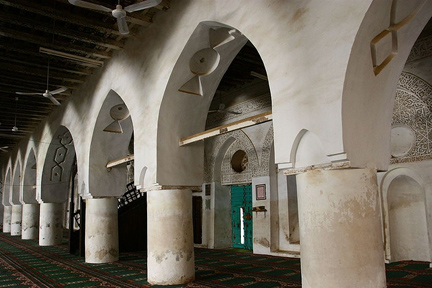
Zabid mosque interior; Photograph by Eric Lafforgue

مدير مرگز المخطوطات في زبيلـ

هناك سبعة آلاف مخطوطة في زبيد!

الجمعة 25 يناير-كانون الثاني 2013 الساعة 01 صباحاً / الجمهورية نت – توفيق حسن أغا

لم يتبق لمدينة زبيد التاريخية إلا أربعة أشهر من المهلة التي منحت لها من قبل لجنة التراث العالمي التابعة لمنظمة الثقافة والعلوم (اليونسكو) إما أن تطمس أو تكون في قائمة التراث العالمي؛ ومنذ عام 2007 وزبيد بين مد وجزر وكلما تنفست الصعداء وجدت أحدا ينغصها ويباعدها عن بلوغ بوابة التراث العالمي، كلما اقتربت من البقاء في هذه القائمة التي كتبت فيها زبيد عبارة دون بقاء منذ عام 1993م ، ومن هذا التنفس وجدت هذه المدينة عام 2007 من مبنى دار الضيافة رفاً وجدته حينها هو المكان المناسب لحفظ ما تمتلكه من مخطوطات، ولكن عندما وجدت ضالتها في هذا المكان وجدت من يطمع بأخذ هذه الدار من يدها ليهدم ما بنته “ زبيد” في ساعة زمن

الجمهورية كانت في اليومين الماضيين في أروقة دار الضيافة سابقا ومركز المخطوطات حالياً، وبعد أن رأت العجب العجاب حول ما يدور حول هذا المبنى والذي إذا قدر الله وتحول إلى مكتب أوسكن أو لمصلحة أخرى عما هو عليه كمركز مخطوطات ستكون واقعة أخرى لن تتحملها مدينة زبيد التاريخية، ولمزيد من التفاصيل التقت (الجمهورية) الأستاذ عرفات الحضرمي ـ مدير مركز المخطوطات في مديرية زبيد وأجرت مع الحوار التالي..
من يكسب..؟!

بداية كيف تحدثنا عن هذه الخلفية التي تم فيها التزامن في اختيار دار الضيافة وتحويله كمركز للمخطوطات؟
Continue reading 7000 Manuscripts in Zabid

The high social price of humanitarian dissimulation


By Estella Carpi

A few months ago, while conducting my PhD fieldwork in North Lebanon, I shared my ideas on the current humanitarian assistance to Syrian refugees with a journalist working in Lebanon. I reported that I was told by some Lebanese from Halba that their neighbors threw stones at humanitarian workers during the food kits’ distribution for Syrian refugees in a little town in ‘Akkar (North Lebanon). Apparently it was just an outburst of tension because of the sudden massive presence of humanitarian organizations in loco. In the past they have always neglected this area in Lebanon due to lack of political interests, since the Israeli occupation and the consequent local impoverishment were primarily vexing the south of the country (1978-2000).

The humanitarian agency that the journalist was working for at that time first decided to omit such information before publishing the article. After that, in order not to be accused of censorship, with a cringe-worthy diplomatic move, they published it by elegantly modifying the content of the stones episode, and contending that local people in North Lebanon would definitely warm up if aid were provided to them too. This is a human dynamic that, unfortunately, I had never got the insight of in the field. The humanitarian agency at issue declared that this “information amendment” was carried out in a bid not to generate further frictions between the Lebanese and the Syrian communities. My “Wikileaks philosophy” pushes me instead to broach out the subject overtly and try to analyze it. Continue reading The high social price of humanitarian dissimulation

A Viennese Tour to Egypt in 1912


While in Vienna last week for a conference, I was able to visit the Museum für Völkerkunde and see several of the current exhibits there. One of these is entitled “Urania reist nach Ägypten:
Wiener Volksbildung und der Orient um 1900”
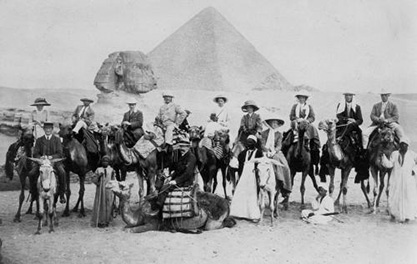
and presents an Austrian field trip to the Pyramids and Egypt in April, 1912. This was led by the President of the Urania institute, opened by the emperor Franz Joseph I in 1910. About 70 individuals went on the trip. some from the Hapsburg family. The exhibition includes a number of vintage photographs and touristic items like postcards and souvenirs, as well as the type of clothing the Viennese would have worn while touring Egypt.


1912 tour to Giza organized by Thomas Cook

Letters to My Son, #3


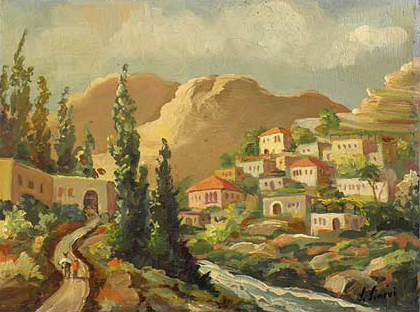
Lebanese village by Saadi Sinevi

by George Nicolas El-Hage, Ph.D.This is part three of a series from my book: The Return of the Hero and the Resurrection of the City, originally written in Arabic and translated by George N. El-Hage and edited by MaryAnn Del Vecchio, Ph.D. For part one, click here. For part two click here.September 1988Monterey, CAThird LetterI plant you in my eyes, a song of virgin longing, and I draw your smile over my sails bound towards the future.I am longing for return, and you are my hope and the eternal truth.Your two hands, my little one, are the cradle of love, and I am but a Sufi drowning in the deluge of meditation.I wear the gown of pain, and my feet are rooted in the glowing clay of creativity.May peace be upon you the day you were born and the day you embraced me and I felt that I held a bouquet of innocence and embraced a flaming sword.Glory be to your miraculous childhood.You are the lamb of peace, the joy of life, the tear of yearning and the hope of resurrection.My letters to you are but the embers of my burning thoughts, for you are the flame of prophecy and the wings of inspiration.You carry me to the world of the unknown and plant me in the fields of lilies and poems.You throw me on the sidewalks of the past and desert me on the shores of faraway islands.There, I metamorphose and transform into tropical plants, exploding with pleasure and burdened with forbidden fruits.I take off the tied gown of civilization and become naught but the flame of truth.I become one with the elements and melt like dew in the eyes of bereaving mothers. Continue reading Letters to My Son, #3

Letters to My Son, #2


Lebanese triptych by Joseph Matta

by George Nicolas El-Hage, Ph.D.
This is part two of a series from my book: The Return of the Hero and the Resurrection of the City, originally written in Arabic and translated by George N. El-Hage and edited by MaryAnn Del Vecchio, Ph.D. For part one, click here.

July 1988
Monterey, CA
First Letter

In the name of God, I preface my first letter to you, my son. You are the stream of tenderness that flows in my heart and fills my cup. You are my provisions for the coming years and the lantern of my future. You are the most precious possession that I have in this world. You were gifted to me at my most blessed moment of contentment and peace. That day, you were formed in my conscience, a graceful thought, and in your mother’s womb, a clot of blood. That day, I was very conscious of what I was doing. To your mother, I said: “Come, my love, let us create a son, and his name shall be Nicolas.” I knew that the newcomer will be you. An inner feeling and a sense of the mystical awakened inside of me an unmistakable realization of your arrival, my joy, my boy, whose playground is the wide world while you remain ever present with me and within me.

Your wide open eyes are two lakes of emeralds. You are not of flesh and blood. You are the essence of love, the expanse of light, a river of warmth and the glimmer of hope. Let time stand behind us because we existed before time. As for me, you are my whole existence. Your smile permeates the world with joy. Your little hands are the perfumed lilies of the fields and your face the shining sun of light and truth. As you embrace me, time stops, and within me, the glory of the Lord shines bright. I declare to you our eternal relationship: You, me and your mother. Let all others who have populated my books come out. They are naught but a mob of “unnecessary duplicates.” You are not alone. I am with you forever. I give you more soul from mine, more love from my love and more heart from my heart. Your presence overfills my existence and leaves no space for any other. You, alone, are my preoccupation, and at your feet, time stops. You are ever-present in my memory. You are my fruit, my roots and my future. You are my glorious history. Continue reading Letters to My Son, #2