Category Archives: Countries

Harun’s houris


Harun Yahya, a.k.a Adnan Oktar

But what greater temptation than to appear a missionary, a prophet, an ambassador from heaven? Who would not encounter many dangers and difficulties, in order to attain so sublime a character? Or if, by the help of vanity and a heated imagination, a man has first made a convert of himself, and entered seriously into the delusion; who ever scruples to make use of pious frauds, in support of so holy and meritorious a cause?
David Hume, “Of Miracles” (1748)

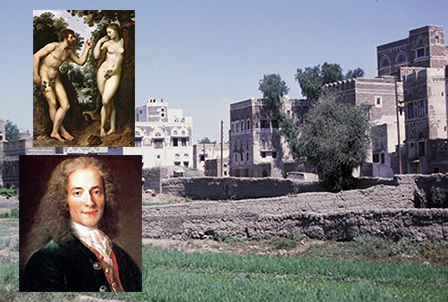
David Hume, the eminent 18th century philosopher, was probably not thinking about Islam when he wrote his seminal essay “Of Miracles,” but his description resonates well with the media realm of the would-be Mahdi Harun Yahya (alias of Adnan Oktar). Put enough money and media-savvy glitz behind a delusion and the gullible will come to the trough. All you need to do is check out the main website of Harun Yahya to see a sexed-up Disney version of Islam. And even if you happen to be Igbo (yes Igbo), you can read what the Harun Yahya machine has to say about the “Koran.”

The checkered history of Adnan Oktar is hardly a secret, especially in Turkey. But his cyber-reach is massive, with multiple websites available in many different languages. If you have time to spare, spend a few minutes perusing some of his 160 websites devoted to attacking evolution, proving miracles, calling for an Islamic Union led by Turkey, the coming of the Mahdi, hell, atheism and beyond. Oktar recently made news by interviewing Israeli guests, despite earlier writings which include holocaust denial.

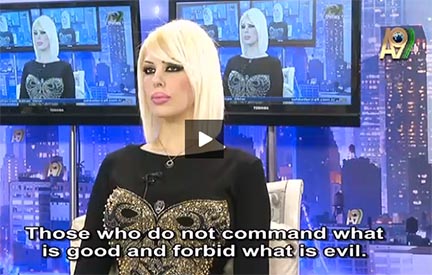
The latest twist in the televised adoration of Adnan Oktar might best be labeled “Harun’s houris.” Continue reading Harun’s houris

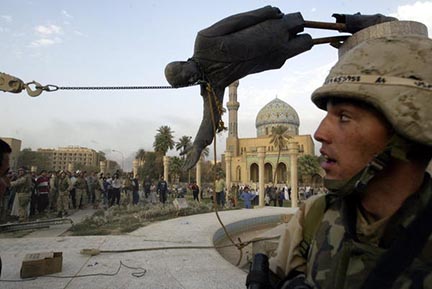
The Forgotten Protagonists: The Invasion and the Historian


Photo by Jerome Delay/AP

by Orit Bashkin, Jadaliyya, March 20. 2013

During the past week Americans, Europeans, and Middle Easterners were reminded of Iraq. A stream of photos, articles, essays, and analyses has tried to make sense of the situation in Iraq during the last decade. One group, however, does not need to be reminded of the gravity of the situation—the many Iraqis, men and women alike, whose lives have been irreversibly changed during the last decades.

In this piece, I want to reflect on the kinds of themes historians have been writing about in the present, and those we ought to write about in the future. In the last ten years, we seemed to have learned much more about Iraqi history; probably more than any of us has ever imagined upon entering graduate school, as our field witnessed the publication of dozens of academic books, articles (including ones published in The International Journal of Contemporary Iraqi Studies), and dissertations. Thus, we now seem to better understand gender relations in Iraq as well as the country’s Diasporas and trans-regional and social networks. We are more knowledgeable about Iraqi patriotism and Arab-Iraqi nationalism. We have learned to appreciate Iraq’s culture, namely its astonishing literary production, the ways in which Iraqi poets revolutionized the field of modern Arabic poetics, and the writings of Iraq’s gifted novelists, whose works have appeared in translation in the last decade. We comprehend better various mechanisms related to the state: the development of its health system, the production of its social memory, its disciplinary institutions—especially its education system—and, significantly, its production of sectarian policies. Historians have likewise attempted to analyze Iraq’s relations with the British Empire, and the modes of resistance to empire, especially the 1920 Revolt. The controversial move that brought the Baath Party archives to the United States in 2008 will enable those who work in these archives, as well as their readers, to know much more about the Baath regime and the ways in which it functioned, possibly more than any other Middle Eastern regime. Continue reading The Forgotten Protagonists: The Invasion and the Historian

هل أمة العليم السوسوة نموذج للمرأة اليمنية ؟!


المساء برس- المساء برس التاريخ : 21-03-2013

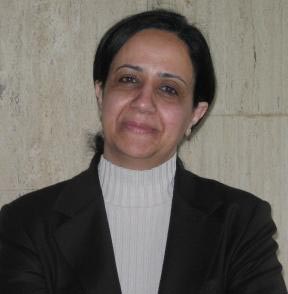
أمة العليم السوسوة ظلت تبحث عن مكان للمرأة في الصفوف الأولى لمؤتمر الحوار الوطني فلم تجد أي مكان شاغر لها أو لغيرها حتى في منصة القاعة التي كانت مخصصة للرئيس ولرؤساء الأحزاب السياسية نواب الحوار الوطني .

السوسوة لم تعترض على ذلك كما فعل البخيتي ولكنها أكتفت بتوجيه رسالة عبر وسائل الإعلام حول غياب المرأة عن قيادة الحوار وإختراقها لمستوى التمثيل وظهور بعض الوجوه الجديدة من خلال بعض القوائم .

السوسوة كانت حرة في طرح آرائها ولم تنقاد وراء القوى السياسية وهذا ما جعلها تكسب إحترام الجميع وتقود قضية المرأة اليمنية بإمتياز فتاريخها يدل على ذلك فيما تسعى بقية المشهورات من النساء اليمنيات الى الصعود السياسي من بوابة الأحزاب ما جعلهن يتعرضن للنقد بسبب إتباع مواقف بعض القادة السياسيين ومراكز النفوذ كما فعلت توكل كرمان مؤخراً من إتباع لحميد الأحمر في الإنسحاب من الحوار بعد كانت تستجدي ضمها للحوار وهو ما جعل الرئيس في نهاية الأمر يوافق على ضمها في قائمة بعد أن تخلى الإصلاح عنها حتى أنها اشادت بقرار الرئيس وأعتبرت هادي أنه باقي في قائمتها .
Continue reading هل أمة العليم السوسوة نموذج للمرأة اليمنية ؟!

Demographics, Islam, Modernity


Photographic image source

by Anouar Majid, Tingitana, March 16, 2013

New reports are showing that Morocco’s fertility rates continue their rather dramatic downward trend. According to InfoMédiaire, Morocco’s High Commission for Planning says they have been halved since 1987, dropping from 4.5 children per women to 2,2 children in 2010. Part of the explanation has to do with the fact that people are marrying later.

Declining fertility rates is a global phenomenon and is particularly surprising in the Islamic world, perplexing observers who expect demographically-related doomsday scenarios of one kind or another. In 2011, David Goldman explained that civilizations without a strong religious faith lose the desire to procreate. Economic prosperity turns children into expensive and time-consuming propositions, since a child born to parents in Paris or New York would have to compete with dozens of other demands, such as the need for education, entertainment, vacations, and the like. And fertility rates are not helped when parents no longer expect to be supported by their children in old age. At least, Westerners have social security systems to rely on. Continue reading Demographics, Islam, Modernity

What ails humanitarian aid in Lebanon


The high social price of media and humanitarian dissimulation in North Lebanon.

by Estella Carpi

In the aid provision sphere of North Lebanon, international media in close connection with humanitarian agencies often hasten to show how North Lebanon’s hospitality of Syrian refugees coming in large numbers to flee destruction, scarcity, repression, chronic fear and instability is huge. Such hospitality is actually a product of a quite complex picture with an up-close look, unlike the idyllic scenario humanitarian practitioners and local people usually provide. In addition, social dynamics are normally depicted in the media in ethnicized terms: that is to say Lebanese versus Syrians.

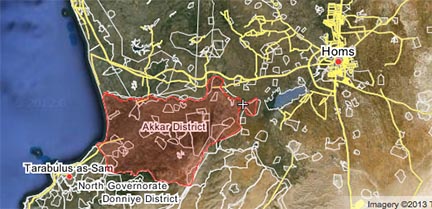
A few months ago, while conducting my fieldwork in Lebanon, I was told that some Lebanese threw stones to humanitarian workers during the food kits’ distribution for Syrian refugees in a town in Akkar, the northern region. The episode had been interpreted by local people themselves as an outburst of tension because of the sudden massive presence of humanitarian organizations in the area, which has always been neglected by state and non-state actors due to lack of political interests. The latter, in fact, were slightly more localized in Beirut and in the south of the country, vexed by Israeli occupation and by a consequent local impoverishment (1978-2000).

The humanitarian agencies operating in that town decided not to let journalists publish about the episode. Others published about it by contending that local people in North Lebanon would definitely stop “hostilities” and warm up if aid were provided to them too. The main reason behind the omission and amendment of this kind of information is apparently the intention not to generate further frictions between the local community and the Syrians. Continue reading What ails humanitarian aid in Lebanon

To kiss or not to kiss: Iranian style

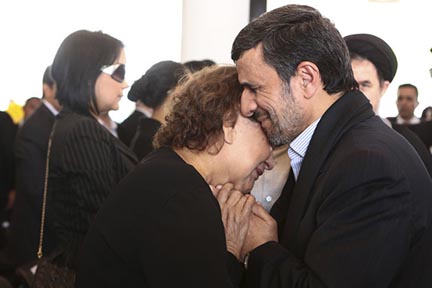
A controversial tempest in a samovar erupted last week when Iran’s President Ahmadenijad appeared to kiss the grieving mother of Hugo Chavez at the state funeral for the Venezuelan leader. The lips do touch the face of Chavez’s mother, but the context suggests an embrace of consolation rather than anything untoward. To the extent this innate human reaction of sympathy is something to be forbidden as unIslamic, religion becomes a mockery. The Muhammad presented in the Sira was a man of compassion. I suspect he would not approve of those who take the charge of modesty to such an extreme as to deny the most basic of positive human instincts.

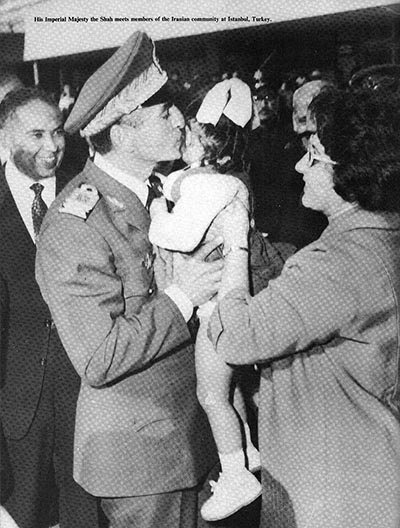
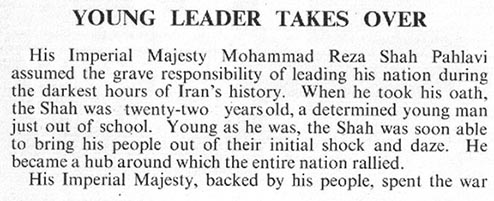
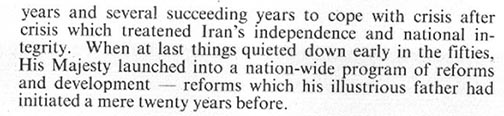
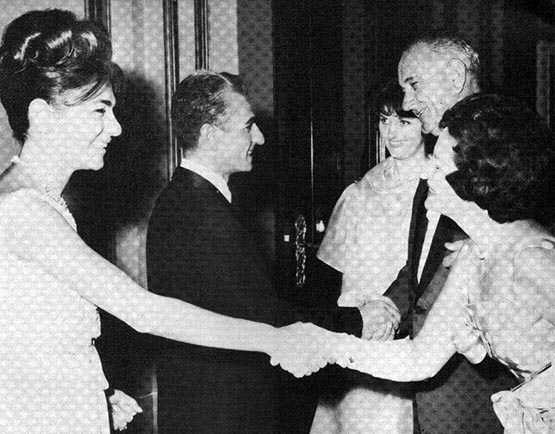
But the controversy over this alleged “kiss” reminded me of an image from a different time in Iran. I have a booklet (Iran Today) issued by the Imperial Iranian Government in the early 1960s, when Lyndon Johnson was still vice-president. This is pure propaganda for the then-young Shah’s Iran. Opposite the Table of Contents, and thus the first image in the booklet, is a full-page spread with the caption: “His Imperial Majesty the Shah meets members of the Iranian community in Istanbul, Turkey.” You will note that this image is the classic politician baby kissing. Obviously, this was seen as a positive side of the ruler who loves his people. What a difference half a century makes in the interpretation of a kiss.

The propaganda aspect of the booklet is most evident in the unflinching praise for the Shah, as can be seen below:

“Their Imperial Majesties the Shah and Queen Farah greet distinguished guests from the United States: Vice President and Mrs. Lyndon Johnson and their daughter, who visited Iran last summer.

Yemen’s National Dialogue


Yemen’s President Rabu Mansour Hadi has issued decree No. (12) for 2013 on Sunday, March 17, forming the presidium of the Comprehensive National Dialogue Conference, which starts today. The officers are listed below:

1- President Abdo Rabu Mansour Hadi as president of the conference.
2- Abdul-Kareem al-Iriani as a vice-president for the conference.
3- Yasin Saeed No’man as a vice-president for the conference.
4- Abdul-Wahab Ahmed al-Anisi as a vice-president for the conference.
5- Sultan Hizam al-Atwani as a vice-president for the conference.
6- Ahmed Bin Fareed al-Sorimah as a vice-president for the conference.
7- Saleh Ahmed Habrah as a vice-president for the conference.
8- Abdullah Salem Lamlas as the conference’s reporter.
9- Nadia Abdul-Aziz al-Sakkaf as a deputy for the reporter.

For a complete list of the 565 participants in Arabic, go here.

The term “dialogue” is ambitious, given the general disrespect held in Yemen for the UN, which is sponsoring this 6-month long exercise. It is hard to imagine how over 500 people can engage in a meaningful dialogue. Is the six months so they can each take the floor and filibuster? While a wide net has been cast, there is still major grievance from the southern secessionists, who staged a strike in Aden on Sunday. Although none of the former major political players will be physically present (including former President Salih, General Ali Mohsen and Sheikh al-Ahmar), they will certainly be represented by some of the participants. One is always hopeful that a path to national reconciliation can be forged. Yemenis did it themselves after the bitter civil war in the 1960s, but that was before decades of military rule eroded most Yemeni support for the central government. Still, talk is always better than bullets, so let the dialogue begin.