Category Archives: Countries

Tabsir Redux: Traveling Light in Arabia

[Note: the following list of items for light camping in Arabia is provided by G. Wyman Bury for the early part of the 20th century.]

CAMP EQUIPMENT
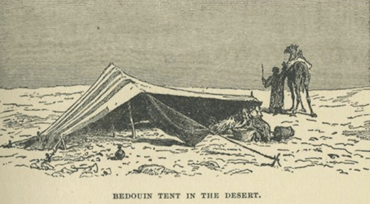
Try to do without a tent. Arabs hate pitching tents after a long day’s march, and seldom pitch them well. They draw fire and afford no protection, while preventing your own observation; they also betray the site of your camp to bad characters and casual callers on the look out for supper.

BEDDING
Avoid Wolseley valises or anything with pleats and folds, which become the permanent abiding places of parasitic insects.
‘Blankets.’ One each for the men. A few extra for convalescents or invalided men. Two for yourself.
‘Pillows.’ Carry your spare clothes in a green canvas sack. Continue reading Tabsir Redux: Traveling Light in Arabia →

Poster Orientalism

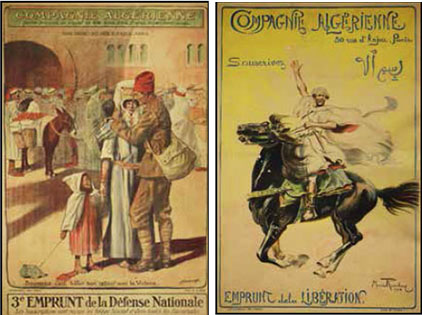
The most recent (April) issue of IMES (Issues in Middle East Studies), the new digital version of the former bulletin of MESA, features an article by Jonathan Casey on posters and old photographs in the National World War I Museum in Kansas City, Missouri. Among theses are two early 20th century era French posters on Algeria, as shown above. The poster on the left is a prime example of the Eurocentric colonialist gaze. Not only is the Algerian pressed into service, but he has a proper nuclear family of wife and child. Of course, as the donkey in the background serves to remind, Algeria is a backward country in need of being civilized. The poster on the right needs no ethnographic context; come to Algeria and be as free as the wind, where the Algerians ride their steeds resplendent in flowing robes. This right one could easily serve as a poster for the 1921 Valentino film, The Sheik.

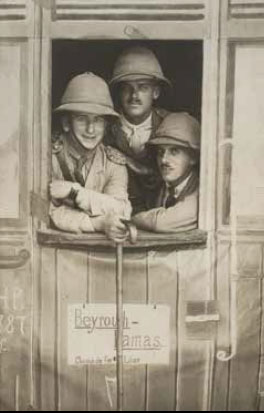
Of the various photographs, the one that struck my attention was of a British soldier named George Mackenzie. This shows the young Lieutenant with his “chums” on the train from Beirut to Damascus. Once again the “Orient” is civilized via the gun. A world war (that did not unfortunately end all wars) that was not caused by anything in the Middle East would change the shape of the region in a dramatic way that is still playing out. To talk of an “Arab Spring,” it is important not to forget the wintry blast that carved up the Ottoman Empire into colonial pieces before oil and the modern state of Israel entered the mix.

The Myth of the “Yemen Model”


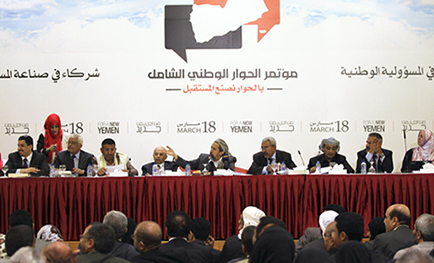
Yemen’s Abdul Wahab al-Ansi (C), secretary-general of the party Islah, speaks during a session of the National Dialogue Conference in Sanaa, March 23, 2013. (photo by REUTERS/Mohamed al-Sayaghi)

by Atiaf Zaid Alwazir, Huffington Post, May 29, 2013

Shortly following the internationally funded uncontested election in Yemen, a high-ranking western diplomat berated me for not voting. When I asked him, “would people in your country be happy with a one-person election?” He responded: “people in my country are not trying to kill each other!”

While not all diplomats think this way, unfortunately, that simplistic and ignorant statement is what drives much of western policy on Yemen — if there is a policy — and it is also why it is expected that Yemenis should accept half solutions — should in fact celebrate them!

Maybe misconceptions of Arabs as apolitical, who were just “awakened” by the “Arab Spring,” leads to the belief that anything is a step forward. These misconceptions, if internalized, lead to flawed analysis, and worse they can become disastrous policies.

This is egregiously exemplified by Thomas Friedman’s recent New York Times op-ed (on May 11) where, for example, he states that “the good news is that — for now — a lot of Yemenis really want to give politics a chance.” Friedman is referring to the internationally backed National Dialogue Conference (NDC) in Yemen. The NDC began in March 2013 and is to last for six months, with 565 delegates tasked with providing recommendations and culminating in writing of a new constitution. Friedman’s statement attempts to celebrate Yemenis, while in fact downplaying an entire history of political participation and ignores Yemen’s cultural tradition of dialogue and political pluralism. Yemen has had dialogues before and has operated in a relatively diverse political sphere. The movement for change in 2011 is a culmination of years of activities in the south and north.

Neglecting all of that naturally does not present a thought-out article. Continue reading The Myth of the “Yemen Model” →
Deep Purple for your hijab


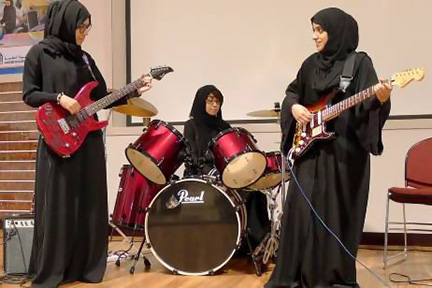
The Al-Ain-based Rock Band “Random Stars”

Where there is youthful fire, there is Smoke on the Water. I remember the first Deep Purple record I bought: Machine Head from 1972. The cover featured a blurry, almost metallic image of the long-haired heads of the band. The song that has since been immortalized describes a fire that destroyed a recording studio in Geneva. Where were these Deep Purple-ites to stay, since Frank Zappa was at the best place in town and the “Rolling truck Stones” were outside the Grand Hotel, which was empty and bare, but obviously full enough to record one of the classics of Rock.

Rock is about as Western as a person can get: sound tracks that serve as neoliberal commercialized crumbs that feed rebellious young people the idea that songs can substitute for real protest. And sex and drugs, of course. It is hard to imagine the band without the groupies, who at least in those days flocked like moths to a flame at every concert. Fundamentalist Christians were appalled, warned by their pastors that Rock songs played backwards held secret Satanic messages. The 1960s auto de fe had already consumed Beatles albums in Alabama. Janis Joplin was dead in 1970; the Lord finally gave her a Mercedes Benz as a hearse. Jimi Hendrix joined her the same year. Jim Morrison walked out of the door of life in 1971. Continue reading Deep Purple for your hijab →

Timbuktu and the Missing Manuscripts


Destroyed manuscripts in Timbuktu; photograph by Eric Feferberg/Agence France-Presse — Getty Images

The Mali version of Nigeria’s Boko Haram, calling itself Ansar al-Din, not only went after Western knowledge but earlier Muslim sources as well. When the extremists ran amok in northern Mali last year, they destroyed Sufi shrines, beat women whose veils were not long enough, flogged men for daring to smoke or drink and did just about everything they could to drag Islam into the mud. But they did not get to burn the vast number, estimated at some 300,000, of Islamic manuscripts stored in collections across Timbuktu. The story of how donkeys and ingenious local men, with a million dollars in funding from abroad, were able to smuggle the precious written documents to safety is told with flair by Sudarsan Raghavan in yesterday’s Washington Post.

Below is the end of the article, styling the rescue operation as an Indiana Jones Moment…

It was the first stage of that mission that brought Traore and his donkey caravan to the old-city streets of Timbuktu on that August night. His grandfather had helped him load the donkeys, but he stayed behind as Traore and three other men set out with the manuscripts.

The rain, in the end, helped them. The jihadists were not at their checkpoints, preferring to stay indoors. Continue reading Timbuktu and the Missing Manuscripts →

Coffee and Yemen

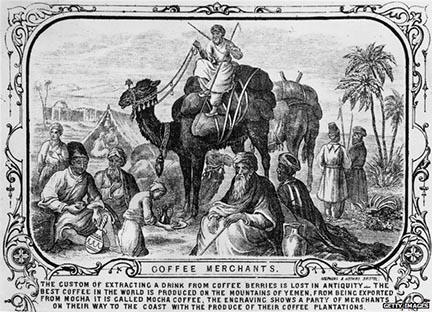
Coffee and qahwa: How a drink for Arab mystics went global

By John McHugo, BBC News Magazine, April 17

The Arab world has given birth to many thinkers and many inventions – among them the three-course meal, alcohol and coffee. The best coffee bean is still known as Arabica, but it’s come a long way from the Muslim mystics who treasured it centuries ago, to the chains that line our high streets.

Think coffee, and you probably think of an Italian espresso, a French cafe au lait, or an American double grande latte with cinnamon.

Perhaps you learned at school that the USA became a nation of coffee drinkers because of the excise duty King George placed on tea? Today ubiquitous chains like Starbucks, Cafe Nero and Costa grace every international airport, and follow the now much humbler Nescafe as symbols of globalisation.

Coffee is produced in hot climates like Latin America, sub-Saharan Africa, Vietnam and Indonesia, and you could be forgiven if you thought it is a product from the New World like tobacco and chocolate. After all, all three became popular in Europe at more or less the same time, in the 16th and 17th Centuries.

In fact, coffee comes from the highland areas of the countries at the southern end of the Red Sea – Yemen and Ethiopia. Continue reading Coffee and Yemen →