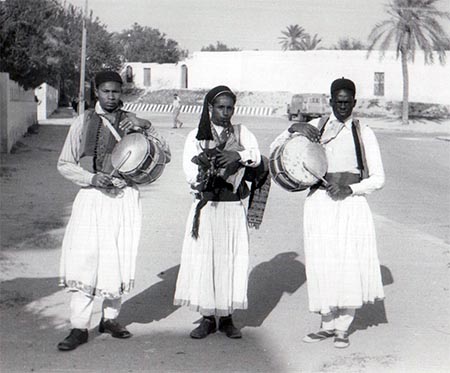
Libyan musicians; Photography by Dr. Virgil Clift in the 1950s
Category Archives: Countries
On the Jews of Yemen
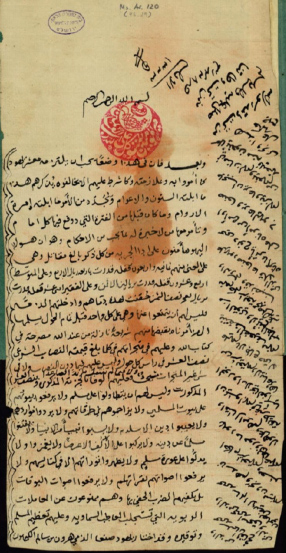
Imam Yahya’s “NiẓÄm al-YuhÅ«d,” ms.ar.120 from the National Library of Israel
There is a new study out on the statute on Yemeni Jews by Imam Yahya in 1323/1905 by the historian Kerstin Hünefeld. This is published in Chroniques du manuscrits au Yémen, in the July 2013 issue, which is available in download as a pdf. Hünefeld provides both an edition and an annotated translation.
Picturing the ka‘ba
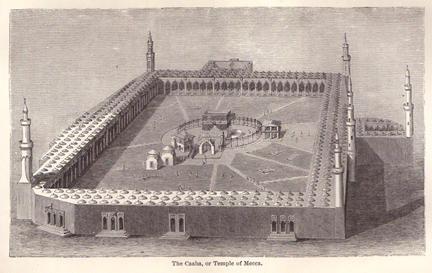
Although few Western non-Muslim travelers penetrated the forbidden zone of the ka‘ba in Mecca, illustrations proliferated by the mid-18th century. The image above was taken from the 1857 edition of Sale’s translation of the Qur’an (London: W. Tegg & Co) and reproduced in Henry J. Van-Lennep’s Bible Lands: Their Modern Customs and Manners Illustrative of Scripture (New York: Harper & Brothers, 1875). The two most famous travelers to make surreptitious trips to Mecca were Johann Ludwig Burckhardt in 1814 and Richard Burton in 1853.
Aden Style
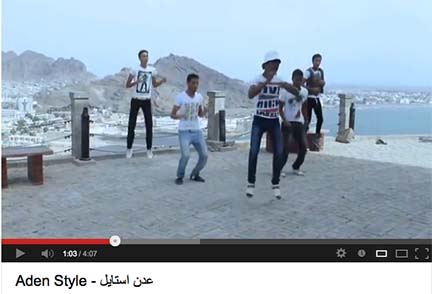
And now for a musical interlude… from Aden. It appears that after I posted this, it was not possible to see it, but this one works. So here is some Aden Rap.
Punditry: Pondering or Pandering?

Having established this blog a little less than a decade ago, I was initially excited about the possibility of responding to things I read about the Middle East and Islam in virtual “real time.” I still have several letters (the kind put on paper) to the editor that never were published where I sent them. Even if they had been eventually published, it would have been a bit late. Blogs seemed a new and accessible way to play the role of a pundit. But there are different paths for punditry. The best kind is pondering about events; the least useful is pandering to a particular point of view.
To ponder is to wonder, which requires taking risks with ideas and sentiments. Pondering goes beyond posturing, which is simply repeating a polemical mantra no matter where it falls on the left-right political spectrum. Pandering results from preaching to the choir, fixating on speaking a specific truth to power that others may not think is a valid “truth” at all. The contentious issues surrounding representation of Islam, Muslims, Arabs, Jews and the gamut of issues that smolder in the region known as the Middle East are not resolved by rhetorical crossfire. I think that sometimes there is so much speech clutter on the internet that voices of reason have little chance of being heard.
Everyone has pet issues and I am certainly no exception. The reader of my posts over the years will find that for the most part I preach tolerance of diverse views with one glaring exception: I am loathe to tolerate intolerance. A dialogue of disagreement, in my mind, is always better than a monologue of “I am right and you are wrong.” To ponder an issue, then, should be to probe it, test it, play with it, throw it around and see what falls out, make it transparent. Dogma ends all dialogue. Continue reading Punditry: Pondering or Pandering?
Greetings from Jerba
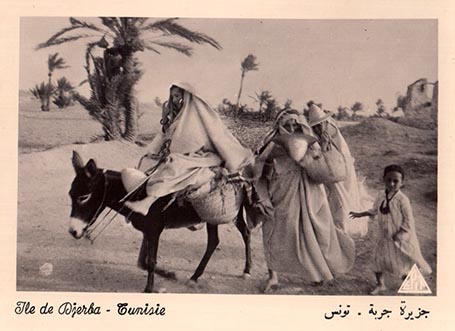
A postcard labeled “Femmes Djerbiennes” and published by Misscoui Mustapha, Fabrique de Couvertures – Houmt – Souk.
Photographs from Yemen: Raiman al-Hamdani
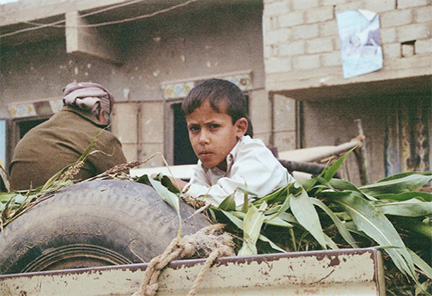
Market on road to Tihama from Hajja
There are a number of promising young Yemeni photographers. Today I highlight the work of Raiman al-Hamdani, from his Flickr site. My thanks to Raiman for permission to post these photographs.
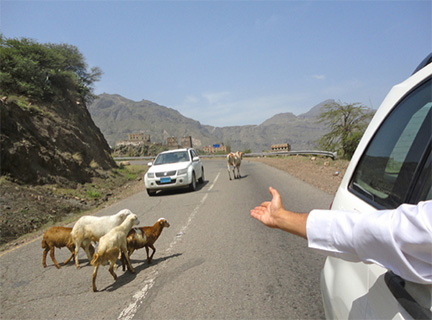
Nagil Haraz, leading to Wadi Surdud in Al-Mahwit
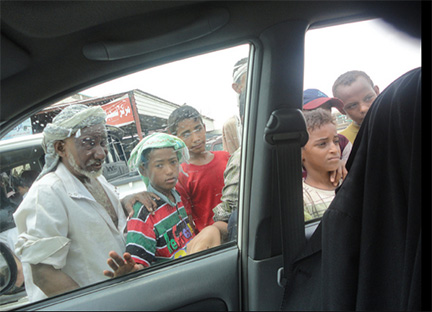
Qat market in ‘Abs, near Hajja
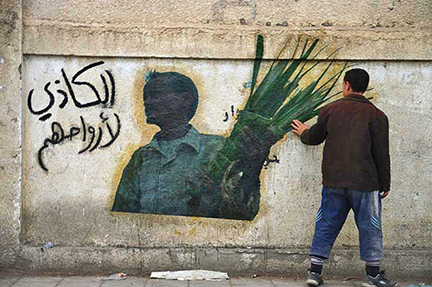
Street Art in Sanaa
Pasted photography on wall, Sana’a 2012; photograph by Jameel Subay
From Street Politics to Street Art in Yemen
By Anahi Alviso-Marino, Nafas Art Magazine, July 2013
In January 2011, demonstrations inspired by the contentious mobilizations taking place in Tunisia and Egypt started to be carried out in Yemen. Gradually, anti-governmental demonstrators came to modify old repertoires of contention, such as the demonstration or the sit-in, into what became a permanent camp and a new space of contention in Sana’a named “Change Square.” Among the self-proclaimed “revolutionary youth” of a sit-in that lasted until April 2013 were a number of visual artists. Their presence in the Square contributed in giving political demands an artistic expression, alongside using artistic practices as a means of contention. Contributing to the symbolic aspects of this mobilization, artistic practices developed inside and outside the tents. As a continuation of street politics acquired in the Square, certain visual artists incorporated dissent, transgression, and civil disobedience in their artistic practices. Among such cases, street art techniques such as graffiti, free writing, mural painting or stenciling participated throughout 2011 in reproducing political slogans that aimed to overthrow Ali Abd Allah Saleh’s regime.
In 2012 this contentious street art underwent certain changes. Continue reading Street Art in Sanaa