Category Archives: Countries

Beyond al-Qaeda, the real Yemen


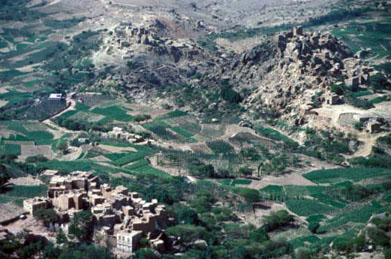
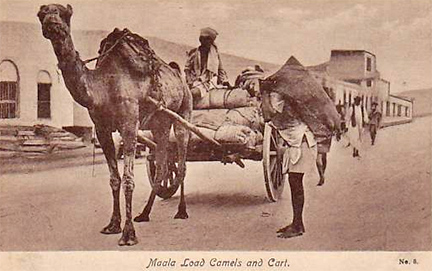
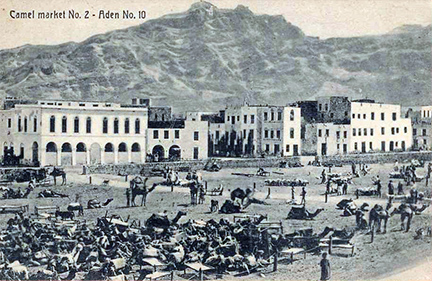
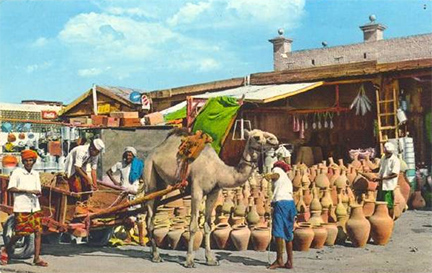
The fertile valley of al-Ahjur

by Abubakr Al-Shamahi, Common Ground News,August 20, 2013

Sana’a, Yemen – This month’s unidentified threat that led to the closure of the United States embassy and several US drone strikes around Yemen has once again shone an international spotlight on the country.

Simply put, as a Yemeni, I fear that all Yemen appears to be to the outside world is a front in the fight with al-Qaeda. But Yemen is more than terrorism and bombs, and many Yemenis are eager to ensure that this does not become the dominant narrative around the world.

Atiaf al-Wazir, a prominent Yemeni activist, voices the frustration of many Yemenis. In a piece for Your Middle East, she talks of a “country with a long history that was once hailed as Arabia Felix, land of generosity, wisdom, coffee, the first sky scrapers, the land with many queens and great architecture,” now overshadowed by “the hysteria of the decade: terrorism.”

If international observers look closer, they will find a country that has the potential to be far removed from a hotbed of fundamentalism. They will find a country undergoing an interesting political transition, one that is hugely important for the region. Continue reading Beyond al-Qaeda, the real Yemen

Going for Broke (Read “Provoke”)

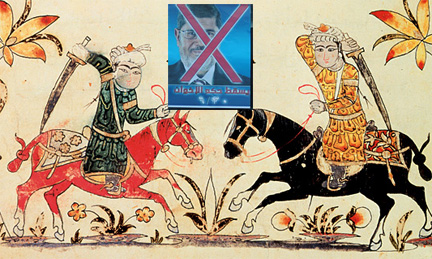
Given the events of last week in Egypt, it is hard not to reflect on these events while they are fresh. Opinions on the military crackdown, which has resulted in hundreds of innocent (obviously people protesting but not carrying weapons, including women) victims, are deeply divided. There seems to be no middle ground in the media or on the street, as far as one can see from outside the conflict area. One reason for this impasse is the level of violence attached to the level of vitriolic rhetoric from both sides. The removal of Morsi was bound to stir up the wrath of those who fervently supported the Muslim Brotherhood as all hopes for gaining power through the ballot box were shattered. The call for protests was doomed to failure as long as the military and security forces were intent on maintaining control of Egypt’s economy and protecting their base of power. In part this is due to the fact that the military never lost power and was clearly not prepared to do so, even with the changing of the guard in the officer shuffle at the top. But it is also the case that the Muslim Brotherhood had many enemies from the start, especially among those who were more secular-minded.

In a New York Times commentary Rick Gladstone quotes several scholars who argue that the aim of the military in forcefully removing the protesters with live ammunition was to provoke the expected violence by members of the Brotherhood. During the past month Egyptians have been bombarded with a propaganda message that the Brotherhood has become a bunch of bearded terrorists who must be resisted. So the strategy by Sisi and the military/security complex appears to have been to provoke violence from the protesters, knowing full well that there would be a violent reaction. The stores of a few weapons that the military claims was found among the protesters, even if planted there by the military, reinforces this scenario. The gut reaction of some supporters to blame the Copts and burn down more than 30 churches again feeds into the message that the Muslim Brotherhood is too radical. Continue reading Going for Broke (Read “Provoke”)

The Tragedy that is Egypt today

Egypt is once again under military curfew. Mubarak is gone, but the military and security system that stabilized the Mubarak regime is undeniably in control, no matter what the rhetoric about restoring democracy. The brief flirtation with a seemingly democratic election has been an abject failure, no matter who you think is to blame. There are no winners in the recent protests and crackdown that left well over 500 people dead and several thousand wounded. At this point all Egyptians are on the losing side as violence escalates. The situation today is a tragedy and is bound to get more tragic in the days ahead. Egyptians are pitted against each other in sectarian clashes, Muslim against fellow Muslim and some Muslims targeting the Copts. As many as 20 Coptic churches may already have been torched. God forbid if Egypt still had a viable Jewish population.

Blame is being hurled against all sides with breakneck speed in blogs, commentaries and twitter. But blaming is part of the problem, since it further inflames the frustration that leads to violence. Coptic churches are being burned because the Copts are said to side with the military as though it is only about politics. But the ugly intolerance that many Salafis and Muslim Brothers have preached to their own transcends politics. The military is indeed ruthless and manipulating the media with propaganda, demonizing the Muslim Brotherhood. Enough Brothers are acting out their violence to lend some credence to the claims in the eyes of many Egyptians. There is also the atrocity of pushing for martyrdom, as leaders of the Brotherhood encourage those who are protesting Morsi’s ouster to engage the military in what can only be a losing and bloody battle. Both sides are acting like spoiled children; no one is promoting a peaceful mediation, if one is still possible. Continue reading The Tragedy that is Egypt today

Egypt Erupts


I have been reading a number of Mamluk historians recently and the turn of events in Egypt since the removal of President Morsi is an eerie reminder that the history of Egypt is more than the Nile, as Herodotus once put it; Egypt is the home of coup after coup from the Pharaohs to the Greeks to the early Muslims who founded Cairo to Fatimids, Ayyubids, Mamluks, Ottomans, Napoleon, the British and Nasser. The Nile still flows and the blood still spills out in the ongoing history of civil strife. The history of Egypt beyond the pyramids that the tourists photograph is very much about the military.

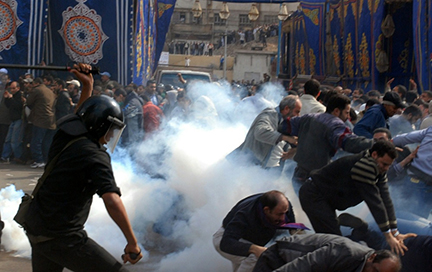
Today the Egyptian military and security forces followed through on their warning that they would clear the Muslim Brotherhood sit-ins in Cairo. The rhetoric for the past month has literally gone ballistic. The government has painted the Brotherhood as a band of intolerant terrorists, while the Brotherhood has made it seem as though they are martyrs for democracy. In all of this there must be some who wish for the days of Mubarak, just as some Iraqis long for the relative security of Saddam Hussein. The Arab Spring, which brought down dictator after dictator, has sprung a leak and a steady flow of blood is oozing out, literally hemorrhaging in the case of Syria, Iraq, Afghanistan and now Egypt.

Reports this morning from both sides in the conflict stretch the meaning of hyperbole. The government claims only 16 or so dead in all of Egypt, while a spokesman for the Brotherhood said thousands have been killed and tens of thousands injured. The truth is quite obviously in between. Continue reading Egypt Erupts

Airing out on Area Studies: Confessions of a Middle East Area Specialist

[These remarks were written on the train back to New York after the 1997 AAA meetings in Washington. I had earlier provided extemporaneous remarks on the subject at the business meeting of the Middle East Section. I found these in a set of old files and decided such a confession is timeless, at least in my case. And this year I will again be presenting papers at both AAA and MESA. ]

The idea of “Area Studies,” especially those areas where several centuries of Western colonialism have helped define the modern boundaries, is under attack. One of the more besieged areas is the Middle East, once the Near East and part of the politically uncorrected Orient as such. I am not particularly interested in defending Area Studies as such. But I am dismayed at the weakening of Middle East Studies programs at major universities. As an anthropologist who encourages other anthropologists to work in the Middle East, I appreciate the teaching of Middle Eastern languages, literature, culture, history, politics, economics, etc. as potentially useful information for ethnography. I do not know how trying to learn “too much” about the region could distort one’s anthropologizing.

Each fall I have a major decision to make: should I go to AAA or MESA? Continue reading Airing out on Area Studies: Confessions of a Middle East Area Specialist