Category Archives: Countries

Sponge Bob in Winterland

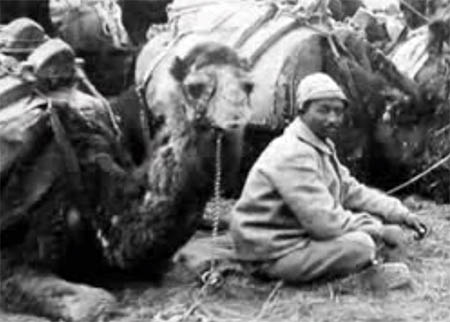
The future belongs to the young, no matter how much older generations try to shape that future. Educations plays a key role, as does the whole family context, but in the past century it is the expansion of media that has establishing a seemingly hegemonic control over the curiosity of the young. Disney launched the careers of Mickey Mouse and Donald Duck, not to mention the lily white Snow White or comfortably brown Bambi. In my day there was Woody Woodpecker, but my son’s generation was mesmerized by the Ninja Turtles. I have not kept up with cartoon evolution, but I had heard something about a cheesy character named Sponge Bob. It seems that there are many episodes of Sponge Bob available in Arabic on Youtube. The image above is from an adventure in a hibernating-bear-in-an-igloo winterland.

I have seen Arabic translations of Western and Japanese cartoon shows before, and anthropologist Mark Peterson has written a fascinating ethnography (Connected in Cairo: Growing Up Cosmopolitan in the Modern Middle East, Indiana University Press 2011) about the Pokemon phenomenon and other comic characters in Cairo. It is important to remember that the urban generation that has taken to the streets in the Arab Spring and lives and dies through the social media has also been brought up in a steady diet of cartoons, both comic books and videos. While academics have been arguing over the impact of erudite Orientalism, there is a far more potent source influencing the thought of the young: I call this “cartoonality,” the shaping of opinion through fictional non-human or ultra-human cartoon characters. Continue reading Sponge Bob in Winterland

The Arab World Learning Barometer

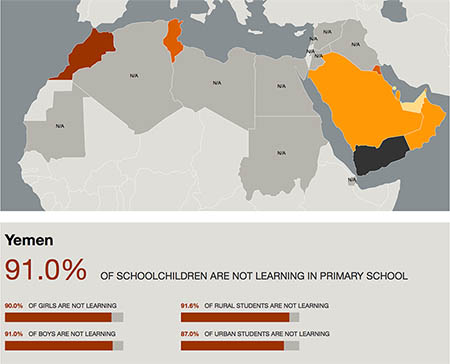
The Brookings Institute has recently released an “Arab World Learning Barometer,” that includes information on education and youth in Yemen. Check it out here.

The Arab World Learning Barometer is an interactive tool developed by the Center for Universal Education at Brookings. Using the latest available data, the barometer provides a snapshot of the state of education and learning in the Middle East and North Africa.

The barometer measures the quality of education and learning by examining four areas: getting into school, staying in school, whether students are learning basic skills while in school, and the link between education and youth unemployment. The barometer brings together often scarce data for 20 countries in the Arab region. The data cover the 2001-2012 period and do not reflect setbacks due to recent conflicts in the region.

Continue reading The Arab World Learning Barometer

No Palestinian Idol at World Cup?

Palestinian Arab Idol Gets Booted From World Cup, and Shakira’s Response Was Perfect

by Milana Knezevic, PolicyMic, February 13, 2014

Palestinian Arab Idol winner Mohammad Assaf says he has been banned from performing at the World Cup opening ceremony this summer — and that Shakira is boycotting.

He said at a press conference earlier this week that he was supposed to sing at the show kicking off the FIFA World Cup in Brazil, but that because of some “countries” or “groups” — no one was specified — his record company was told this won’t happen after all. He also said that Colombian superstar Shakira, who sang the 2010 World Cup anthem “Waka Waka,” has refused to perform at the ceremony because of it.

Assaf rose to fame last year when he won the regional singing competition Arab Idol, and was especially lauded for his performances of traditional Palestinian music:


Hear the winning song on Youtube here

In the process, he gained some high-profile fans. FIFA President Sepp Blatter visited Palestine last summer, and said he would invite Assaf to sing at this summer’s World Cup.

It was reported then that Assaf and Shakira might sing together in Brazil, but now it appears both will be staying away from the festivities. Continue reading No Palestinian Idol at World Cup?

Jerusalem Filmed in 1896

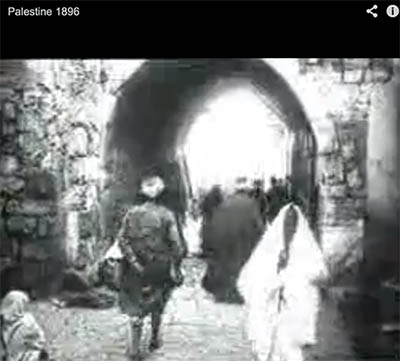
There is a fascinating short video on Youtube of what is apparently the first filming done in Palestine. Check out the blog Hummus for Thought for the Youtube bounce but also for a transcription of the commentary. As the narration indicates, Jerusalem was an interfaith city. There is even a shot of a Jew wearing a tarbush at the wailing wall. At this time under Ottoman control, the population of the three districts that comprised Palestine was 85% Muslim, 10% Christian and 5% Jewish.

Syria’s war must end

By Stephen Hawking, Washington Post, February 14

Stephen Hawking is the author of “A Brief History of Time” and a former professor of mathematics at the University of Cambridge.

The Greek philosopher Aristotle believed that the universe had existed forever. The reason humanity was not more developed, he believed, was that floods or other natural disasters repeatedly set civilization back to the beginning.

Today, humans are developing ever faster. Our knowledge is growing exponentially and with it, our technology. But humans still have the instincts, and in particular the aggressive impulses, that we had in caveman days. Aggression has had definite advantages for survival, but when modern technology meets ancient aggression the entire human race and much of the rest of life on Earth is at risk.

Today in Syria we see modern technology in the form of bombs, chemicals and other weapons being used to further so-called intelligent political ends.

But it does not feel intelligent to watch as more than 100,000 people are killed or while children are targeted. It feels downright stupid, and worse, to prevent humanitarian supplies from reaching clinics where, as Save the Children will document in a forthcoming report, children are having limbs amputated for lack of basic facilities and newborn babies are dying in incubators for lack of power. Continue reading Syria’s war must end