Category Archives: Countries

Omid Safi on George Clooney

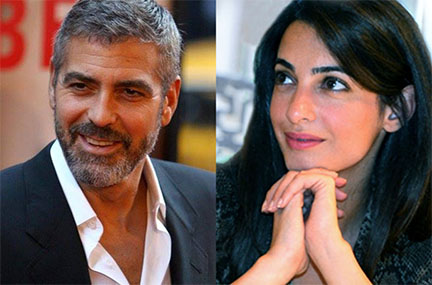
What is the religion of George Clooney’s fiancé, Ms. Amal Alamduddin? Druze? Muslim?
by Omid Safi, What Would Muhammad Do, April 29, 2014

The news that George Clooney, the perpetual bachelor, had gotten engaged to Amal Alamuddin, a stunning Arab beauty, who (ahem, ahem) is also a badass brainy Oxford-educated international human rights lawyer—pardon us, barrister—has now officially gone viral. Here and here and here.

On social media, many professional women, in their 30s and 40s, have expressed joy that Clooney was wedding a brainy (Ok, and stunning) professional woman.

Many human rights activists see this as an opportunity to bring attention to catastrophes like Syria.

Many Arabs are naturally seeing this as a confirmation of the attractiveness of Arabs. [Just check out the outburst of pride on FB!] Continue reading Omid Safi on George Clooney

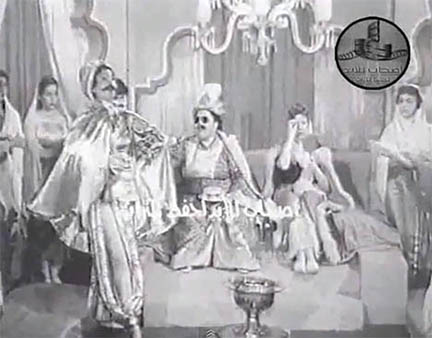
فيلم مدرسة البنات بطولة نعيمه عاكف و كمال الشناوي لسنة 1955

Half a century ago the Egyptian film industry was in full swing. Here is a clip from a 1955 film called مدرسة البنات. This was only 13 years after the classic Road to Morocco with Bob Hope and Bing Crosby. Are these films Orientalist? Indeed, that is there appeal, but there is also an undertone of satire in both. Check out the moustaches on the harem beauties in the Egyptian film.

Thimar: Research on Agriculture in the Arab World


[
Thimar is a new organization that promotes research on agriculture, environment and labor in the Arab World. Check out their website, which is still under production.]

Problematic

The lands which formed a cradle of plant and animal domestication exhibit today the greatest ‘food insecurity’ of any region in the world. Stark dependence on imported food is often attributed, on the production side, to aridity exacerbated by climate change, soil salinity, and under-capitalized small land-holdings, and on the consumption side, to population growth and change in food cultures. Dominant political and economic interpretations would have us see the region’s food deficit as ‘natural’ (a result of aridity, population growth and the force of the market).

But this argument dismisses the centrality of economic, political and social policies. An important example is Syria, where changes in policy from the end of the 1980s have led the country by 2007 to face, for the first time in its history, major national food insecurity and growing rural child-malnutrition. A comparison with Iran since the late 1980s is telling. While Syria lost industrial production, scaled back support for agriculture, and failed to develop a national consensus about the relation between wealth distribution and population policy, Iran sustained the growth of its manufacturing sector, strengthened its programme of national food-security, continued to engage with pastoral producers, and opened a public debate on population and development which led to an effective family-planning programme operating through the country’s public primary healthcare service. Continue reading Thimar: Research on Agriculture in the Arab World

A Hadrami Million

Southern Yemeni Activists Prepare for Nationwide Rally
by Susanne Dahlgren, MERIP, April 24, 2014

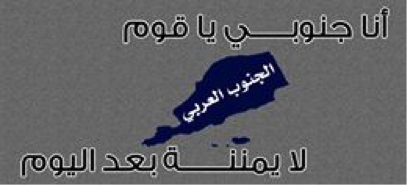
For the first time, a Million-Person Rally or milyuniyya will be held in Yemen’s oil-rich eastern province of Hadramawt. It is being called milyuniyyat al-huwiya al-junubiyya or the Million-Strong Rally for Southern Identity.

The mass demonstration aims to unify all of the southern Yemeni protests against the Sanaa regime. For two years now, milyuniyya rallies have been held in Aden, the hub of southern Yemeni revolution, gathering large crowds of men from all over the southern provinces and women from less far-flung areas to give voice to the concerns of southerners before the world. The object of the April 27 rally is to commemorate the 1994 “war against the south” that led to the downfall of the southern army and the solidification of ‘Ali ‘Abdallah Salih’s rule, understood by many southerners as a northern occupation. The choice of Mukalla, Hadramawt’s main port, as the site for the demonstration is significant; only months earlier tribes gathered to form the Hadramawt Tribes Confederacy, in order to resist what is considered a systematic looting of the fruits of the land by the regime, which is distributing business deals to its cronies while marginalizing locals. The tipping point was the murder of a notable tribal sheikh at an army post, which sparked a full-blown popular uprising. Continue reading A Hadrami Million

الإرياني :اليمن حققت ما لم تحققه دول عربية أخرى من عملية التغيير


عبد الكريم الارياني

عين اليمن الخميس 24 أبريل

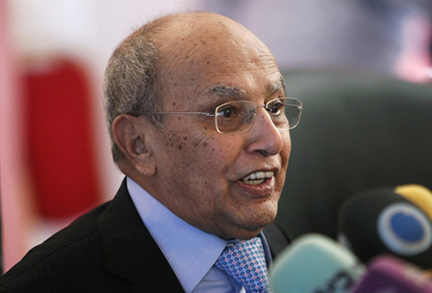
أكد مستشار رئيس الجمهورية الدكتور عبد الكريم الإرياني أن اليمن حققت ما لم تحققه دول عربية أخرى من حيث عملية التغيير التي يعود الفضل في ذلك إلى المبادرة الخليجية وآليتها التنفيذية والالتزام بهما الأمر الذي أفضى إلى انتقال سلس للسلطة وإجراء انتخابات رئاسية مبكرة.

وقال الدكتور الارياني في كلمة له في افتتاح ندوة حول تأكيد حقوق المرأة في الدستور والمجتمع اليمني تنظمها مؤسستي منيرفا والقانون الدولي الإيطاليتين بدعم وزارة الخارجية الإيطالية: بالتعاون مع السفارة اليمنية في روما ” إن دور المرأة البارز والمؤثر سواء في الثورة الشبابية أو الحوار الوطني أصبح جزء لا يتجزأ من الحياة السياسية والاقتصادية والاجتماعية والثقافية “.

وأشار مستشار رئيس الجمهورية إلى أن المرأة حصلت على حقوق لا يستطيع أحد أن يسلبها تلك الحقوق .. لافتا إلى أن المرأة في اليمن أصبحت شريكا فاعلا ومؤثرا لشقيقها الرجل وممثلة بما لا يقل عن 30 بالمائة في السلطات التنفيذية والتشريعية ومستقبلا القضائية .

ونوه الدكتور الإرياني بدور وزارة الخارجية الإيطالية ومؤسسة منيرفا ومؤسسة القانون الإيطاليتين في دعم ومساندة قضايا المرأة في اليمن . من جانبها أكدت وزيرة الشؤون الاجتماعية والعمل الدكتورة أمة الرزاق علي حُمد أن مخرجات مؤتمر الحوار الوطني تعتبر الموجه الأساس لكل البرامج في اليمن للعمل من أجل مستقبل أفضل وواعد بالخير والعطاء .

وأشارت إلى أن مخرجات مؤتمر الحوار الوطني أنصفت المرأة اليمنية من خلال حصولها على حق المشاركة في مختلف المجالات السياسية والاجتماعية والاقتصادية بنسبة لا تقل عن 30 بالمائة . وقالت :” إن لم يكن هناك بداية من الدستور ثم القوانين على حق مشاركة المرأة فإننا لن نتمكن من الوصول إلى كل المواقع “..
Continue reading الإرياني :اليمن حققت ما لم تحققه دول عربية أخرى من عملية التغيير

Feeling Happy in the Middle East

Given all the unhappiness, it is refreshing to find a little happiness in the Middle East, even if it is musical. Enjoy the following:

Happy in Yemen (https://www.youtube.com/watch?v=2JzNxo5m8vI)

Happy in Abu Dhabi (https://www.youtube.com/watch?v=audy0aHjdyg)

Happy in Algeria (https://www.youtube.com/watch?v=Dr3-6H6P6Ng)

Happy in Egypt (https://www.youtube.com/watch?v=5D5dO5cn1PQ)

Happy In Kuwait (https://www.youtube.com/watch?v=mQzDDg2poOc)

Happy in Jerusalem (https://www.youtube.com/watch?v=-oszKeU7lEs)

Happy in Jordan (https://www.youtube.com/watch?v=JyXGv-7b_xo)

Happy in Lebanon (https://www.youtube.com/watch?v=7RqSFiVUhDw)

Happy from Morocco (https://www.youtube.com/watch?v=qnuNA8HkVp0)

Happy in Qatar (https://www.youtube.com/watch?v=V8N5TkduFjA)

Happy from Saudi Arabia (https://www.youtube.com/watch?v=YKi4iAl_qb0)

Happy in Turkey (https://www.youtube.com/watch?v=a12vAtzbe68)

Unravelling culture in Iraq’s Kurdish region


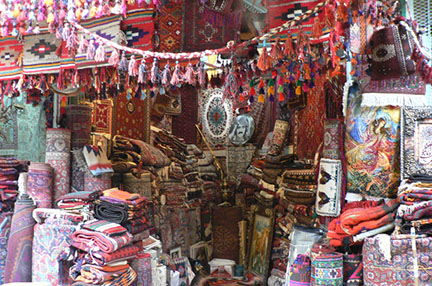
It is getting harder for Iraqi-Kurdish vendors to find stock of genuine Kurdish handicrafts [Lara Fatah/Al Jazeera]

by Lara Fatah, Al Jazeera, April 20, 2014

Erbil, Iraq – In the heart of the ancient city of Erbil, capital of the Iraqi Kurdistan region, stands the Erbil citadel, or Qalat, as it is known locally. A walk along the city walls, which are currently under restoration, brings people to one of the region’s gems: the Kurdish Textile Museum.

It is here that the lost art of weaving and handicrafts is being re-taught. Shereen Fars Hussan, one of 40 women trained in weaving at the museum since 2009, sits quietly in the building’s cool upper interior as her colleagues chatter with pride at having learned these traditional skills.

Hussan, 30, remembers how she used to watch her grandmother weave carpets and kilims (tapestry-woven carpets). “She would tell us stories about the old ways of life in Kurdistan, how she would weave carpets with the patterns that her own grandmother and mother had taught her from childhood, but war and genocide meant that she couldn’t pass on the skills to my mother and me,” Hussan told Al Jazeera.

VIDEO: Kulajo – My heart is darkened Continue reading Unravelling culture in Iraq’s Kurdish region

Mormons in Marib


N-H-M in Sabaean

Not being a resident of Utah, I sometimes forget that there are people who take The Book of Mormon (the original and not the Broadway play) seriously. There is a passage in 1 Nephi 16:34 that suggests the place of Ishmael’s burial: “And it came to pass that Ishmael died, and was buried in the place which was called Nahom.” So where might Nahom be? Well, why not Yemen? That is the argument in an article by Warren Aston, who traveled to Yemen and found an inscription on an alter at Marib that referred to Nihm, a tribe. Thus, The Book of Mormon is verified, as innumerable Mormon websites attest, including one on Wikipedia.

There is indeed a Yemeni tribe called Nihm, part of the Bakil confederation. But why exactly would Ishmael end up getting buried in Yemen? There is certainly no indication in the Old Testament of Ishmael going to Yemen. Genesis 25:17 reads “And these are the years of the life of Ishmael, an hundred and thirty and seven years: and he gave up the ghost and died; and was gathered unto his people.” I sort of doubt that the priestly authors mention of “his people” meant the Sabaens down in Yemen. And in Islam Ishmael stops at Mecca. So either the Torah is wrong, Islamic tradition is wrong or the 19th century Book of Mormon is wrong. And, of course, given that this legendary material, they may all be wrong. There are indeed skeptics of Nephi.

The placename fallacy has a long history in pseudo-archaeology. One can rather easily manipulate major biblical placenames in Arabia. The Lebanese scholar Kamal Salibi played this game to the hilt in his imaginative The Bible Came from Arabia. Two individuals in Bahrain have continued the theme. It is difficult to dismiss the political motive (that Abraham and Moses were not herding their flocks and refugees respectively to ancient Israel) that no doubt underlies such attempts to rewrite history. Certainly there is no archaeological evidence for these bizarre claims. And just as certainly there is no end of lunatic archaeology in sight.

UPDATE:
Dr.Mohammed Maraqten, who has excavated at Marib, sends the following details about the altar:

This altar is from Barʾān Temple (Arsch Bilqis), ca. 6 Century B.C. and still in situ.
The complete filiations of the dedicator of this altar to Almaqah reads: Bʿṯtr / bn / s¹wdm / bn / nwʿm / nhmyn
The partly damaged letters are / N / and / H / (like Arabic Hirra) and the complete word is NHMYN and has for sure NOTHING to do with Biblical NḤM with / Ḥ / and the Canaanite root NḤM. The root is NHM and not NḤM.
Two possibilities to understand this word:
– NHMYN (al-NihmÄ«) is Nisbe to the very famous and many time attested in the inscriptions, in the Islamic period and still in the same place northeast of Sanaa. Also the Nisbe NHMYN is attested may times.
– NHMYN is a designation of a profession “Stonemason”, Munahhim or Muhandis, the verb NHM is well known in the inscriptions and the Arabic sources as a Yemeni term in the meaning of “to dress stones”.