Category Archives: Countries

Gibran Kahlil Gibran: A Timeless and Universal Vision

By George Nicolas El-Hage

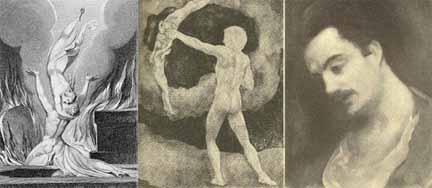
Poetry and art are twins. Both are the offspring of suffering and joy. Gibran translated Blake’s “Innocence and Experience” into a “Tear and a Smile.” Nevertheless, the unending drama of human existence unfolds itself in the pages of both men. Only the elected and gifted soul is capable of creativity, of reading the world differently, and of rebelling against evil clothed in a lamb’s garment. Art knows no boundaries. It transcends all national limits and is only satisfied with the universal. There, time and place lose their ability to imprison the artist in a closed cell. The inspired poet becomes a winged soul floating over life, embracing the infinite. It is in the midst of this vast expanse where the responsibility of the artist becomes eternal and his mission turns holy that we can speak of Kahlil Gibran and William Blake together. Continue reading Gibran Kahlil Gibran: A Timeless and Universal Vision
The Founding of Baghdad

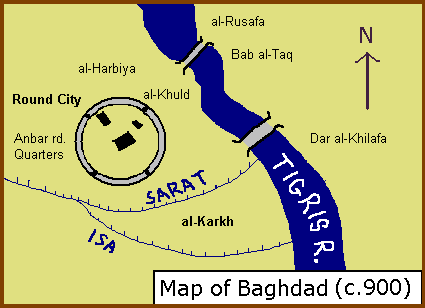
The Founding of Baghdad
by
Ahmad ibn Abu Ya’qub ibn Ja’far ibn Wahb Ibn Wadih Yaqubi (died ca. 897 CE)

“I mention Baghdad first of all because it is the heart of Iraq, and, with no equal on earth either in the Orient or the Occident, it is the most extensive city in area, in importance, in prosperity, in abundance of water, and in healthful climate. It is inhabited by the most diverse individuals, both city people and country folk; people emigrate to it from all countries, both near and far; and everywhere there are men who have preferred their own neighborhoods there, their trade and commercial centers; that is why there is gathered together here what does not exist in any other city in the world. Continue reading The Founding of Baghdad

A Sailor and His Camel Ride


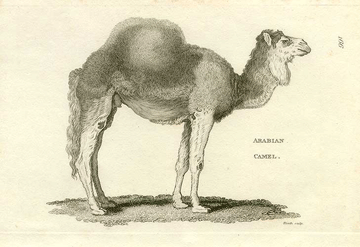
[Illustration: Arabian Camel from George Shaw, Zoology (1801)]

[Joseph Osgood was a Black American sailor who visited the Yemeni port of Mocha about a dozen years before the start of the American Civil War. He offers a rich, descriptive account of his visit to the Yemeni coast, including a sailor’s view of the ship of the desert.]

No wheel carriages are used here, the most general mode of transportation being by camels, for which the males along are serviceable. The flesh of the camel forms a staple article of food, the head and neck being excepted, because one of the race unwittingly rendered these parts unholy by obtrusively poking his head and neck into Mahomet’s tomb. Wellsted says that a camel is welcomed at its birth, by the Arab, with “another child is born unto us.” Continue reading A Sailor and His Camel Ride

Napoleon Tried It: He Failed


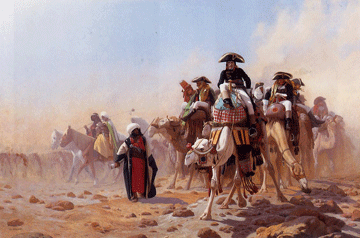
Illustration: “Napoleon and his General Staff in Egypt” by Jean-Léon Geróme, 1867

In 1798 the French leader Napoleon, a seemingly mature 28 year old at the time, set off from France with a fleet of 400 ships and 36,000 men. The goal was to conquer Egypt and “liberate” it from the corrupt Mamluk overlords. No CNN or BBC reporters were around; nor had al-Jazeera set up a satellite feed. It did not take long for the French to overwhelm the Egyptians with about 25,000 French against 15,000 local Mamluks. Napoleon won in sight of the Pyramids, but very soon after the entire mission was doomed to failure when Lord Nelson obliterated the French fleet. Napoleon himself left Cairo secretly a year later, returned to France and turned his conquest machine against fellow Europeans.
Continue reading Napoleon Tried It: He Failed

The Book of Sanaa

One of the Arab World’s most important modern poets is the Yemeni ‘Abd al-‘Aziz al-Maqalih. Dr. al-Maqâlih received his Ph.D. from ‘Ayn Shams University in 1977. He was President of Sanaa University from 1982-2001. He has received the title of “Knight of the First Rank in Arts and Letters” in 2003 from the government of France. The poem (translated here by Bob Holman and Sam Liebhaber) was written during the 70 day siege of Sanaa in 1968 when the poet was 31 years old. Sanaa is the capital of the modern Yemeni nation state, as it was for the Zaydi imamate when Dr. al-Maqalih was born.

The 26th Qasida
By ‘Abd al ‘Aziz al-Maqalih

Where are the gardens of Sanaa?
Dusty souqs have killed them,
covered them with corruption.
Nothing remains of their walls,
no one marched in their funeral.

Continue reading The Book of Sanaa

Beirut Speaks

by George El-Hage

I am Beirut
Look at me
DonÂ’t you remember?
I am Beirut
The Jewel of eternity
A boat of emeralds and rubies
A lighthouse built in marble
DonÂ’t you remember?

I am the bride of all cities
Mother of ships and alphabets
And home for those
Who are homeless
DonÂ’’t you remember?
Sole daughter of the East
Sun-colored daughter
Of the brown Levant.
Continue reading Beirut Speaks

Reflections on Fieldwork in Yemen


Reflections on Fieldwork in Yemen: The Genealogy of a Diary in Response to Rabinow’s Reflections on Fieldwork in Morocco
by Daniel Martin Varisco


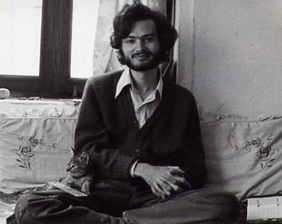
[Anthropologist at rest with cat, al-Ahjur, Yemen, 1978]

[The following excerpt is from an article recently published in Anthropology of the Middle East (Volume 1(2):35-62, 2006).]

Abstract: In preparation for writing an ethnographic monograph on fieldwork in Yemen, I compare and contrast my field diary, written in 1978–9, with Paul Rabinow’s ‘Reflections on Fieldwork in Morocco’ (1977). The underlying question is what post-fieldwork reflections reflect meaningfully about the immediacy of ethnographic fieldwork. I criticize the reflexivist trope of privileging ‘writing culture’ over the significance of ‘being there’ in the field. Point by point, I examine the implications of graduate training in anthropology, culture shock, health problems, language skills, the unreflective male voice, visual ethnography and the rhetoric of narrative writing.

Keywords: culture shock, ethnography, fieldwork, reflexivity, Visual Anthropology

Continue reading Reflections on Fieldwork in Yemen