Category Archives: Countries

Lebanese Hymns of Love and War

By George N. El-Hage

1-
Thirty years of prosperity, patriotism, harmony and florescence, ruined in one year, it is true that destroying is easier than building, but it is also true that a year in which the masks fell and the buffoons stepped from their disguises into the shadows, was more real to them and to us than the thirty years they masked themselves in falsehood, hypocrisy and exploitation.

2 –
There were those who sold Lebanon and lost their families, their children and their villages. Then the strangers spit in their faces and cursed them. Their shekels were plundered, the price of treason. Do not ask those of their honor and patriotism. How can they give you what they do not possess?

3 –
The youth of Lebanon who abandoned their books and embraced rifles, know that they will triumph, because those who know how to live life, know how to live death and resurrection. Continue reading Lebanese Hymns of Love and War

Bury Me Not on the Lonesome Yemeni Plain

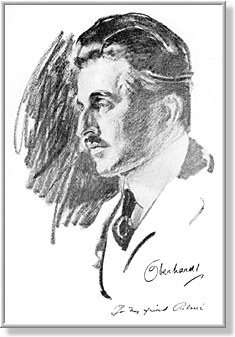
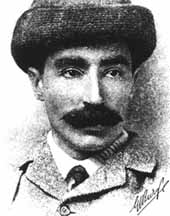
There are not as many travel accounts by Western authors visiting the Middle East as sand particles in the great Arabian desert, but the number is considerable just the same. One of the younger visitors, arriving in the British held port of Aden in 1896, at the age of 22 was G. Wyman Bury, whose intrigues and failed attempt to navigate the so-called “Empty Quarter” left him a broken man and brought him to an early death at age 46. It did not start out that way. Spending a year in Morocco, the young English lad described himself there as a “callous youth just out of his teens dropping in haphazard on a real tribe accompanied by a mission-taught Moor and a large liver-coloured pointer who had more sense than his master.” Continue reading Bury Me Not on the Lonesome Yemeni Plain

A Voice in the Wilderness that is Gaza


[Illustration: Khalil Yaziji found two bodies outside his shop, al-Jazeera.]

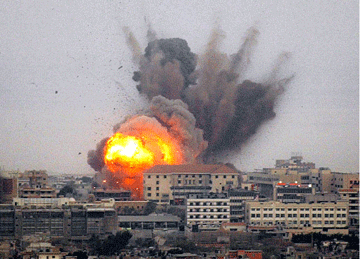
So what is today’s top story of violence in the Middle East? Take your pick: the Lebanese army vs. Fatah al-Islam in the camps of Tripoli, a Taliban-ignited bomb exploding in a market and killing civilians in Afghanistan, an assassination attempt on the mayor of Mogadishu, six U.S. soldiers and an interpretor killed in Diwaniya in southern Iraq, more deaths in Gaza. Reading the news (I almost made the anachronistic slip of “picking up” a newspaper) today is a time warp back to the revelationary isle John of Patmos and his prophetic vials of plagues. I am not referring to an incendiary end of the world scenario spun by the late Jerry Falwell (may he rest in Baptist solitude), but the continuing hell on earth. If you think this is about religion (or democracy), think again. Remove the politics (and American involvement or influence) from each of the stories above and the religion is reduced to a drizzle.

So here is my pick of the day, one from the little guy. Al-Jazeera, which has the resources and access that Western journalists can only dream about, published a piece by reporter Laila Haddad, who interviewed a variety of ordinary Palestinians living through the nightmare of Gaza these days. It is worthwhile looking at the violence from the ground-up, a welcome break from the bird’s-dropping view usually spun in the media. Here is what Khalil Yaziji, 26 years old, a shopkeeper and banker thinks of his present and future: Continue reading A Voice in the Wilderness that is Gaza

Tableaux Manners Egyptian Style

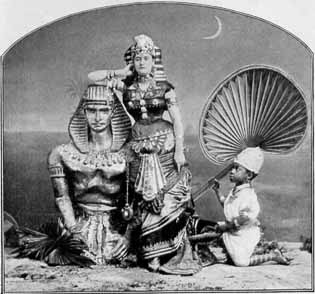
The year was 1875. As reported in The Cosmopolitan (for January, 1898), the governor of New York proposed a fund raiser for the expected visitors in the upcoming American centennial celebrations. New York City’s high society was mobilized under the direction of Mrs. Elizabeth Hamilton Cullen, granddauther of Alexander Hamilton and wife of General G. W. Cullen. Mrs. John Jacob Astor and Mrs. Belmont assisted in gathering 230 elite ladies and gentlemen to pose in various tableaux from “The Puritan Family at Prayer” to “Miss Egypt” shown here. Here is a nostalgic tidbit of vintage American Orientalism when the digs in Egypt were still very fresh. But for a nation that had only abolished slavery slightly over a decade before, it is clear that the race to end racism had only just begun. Continue reading Tableaux Manners Egyptian Style

Hamas and Ibn Khaldun: Going for the Cycle?

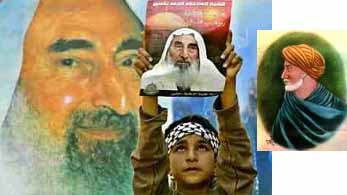
I am not an expert on the Palestine issue, nor am I trained to think in the apocalyptic terms sometimes engaged by pundits who forget that political science is more often an art or even impure fiction than a replicable analytical technique. But the ongoing in-fighting between Hamas (the neo-bad guys) and Fatah (the paleo-bad guys) is too intriguing to pass up. Today’s BBC News has a comparison of the two parties, following the resignation of the interior minister. Much of the speculation in the media is about tactics: Will Hamas ever give up support of violent acts against Israelis? Will Israel stubbornly refuse to negotiate with a group it would rather see fade into oblivion? Will the United States promote this democratic experiment as a bridge or a barrier on the so-called road map to peace? In all this I cannot help but think about what the famous 14th century North African savant Ibn Khaldun would have said if he could be interviewed from the grave for the New Tunis Times. It might go something like this… Continue reading Hamas and Ibn Khaldun: Going for the Cycle?

Mocha, Port of Coffee

[Joseph Osgood was a Black American sailor who visited the Yemeni port of Aden about a dozen years before the start of the American Civil War. He offers a rich, descriptive account, including information on the coffee cargo that may have brought his ship to this Red Sea port in the first place. The following is his rendition of a popular origin tale for the popular brew.]

Any communicative Arab will tell the following story about the early history of Mocha, with more or less modification.

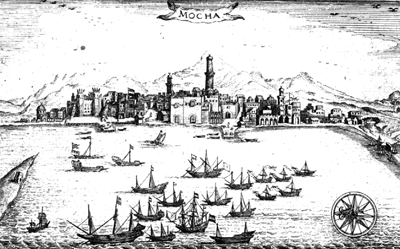
A little over two centuries ago, there dwelt near the beach, enclosed by two sandspits forming the harbor, a worthy fisherman, whose learning, wisdom, and pious observance of all the tenets of the Moslem faith, had collected around his humble hut the dwellings of a band of devoted pupils to be instructed in the religion of their great Arabian legislator and prophet. One day a ship from India, and bound to Jiddah, was driven by adverse winds into the cove, and, while there detained, the crew visited the settlement near the beach, and were entertained by the holy Sheik, who regaled them with coffee, a beverage till then unknown to his guests. The Sheik, learning that the captain was ill on board his vessel, extolled the sanative virtues of coffee, and sent some as a present to the captain, by the returning crew. The prescribed medicine was taken, the captain recovered his health, visited the shore, made confidence with the people, bartered his cargo for coffee and sailed for home, where the worth of the rare and newly discovered product was quickly acknowledged, and successive voyages soon established a lucrative commerce, and thus founded and gave a world wide repute to the city of Mocha and many of the neighboring inland towns. Continue reading Mocha, Port of Coffee

Selections from al-Rihaniyyat

by Ameen al-Rihani (1876-1940)

1 – Oh Freedom: When would you direct your face towards the East? When would your light merge with the light of this bright moon so it would rotate with it around the earth and enlighten the darkness of every oppressed people?

2 – When would the religious chasms be obliterated and sectarianism be trampled under the boots of civilization? When would we form the organization of tolerance and build the church of forebearance?. When would we raise and establish the school and journal of tolerance?

3 – I am the flower that bloomed out of the despair of the Prophets. A flower that flourished and then withered and finally its buds were scattered until the seeds of life gushed out of her heart and the winds carried it to the four corners of the earth. Continue reading Selections from al-Rihaniyyat

Apocalypse Watch: The Man Who Knows Squat

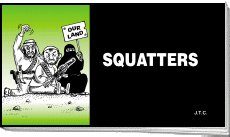
Most people find it hard to take cartoons seriously, apart from political satire and that can become a deadly issue, depending on the target. Given the recent Danish cartoon controversy it would seem that comics and religion do not mix well or at least settle well for the believers who see themselves as the target. But what about comic relief for the political struggle between Israel and the Palestinians? Fundamentalist tract artist Jack Chick, whose comic empire is dedicated to winning souls for Christ by drawing on God’s hate, has been using his pen to spread a rather sinister version of the fundamentally reduced Gospel for over 40 years. One of his more recent offerings is called “The Squatters” and it provides a virtual roadmap to apocalypse. Continue reading Apocalypse Watch: The Man Who Knows Squat