Category Archives: Countries

When Iran was Welcomed into the Nuclear Club

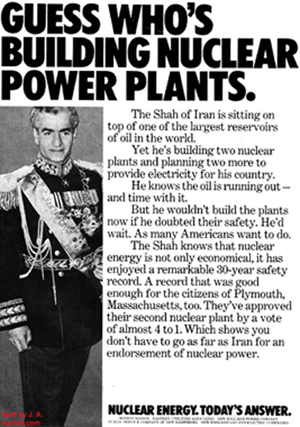
In all the recent back-and-forth about the capabilities of Iran to produce a nuclear bomb, it is well to remember how Iran was once welcomed into the nuclear club defending the free world (well, not that free in Iran at that time), when the Shah was in now-all-too-clear power. Iran was in fact a good example for the folks pushing nuclear power plants in our own back yards. What a difference a regime change makes … The ad above would seem quite dated, but then history does have a habit of repeating itself.
Iran’s Nuclear Weapons Program Never Existed

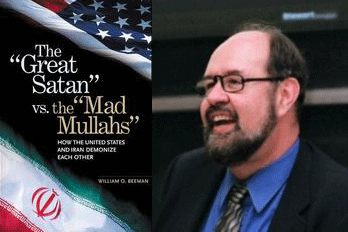
by William O. Beeman,
New America Media, News Analysis, Dec 05, 2007

Iran has never had a proven nuclear weapons program. Ever. This inconvenient fact stands as an indictment of the Bush administration’s stance on Iran.

The recently released 2007 National Intelligence Estimate that Iran “suspended its nuclear weapons program in 2003” caught the Bush administration flat-footed. In his panic, Bush grasped desperately at the idea that the weapons program may have once existed. However, the report does not offer a scintilla of evidence that the weapons program was ever an established fact. Continue reading Iran’s Nuclear Weapons Program Never Existed →

The Ninth International Symposium on Comparative Literature

Call for Papers
The Ninth International Symposium on Comparative Literature
November 4-6, 2008
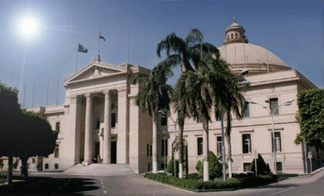
Department of English Language and Literature, Cairo University
“Egypt at the Crossroads: Literary and Linguistic Studies”
Deadline for abstracts: March 15, 2008

Because of its geographical, historical, and cultural placement, Egypt has been—since time immemorial—both literally and metaphorically at the crossroads. Enjoying the strategic location that it does—at a meeting point between Africa and Asia, facilitating contact between the two continents and Europe, and at a juncture between the Mediterranean and the Red Sea—Egypt is a rich amalgam of diverse cultural heritages: Ancient Egyptian, Greek, Roman, Persian, Coptic, Islamic. Influenced by all these and, in modern times, the French and British, the inhabitants are in the happy position of being hybrid—African, Arab, Mediterranean—but indubitably and inimitably Egyptian. It is, perhaps, this unique situation that inspired the Egyptian geographer Gamal Hamdan (1928-1993) to write of Egypt as having a “natural gift” which may explain “the secret of Egypt’s survival and vitality through the ages and in spite of the ages.” Continue reading The Ninth International Symposium on Comparative Literature →

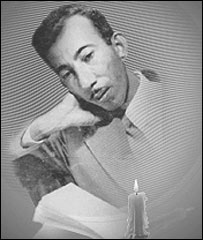
The Letters of Badr Shakir al-Sayyab: #10


The Iraqi Poet Badr Shakir al-Sayyab

[Note: This is the tenth in a series of translations of selected letters of the noted Iraqi poet Badr Shakir al-Sayyab. For more information on the poet, click here.]

Letter #9

My Dear Brother Yusuf (al-Khal) (1)

I hope you and the rest of our brothers are well. I have a Lebanese friend, the Adunisian poet, Basim Shawqi al-Salmaan (2). He is currently unemployed. You know him well for he lived in your house for a few days last summer. He then moved to Adunis’ house. He also published many poems in your journal, “Shi’r:” “Jaikur and the City,” “The River and Death,” and “Christ after Crucifixion.”

He now intends to return to Lebanon. Will he be able, with your help, to obtain a job that allows him to adequately earn a living for himself, his wife, his sister, and his two children? He can work as an instructor of English or Arabic language. He can also work in journalism or do translations. Continue reading The Letters of Badr Shakir al-Sayyab: #10 →

A Royal Ransom for the Book of Kings

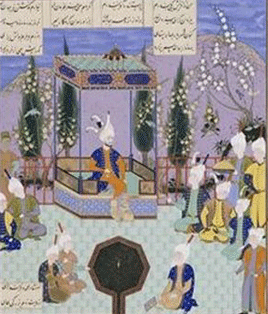
Looking for the perfect Christmas or Eid present? Well, if you have little spare cash but love rare books, why not mortgage the farm and go for one of the most beautiful illustrated manuscripts of all time, The Shahnameh of Shah Tahmasb Safavi in its Houghton manuscript form. This facsimile set of two volumes was edited by Martin Bernard Dickson and Stuart Cary Welch in 1981 and published by the Fogg Art Museum of Harvard University. And it is available for only $1495.00 plus shipping. Here are the details and it can be ordered by clicking here:
Continue reading A Royal Ransom for the Book of Kings →

Keeping Mecca Flu Free

Bird Flu Measures in Place

by Faleh Al-Thibyani, The Saudi Gazette, Sunday, 25 November 2007

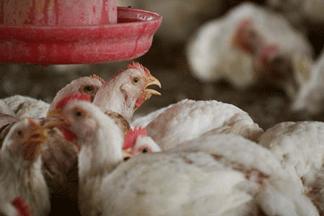
RIYADH – Measures will be in place to prevent an outbreak of avian flu in Makkah and Madina during the upcoming Haj season, a Ministry of Health spokesperson said.
Pilgrims coming from the Central Region, where the disease broke out last week, will undergo stringent medical checks, the spokesperson said.

Health Minister Dr. Hamad Al-Manie is due to attend a meeting of the Haj Preparation Committee in this regard Sunday.

Minister of Agriculture Dr. Fahd Balghunaim, meanwhile, said the public would be promptly informed about ongoing efforts to prevent the disease from spreading further.

So far, 3.5 million chickens and other birds have been culled since the disease was detected at a farm in Al-Kharj, and the ministry would not hesitate to eliminate all chickens in the Kingdom in order to protect its citizens and residents, Dr. Balghunaim said. Continue reading Keeping Mecca Flu Free →

Al Qaeda’s generational split

by Gregory D. Johnsen
The Boston Globe, November 9, 2007

RECENT CONFUSION over the status of Jamal al-Badawi, one the masterminds of the attack on the USS Cole in Yemen in 2000, illustrates the difficulties of containing an increasingly fractured jihadist movement. Badawi, who escaped from prison early last year, had surrendered to the Yemeni government in early October, only to be released as part of a plea deal. These events have sparked confusion and anger in the United States.

In Yemen, meanwhile, authorities have continued to make misleading and ambiguous statements about his whereabouts. It would be easy to assume, as many have done, that the country’s reaction was that of a reluctant ally eager to shirk its responsibility in the war against Al Qaeda. This reading, as Rudy Giuliani suggested, demands that the United States threaten Yemen with a reduction in aid.

But what to the United States is a cohesive organization bound together by a common hatred is to Yemen a fragmented movement that is rife with infighting and dissension. Continue reading Al Qaeda’s generational split →

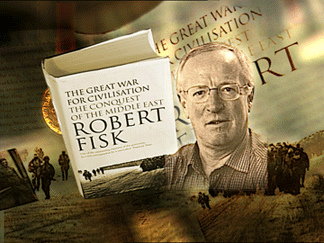
Darkness Falls on the Middle East

by Robert Fisk
The Independent, 24 November 2007

In Beirut, people are moving out of their homes, just as they have in Baghdad.

So where do we go from here? I am talking into blackness because there is no electricity in Beirut. And everyone, of course, is frightened. A president was supposed to be elected today. He was not elected. The corniche outside my home is empty. No one wants to walk beside the sea.

When I went to get my usual breakfast cheese manouche there were no other guests in the café. We are all afraid. My driver, Abed, who has loyally travelled with me across all the war zones of Lebanon, is frightened to drive by night. I was supposed to go to Rome yesterday. I spared him the journey to the airport.

It’s difficult to describe what it’s like to be in a country that sits on plate glass. It is impossible to be certain if the glass will break. When a constitution breaks – as it is beginning to break in Lebanon – you never know when the glass will give way. Continue reading Darkness Falls on the Middle East →