Category Archives: Countries

A Century Ago in Biskra


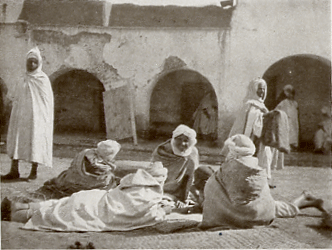
Outside a café: Biskra

A century brings change, yet memories of the past can still bring life to a quickly forgotten past. Exactly one hundred years ago, if you were to visit your doctor and pick up the latest issue of National Geographic Magazine, you would find a story about Biskra, the oasis in Algeria. Pre-Valentino’s The Sheik, this is rather pedestrian travel dialogue from an author who survives in the text only as a Mrs. But the pictures are truly marvelous and make returning to this century-old magazine well worthwhile. Webshaykh

A visit to the market place during the morning is one of the sights of the town and oriental in every tone. Squatting groups and bronzed-legged Bedouins, in brown and white camel’s-hair burnouses, are selling cous-cous, dried peppers, and of course dates. Bunches of fresh grass and green barley and thistles are heaped in one corner of the inclosure, Moorish slippers here and a pile of red fezzes there, and souvenirs for the tourist not lacking. For fifty centimes one may purchase a set of graceful gazelle horns, and curious knives and Arabian guns tempt the collector on the way. An ebon negress is selling oranges, an Arab boy in a red fez, and not much else, carries a basket of purple fruit in green leaves, while cloaks, burnouses, turbans, and yakmahs, purple, blue, deep red, and spotless white all crushed together, make a kaleidoscopic color in the whitewashed square. Bags of henna leaves, for staining the nails in Arab fashion, send forth their pungent odor, and the aroma of coffee and cigarettes fills the air. A Kabyle girl in red gown, tattooed bluely as to her forehead and cheeks, stained yellow as to her finger tips, passes us, cigarette in mouth, her bangles and anklets clanking as she goes. Continue reading A Century Ago in Biskra
Have Felix, will travel

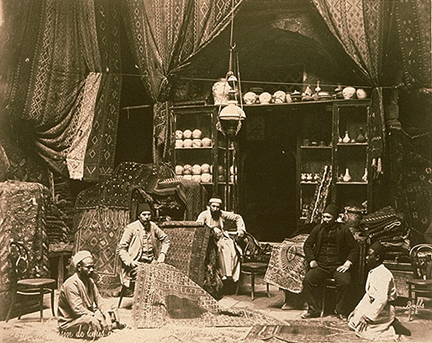
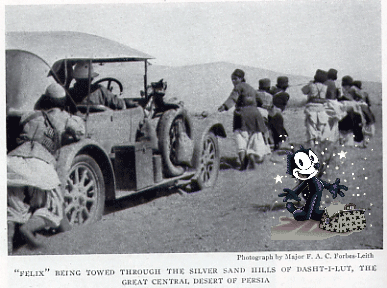
In 1924 Major F. A. C. Forbes-Leith decided to drive a “motor-car” from London to India, a journey that took almost half a year to traverse ten countries. Overall, a total of 8,527 miles were covered, with 3,000 of them devoid of road or track and 1,500 over desert, not to mention detouring around 150 broken bridges. This was three years before Lindy flew from Mitchell Field (next to the university I currently teach at) to France. The rationale for a ridiculously long auto adventure? That was simple: no one had done it before. As Major Forbes-Leith puts it, “Airplanes had already flown to India on several occasions, airships for a regular mail service were in the course of construction, even one of the submarines of the Royal Navy was on its way, but as yet no effort had been made to bridge the distance by mechanical transport.”

Attempting such an adventure at the time no doubt took a sense of humor. In this case the auto was labeled “Felix” after the cartoon character Felix the Cat. Continue reading Have Felix, will travel

Yemen sleepwalks into water nightmare

By Alistair Lyon, Special Correspondent, Environmental News Network, March 1, 2008

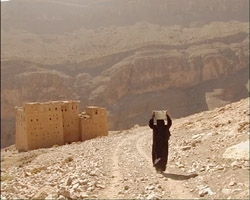
BEIT HUJAIRA, Yemen (Reuters) – Black-clad women trudge across a stony plateau in the Yemeni highlands to haul water in yellow plastic cans from wells that will soon dry up.

“We come here three or four times a day,” says Adiba Sena, as another woman draws water six metres (20 feet) to the surface and pours it into jerry cans lashed to her grey donkey. “We use it to clean, cook, wash — we have no pipes that reach us.”

These women are at the sharp end of what Yemen’s water and environment minister describes as a collapse of national water resources so severe it cannot be reversed, only delayed at best. Continue reading Yemen sleepwalks into water nightmare

Chickens Come Home to Roost in Georgia

William O. Beeman, New America Media, Aug 12, 2008

Editor’s Note: The Bush Administration’s push for access to oil from the Caspian Sea and it’s desire to isolate Iran precipitated the Russian invasion of Georgia. William O. Beeman is professor and chair of the department of anthropology at the University of Minnesota. He has lived and worked in the Middle East region for more than 30 years.

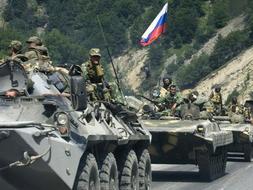
No one should be surprised that U.S. interference in the Caucasus has led to the Russian invasion of South Ossetia. By mixing into the volatile politics of the Caucasus, and trying to recruit the governments there to become American “plumbers” for a variety of purposes, the United States has only drawn Russian fire.

The Caucasus was one of the last territories added to the Russian Empire in the 19th century. It was captured from the Qajar Empire of Iran. The Caucasians never were fully incorporated into Greater Russia, and maintained a fierce cultural separatism. Georgia in particular was proudly nationalistic, with a distinctive language, cuisine, literary tradition and writing system. Continue reading Chickens Come Home to Roost in Georgia

Mahmoud Darwish Dies

Al-Jazeera, August 9, 2008
Mahmoud Darwish, the renowned Palestinian poet, has died after open heart surgery at the Memorial Hermann medical centre in Texas.

Ann Brimberry, Memorial Hermann’s spokeswoman, confirmed to Al Jazeera that Darwish died at 1.35pm (1835GMT).

Siham Daoud, a fellow poet and friend of Darwish, 67, had asked not to be resuscitated if the surgery did not succeed.

She said Darwish departed for the US ten days ago for the surgery, and he had undergone two operations for heart problems before Saturday’s surgery.

Best known for his work describing the Palestinian struggle for independence, the experience of exile and factional infighting, Darwish was a vocal critic of Israeli policy and the occupation of Palestinian lands. Continue reading Mahmoud Darwish Dies

Al-Qaeda’s war in Yemen

By: Aqeel Al-Halali, The Yemen Times, August 7, 2008

SANA’A, Aug. 6 – A leading Al-Qaeda figure in Yemen has threatened to execute armed attacks “at larger scales” if the Yemeni government doesn’t release his detained colleagues from prison.

This comes a day after a government announcement that it is interrogating suspects in the July 25th suicide bombing that targeted a camp in Hadramout governorate’s Sayoun city, 794 kilometers east of Sana’a.

In a taped recording, Yemeni Al-Qaeda leader Hamza Al-Quaity stated, “Your worries are our worries, your sorrows are ours and your grief is our grief. We’ll never forget you, Allah willing. As for you, oh [Ariel] Sharon of Yemen, [Political Security director] Ghalib Ba Gumesh, you’ll see how our colleagues will be freed from your prisons, Allah willing.” Continue reading Al-Qaeda’s war in Yemen