Category Archives: Countries

The PKK as a burden on Iraqi Kurds


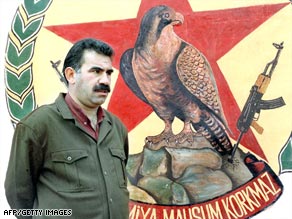
Former PKK leader Abdullah Ocalan, pictured in 1992.

The PKK as a burden on Iraqi Kurds

by IHSAN DAÄžI, Today’s Zaman, October 14, 2008

The outlawed Kurdistan Workers’ Party’s (PKK) attacks from northern Iraq on Turkish targets have turned the Kurdish region in Iraq into a primary target of Turkey.

It is time for the regional Kurdish administration to stop using the PKK as a bargaining chip against Turkey; it is not a time for the Kurdish people of Iraq to side with the PKK out of Kurdish sentimentality. While the former produces no advantages and incites the animosity of Turkey and pressures of the US, the latter ignores the fact that the PKK threatens to undo the gains Iraqi Kurds have made through their long struggle.

What Iraqi Kurds have today, after decades of struggle, is certainly worth preserving and consolidating, and those gains should not be risked by protecting the PKK. Continue reading The PKK as a burden on Iraqi Kurds
McCain and Palin Are Playing With Fire

McCain and Palin Are Playing With Fire

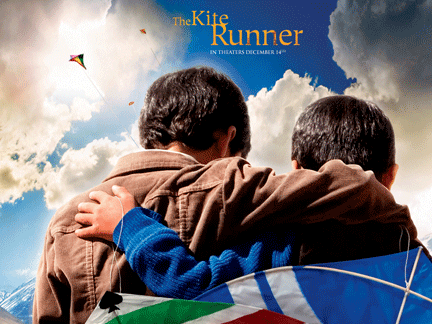
By Khaled Hosseini, The Washington Post, Sunday, October 12, 2008; B05

I prefer to discuss politics through my novels, but I am truly dismayed these days. Twice last week alone, speakers at McCain-Palin rallies have referred to Sen. Barack Obama, with unveiled scorn, as Barack Hussein Obama.

Never mind that this evokes — and brazenly tries to resurrect — the unsavory, cruel days of our past that we thought we had left behind. Never mind that such jeers are deeply offensive to millions of peaceful, law-abiding Muslim Americans who must bear the unveiled charge, made by some supporters of Sen. John McCain and Gov. Sarah Palin, that Obama’s middle name makes him someone to distrust — and, judging by some of the crowd reactions at these rallies, someone to persecute or even kill. As a secular Muslim, I too was offended. Obama’s middle name differs from my last name by only two vowels. Does the McCain-Palin campaign view me as a pariah too? Do McCain and Palin think there’s something wrong with my name? Continue reading McCain and Palin Are Playing With Fire

Literacy through Poetry


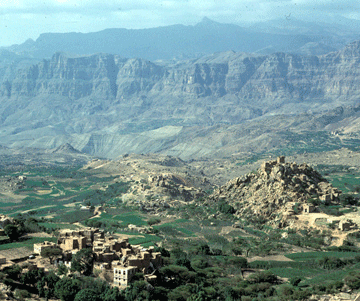
Highland valley of al-Ahjur in central Yemen

The following report was recently published online by dvv international at the Institut für Zusammenarbeit des Deutschen Volkshochschul-Verbandes. It can be read in English, French or Spanish. The report describes an innovative World Bank-funded literacy project coordinated in Yemen by anthropologist Najwa Adra in 2002/2003.

Learning through Heritage, Literacy through Poetry
by Najwa Adra

I have just read Henrik Zipsane’s fascinating article on heritage learning (Zipsane 2007) in the latest issue of this journal. Zipsane describes several highly effective programs for lifelong learning provided by Jamtli Open Air Museum in Sweden. He argues that each person’s heritage includes “many coexisting histories” and that there is a need to provide diverse learning experiences. He suggests that one can learn “through cultural heritage” and not only about this heritage. In a part of the world far from Sweden, geographically and culturally, I too have found that heritage can be an effective learning tool “in the present” and not just an interesting artifact of the past.
The Project

In 2002-2003, I piloted a literacy project for adults in Yemen, on the SW corner of the Arabian Peninsula, in which learners created their own texts through their stories, poems and rhyming proverbs (Adra 2004). 2 Classes began with a discussion of a photograph of a scene familiar to the students or a topic of their choice. Students were encouraged to insert poetry and proverbs into their discussion, as is their custom when discussing issues of importance to them. With the teacher’s help, the class developed a short story based on the discussion. This story, which was written on large paper taped to the wall, along with poems and proverbs generated by the discussion, became the text through which students learned to recognize and read phrases, words and letters of the alphabet. In order to reinforce letter and word recognition, texts often focused on particular letters, words or syllables. Continue reading Literacy through Poetry

Mullah Omar mulls alliance


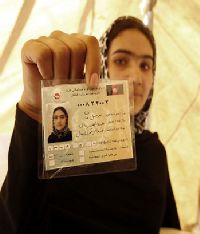
An Afghan woman poses with her newly made voter registration card in Parwan province, north of Kabul.

Mullah Omar No Longer an Ally of Al Qaeda – Afghan Source

By Mohammed Al Shafey and Omar Farouk, Asharq Alawsat, Tuesday 07 October 2008

London, Islamabad

An Afghan source has revealed to Asharq Al-Awsat that negotiations between the Afghan government and the Taliban are headed for Islamabad for further talks with Pakistani officials with regards to ending the violence in Afghanistan.

The source close to the negotiations told Asharq Al-Awsat that a Taliban delegation met with representatives of Afghan President Hamid Karzai’s government in Mecca, Saudi Arabia. Attendees included Mullah Mohamed Tayeb Agha, the spokesman for Taliban leader Mullah Omar, and Mawlawi Abdul Kabir who was second deputy of the Taliban’s Council of Ministers and former governor of Nangarhar province. The Afghan government delegation was led by MP Arif Noorzai, who was deputy to parliament speaker Sheikh Younis Qanuni. Continue reading Mullah Omar mulls alliance

Surge vs. Splurge

McCain is deluding himself over the ‘surge’
Johann Hari, The Independent, October 6, 2008

There’s a hole in the US argument, and blood is rushing through

John McCain is desperate to talk about the surge rather than the splurge. His Iraq war is set to cost one trillion dollars, and his deregulation-mania has cost hundreds of billions. So in order to maintain his façade of being “tough on spending”, he needs to shift the subject. That’s why he has tried to shrink the debate about the Iraq War to one small question. Not: did Saddam have Weapons of Mass Destruction? Not: did Saddam have links to 9/11? Not: why do 70 per cent of Iraqis think the presence of US troops make them less safe and they should go home now?

McCain knows he will lose those arguments, so he wants us to talk solely about whether the surge of US troops last year has been successful. But a hole was just blown in that argument – and blood is rushing through.

Those of us who got Iraq wrong have a particular duty to honestly describe what is happening now. Continue reading Surge vs. Splurge

Jangling Nerves in Yemen


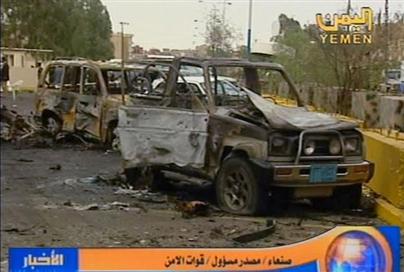
Damage is seen after a car bombing near the U.S. embassy in Yemen in this frame grab taken from Yemen TV on Sept. 17, 2008.

Jangling nerves

The Economist ,Oct 2nd 2008


Resurgent terrorist groups are just a symptom of broader troubles

THE wreckage of twin car bombs outside the American embassy in Yemen’s mountain capital, Sana’a, confirmed fears of a resurgent jihadist movement in a strategic country at the foot of the Red Sea, just across from chaotic Somalia. The attack in mid-September was the second on the American embassy in six months. A misfired mortar that hit a nearby girls’ school in March had prompted the evacuation of non-essential American staff.

Jittery diplomats had been back at their desks for less than a month when six suicide-bombers blew themselves up outside the embassy compound’s gate. American staff promptly packed their bags once again. Yemen’s interior ministry rounded up dozens of suspects but is said to be refusing to adopt some of the State Department’s suggested extra security measures. Continue reading Jangling Nerves in Yemen

A Persian Catwalk


Iran’s Catwalk Ban Is Only The Beginning

by Farangis Najibullah, Radio Free Europe/Radio Liberty, September 20, 2008

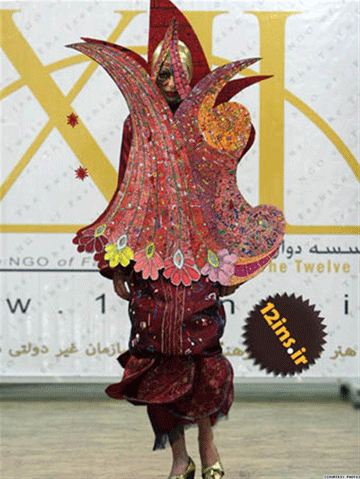
Move modestly. No garish makeup. Don loose and unrevealing clothing. Those are some of the new rules for Iranian models, who have been told not to attract too much attention during fashion shows.

The orders, handed down by the Culture and Islamic Guidance Ministry and published this month, are intended to promote Iranian and Islamic designs and stave off the influence of Western culture.

Live models “should avoid any behavior that would distract visitors’ attention from the clothes put on display,” according to the eight-part “Guideline For Fashion And Dress Shows.”

“Models are not allowed to show off the curves of their bodies, and their hair should not be seen,” the document reads. “The wearing of tight and body-hugging clothes and types of makeup that are incompatible with Islamic and Iranian culture are prohibited.”

Musical accompaniment must be “well-matched to Islamic and Iranian culture,” and should not prompt models to move or walk in an inappropriate manner.

And the fashion-show runway, better known as the catwalk? That’s been banned altogether, since it’s been deemed a slavish imitation of foreign culture. Continue reading A Persian Catwalk

Lucie Wood Saunders, 1928-2008

Lucie Wood Saunders, 1928-2008

One of AMEWS’ earliest members and warmest supporters, Lucie Wood Saunders, passed away on July 26, 2008. Lucie received her PhD in Anthropology from Columbia University in 1959. Her dissertation research was on parallel cousin marriage in Arab families. She carried out research in Egypt, at the invitation of Laila el Hamamsy, Director of American University of Cairo’s Social Research Center, starting in 1961 and into the 1980’s in the Egyptian Delta village, Tafahna el-Ashraf. She worked with Sohair Mehanna of the SRC, authoring many articles with her on Tafahna el-Ashraf. Lucie was among the first Anthropologsits to write on issues of gender in the Delta villages. Her research inspected family and gender relations, the local zar cults, women and development issues around small businesses such as poultry, and medical anthropology. Her early work focused more on psychological issues and her later work more on economic issues. Continue reading Lucie Wood Saunders, 1928-2008