Category Archives: Countries

Sex and the Islamic City

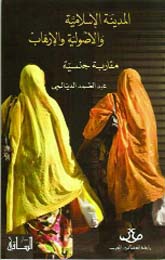
[The following is a review by Omar El Kouch of Al-Madina al-Islami wal-Ouçoulya wal-Irhab: Muqaraba Jinsya, (Islamic City, Fundamentalism and Terrorism: a Sexual Approach), Beirut, Arab Rationalist League, Dar Es Saqi, 2008, 208 pages, ISBN 978-1-85516-287-7 by Abdessamad Dialmy. The review is translated here from Arabic into English by Said Allibou and Imad Mahhou (Mohamed V University, Rabat, Morocco).]

The new book of Prof. Dr. Abdessamad Dialmy holds a new treatment and handling, where the author attaches a particular importance to the sexual factor in the composition and the reasoning of a fundamentalist, radical and terrorist personality. This is a factor which is absent in the various studies on fundamentalist and radical movements in the Kingdom of Morocco and witnessed in the rise of radical movements and incidents of violence and bombings, fields of study and research. Continue reading Sex and the Islamic City →

Showcasing Palestinian cinema


Jackie Reem Salloum, the director of Slingshot Hip Hop, wants to encourage Palestinians to tell their stories through artistic expression.

Showcasing Palestinian cinema
By Deena Douara, Al-Jazeera, October 29, 2008

On the heels of the Toronto International Film Festival comes another motion picture fete about a people trying to carve out a state in a war-torn region.

From October 25 to November 1, Toronto will showcase 36 films about the Palestinians as part of year-long commemorations marking the 60th anniversary of the ‘Nakba’, or catastrophe.

Kole Kilibarda, one of the Toronto Palestine Film Festival (TPFF) organisers, believes audiences will be surprised by “the amazing cinema produced even under the most difficult of circumstances”.

The TPFF will include Canadian, North American, and world premieres of award-winning documentaries, features and short films.

Palestinian films have gained prominence on the international scene in recent years, beginning with the enigmatic Divine Intervention (2002) and the controversial Oscar-nominated Paradise Now (2005). Continue reading Showcasing Palestinian cinema →

Pay Dirt for the RNC


Where the RNC found Joe the Plumber

Yesterday the RNC (also to be known as Really Nasty Condemnations) slid out yet more mud trying to fearmonger Senator Obama yet again as a terrorist. Since they cannot find any smoking guns from Obama’s record, the exit strategy has come down to throwing smoke-filled room stink bombs around Obama’s Chicago neighborhood. The latest mudpie comes at the expense of Professor Rashid Khalidi, who holds the Edward Said Chair of History at Columbia University. When Obama taught at the University of Chicago he was a colleague, neighbor and friend of Khalidi. For the RNC all it takes to be labeled terrorist these days is to be Palestinian. But they have chosen an individual who is a recognized international scholar and who is admired across a broad spectrum of the academy. His most recent book, The Iron Cage, attacks the excesses of Zionism on the Palestinian quest for statehood, but is also critical of the PLO and Palestinian violence. He writes as a historian, not a polemicist only interested in political spin. Continue reading Pay Dirt for the RNC →

More on Floods in Yemen

Thousands of people displaced Hundreds of houses damaged

Abdul Aziz Oudah, Yemen Observer, October 28, 2008


Flood damage in the Hadramawt

Devastation in eastern Yemen after last Friday’s floods caused by heavier than usual rainfall.
Preliminary estimates from the floods in Hadramout and al-Maharah put the death toll at 184 with 100 others still missing.

Seventeen hundred houses were damaged, and ten thousand people have been displaced in the last three days.

The total cost of the damage is estimated to be in the hundreds of millions of YR. Continue reading More on Floods in Yemen →

The Endorsement from Hell

The Endorsement From Hell
By NICHOLAS D. KRISTOF, The New York Times, October 25, 2008

John McCain isn’t boasting about a new endorsement, one of the very, very few he has received from overseas. It came a few days ago:

“Al Qaeda will have to support McCain in the coming election,” read a commentary on a password-protected Islamist Web site that is closely linked to Al Qaeda and often disseminates the group’s propaganda.

The endorsement left the McCain campaign sputtering, and noting helplessly that Hamas appears to prefer Barack Obama. Al Qaeda’s apparent enthusiasm for Mr. McCain is manifestly not reciprocated. Continue reading The Endorsement from Hell →

Floods in Yemen

Death toll rises in Yemen floods
Al-Jazeera, October 25, 2008

The death toll from floods sweeping through southwestern Yemen following heavy rains has risen to 49, officials have said.

The floods have been most severe in the provinces of Hadramaut and Mahara.

Officials said that four people were killed by lightning in the southern provinces of Tayez and Lahj, and a mother and son were also killed when lightning struck them in the al-Mahwit region north of the capital Sanaa.

Hadramaut and Mahara were both declared disaster zones on Friday, officials said. Continue reading Floods in Yemen →

The Territory with which We Are Threatened


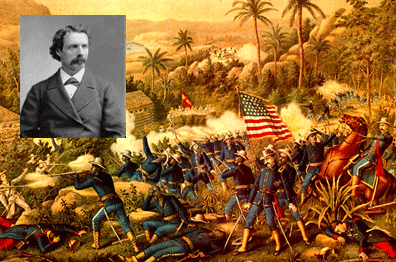
Whitelaw Reid as a young correspondent

[In 1898 the United States was fresh from its imperialist expansion in the Spanish American War. Ironically, the situation faced by the United States today in Iraq has a parallel with the war in Cuba, as can be readily seen from this essay by the well-known journalist and Republican politician Whitelaw Reid. The irony continues in the example given by Reid of Egypt’s colonial occupation of Egypt. Although written over a century ago in one of America’s most popular periodicals, the sentiments are relevant to the ongoing occupation of Iraq. Whether or not history repeats itself, some historical observations are well worth repeating. Webshaykh]

by Whitelaw Reid

Men are everywhere asking what should be our course about the territory conquered in this war. Some inquire merely if it is good policy for the United States to abandon its continental limitations, and extend its rule over semi-tropical countries with mixed populations. Others ask if it would not be the wisest policy to give them away after conquering them, or abandon them. They say it would be ruinous to admit them as States to equal rights with ourselves, and contrary to the Constitution to hold them permanently as Territories. It would be bad policy, they argue, to lower the standard of our population by taking in hordes of West Indians and Asiatics; bad policy to run any chance of allowing these people to become some day joint arbiters with ourselves of the national destinies; bad policy to abandon the principles of Washington’s Farewell Address, to which we have adhered for a century, and involve ourselves in the Eastern Question, or in the entanglements of European politics. Continue reading The Territory with which We Are Threatened →